Dr. Wei Yu: Research Progress in ASCO-GU 2023 Urothelial Carcinoma

Dr. Wei Yu: Research Progress in ASCO-GU 2023 Urothelial Carcinoma

The American Society of Clinical Oncology (ASCO) Genitourinary Cancers Symposium 2023 (ASCO-GU 2023) kicked off on February 16th in San Francisco, USA. In the field of urothelial carcinoma (UC), significant progress has been made in research. Immunotherapy with immune checkpoint inhibitors (ICIs) in the first-line treatment for advanced UC, as reported in the final analysis of the IMvigor130 study, has provided more information on the population benefiting from immune therapy. Additionally, immunotherapy has expanded into early-stage treatment, with the updated 3-year follow-up data from the CheckMate 274 study showing a Disease-Free Survival (DFS) of up to 52.6 months in the PD-L1 > 1% subgroup. Furthermore, different targets such as Trop-2 and Nectin-4 in antibody-drug conjugates (ADCs) are being explored in various treatment modalities and are extending from later-line to first-line treatment.
Dr. Kan Gong: Research Progress in ASCO-GU 2023 Kidney Cancer

Dr. Kan Gong: Research Progress in ASCO-GU 2023 Kidney Cancer

The 2023 American Society of Clinical Oncology Genitourinary Cancers Symposium (ASCO-GU 2023) kicked off on February 16th in San Francisco, USA. In the field of kidney cancer diagnosis, a novel molecular imaging agent, 89Zr-DFO-girentuximab, has been shown to accurately diagnose clear cell renal cell carcinoma (ccRCC). In the first-line treatment area, the CheckMate 9ER study reported extended follow-up data, while the COSMIC-313 study presented data on IMDC subgroup patients. Additionally, research explored the improvement of complete response rates in first-line immunotherapy patients through local treatments and the benefits of reducing the number and duration of immunotherapy treatments for untreated survival. In the area of second-line treatment, CaboPoint reported positive anti-tumor activity of cabozantinib for immunotherapy-resistant patients.
Key Insights from the 2023 ASCO-GU Conference on Sacituzumab Govitecan in Advanced Urothelial Cancer

Key Insights from the 2023 ASCO-GU Conference on Sacituzumab Govitecan in Advanced Urothelial Cancer

Advanced urothelial cancer (aUC) has seen remarkable progress in recent years with the emergence of antibody-drug conjugates (ADCs) targeting specific antigens. Trop-2, a cell surface antigen highly expressed in UC, has become a promising therapeutic target. Sacituzumab govitecan (SG), a next-generation Trop-2 ADC, received accelerated approval from the US FDA in April 2021 for treating adult patients with locally advanced or metastatic UC who had prior platinum-based chemotherapy and PD-(L)1 inhibitors. The 2023 ASCO-GU conference unveiled data from various cohorts of the TROPHY-U-01 trial and the latest advancements in UC treatment, encompassing late-line monotherapy, combination therapy, first-line combination therapy, and first-line maintenance therapy. Here, we summarize essential findings from these presentations, anticipating further insights after the conference.
Prostate Cancer Radiation Therapy Research: SBRT vs Surgery; Conventional Radiation vs Large Fraction Radiation  

Prostate Cancer Radiation Therapy Research: SBRT vs Surgery; Conventional Radiation vs Large Fraction Radiation  

The 2023 American Society of Clinical Oncology Genitourinary Cancers Symposium (ASCO-GU 2023) kicked off on February 16th in San Francisco, USA. In the field of prostate cancer radiation therapy, two phase 3 clinical studies were selected for oral presentation: The PACE-A study explores stereotactic body radiation therapy (SBRT) compared to surgery for localized prostate cancer; The CHHiP study further reports survival and comorbidity outcomes with a 12-year follow-up.
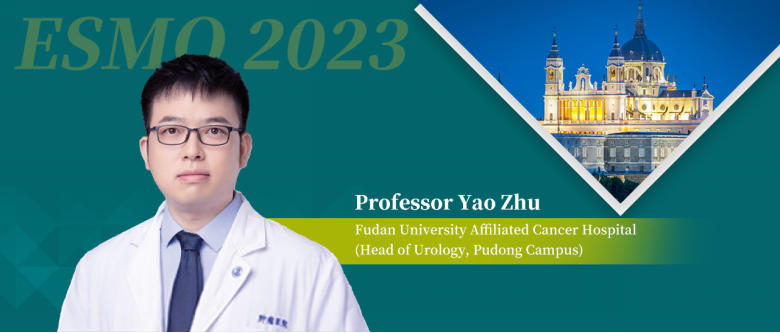
Dr. Yao Zhu talks to Dr. Nguyen: Advances in Radiotherapy and Surgical Treatment of Prostate Cancer at ASCO-GU 2023

Dr. Yao Zhu talks to Dr. Nguyen: Advances in Radiotherapy and Surgical Treatment of Prostate Cancer at ASCO-GU 2023

The 2023 American Society of Clinical Oncology (ASCO) Genitourinary Cancers Symposium (ASCO-GU 2023) has concluded. During this conference, several studies related to early-stage/ localized prostate cancer radiotherapy or surgical treatment were presented as oral reports. Among them, the FORMULA-509 study presented by Dr. Paul L. Nguyen of the Dana-Farber Cancer Institute at Harvard Medical School showed that for high-risk patients with biochemical recurrence after radical surgery, combining 6 months of ADT (Androgen Deprivation Therapy) with novel hormonal therapy on top of salvage radiotherapy can improve patient survival. "Oncology Frontier" invited Dr. Zhu Yao from Fudan University Shanghai Cancer Center to have a discussion with Dr. Nguyen, delving into the interpretation of the FORMULA-509 study and other prostate cancer surgery and radiotherapy-related research presented at the conference.
Interview with Dr. Girard Deciphers at ELCC 2023

Interview with Dr. Girard Deciphers at ELCC 2023

The 2023 European Lung Cancer Congress (ELCC) was held from March 29th to April 1st, in a combined online and offline format in Copenhagen, Denmark. Professor Nicolas Girard from the Curie Institute in Paris, France, presented the 3-year data update (Abstract 84O) of the CheckMate 816 study on neoadjuvant immune combined with chemotherapy in the Proffered Paper 2 session. In an interview with Oncology Frontier he further discussed the significant research data released at ELCC 2023, the status of dual immune checkpoint inhibitor regimens in the treatment of driver gene-negative non-small cell lung cancer (NSCLC), and the treatment of EGFR exon 20 insertion mutations (ex20ins) subtype.
Dr. Huibiao Zhang: Three Osimertinib  Adjuvant Studies Shine at ELCC, Adding New Evidence for Early-Stage Lung Cancer Treatment

Dr. Huibiao Zhang: Three Osimertinib  Adjuvant Studies Shine at ELCC, Adding New Evidence for Early-Stage Lung Cancer Treatment

The European Lung Cancer Congress (ELCC) is one of the most anticipated academic conferences in the field of lung cancer, jointly organized by the European Society for Medical Oncology (ESMO) and the International Association for the Study of Lung Cancer (IASLC). Since its inception in 2008, ELCC has become one of the premier conferences for professionals in this field. The 2023 European Lung Cancer Congress (ELCC) took place in Copenhagen, Denmark, from March 29 to April 1. This conference featured five abstracts on osimertinib, including three adjuvant treatment studies. This article summarizes the latest research results and invites Professor Zhang Huibiao from Fudan University-affiliated Huadong Hospital to provide expert commentary from the perspective of thoracic surgery.
“Recent Developments in Lung Cancer Research: Insights from ELCC 2023”

“Recent Developments in Lung Cancer Research: Insights from ELCC 2023”

Dr Paz-Ares: I think this meeting is a particularly relevant meeting for continuous education, where the different and relevant aspects of lung cancer diagnosis, treatment and so on are reviewed and updated compared to standard-of-care. On top of that, some new data are typically presented. A good highlight for the current conference this year were some data updating the CHECKMATE-816 trial, showing more mature data on the benefit of chemotherapy plus nivolumab compared to chemotherapy as a neoadjuvant treatment in early stage non-small cell lung cancer. Importantly, it was suggested that an inflammatory signature may be predictive of benefit from this combination. There were some other interesting data updating the APPLE trial suggesting that third-generation TKIs like osimertinib are a better alternative compared to first-generation and then sequentially third-generation at time of progression even if using a liquid biopsy. Of course, there were updates of some other studies, including the presentation of novel phase III trials. There were two negative trials. The RESILIENT non-small cell lung cancer trial showed that the experimental drug, liposomal irinotecan, is not any better as compared to topotecan. And secondly, the CONTACT-01 trial with the addition of cabozantinib to atezolizumab does not improve prognosis, compared to standard-of-care in relapse non-small cell lung cancer.