The Mysteries of Hepatitis D: Key Molecular Determinants in Virus Replication and Assembly

The Mysteries of Hepatitis D: Key Molecular Determinants in Virus Replication and Assembly

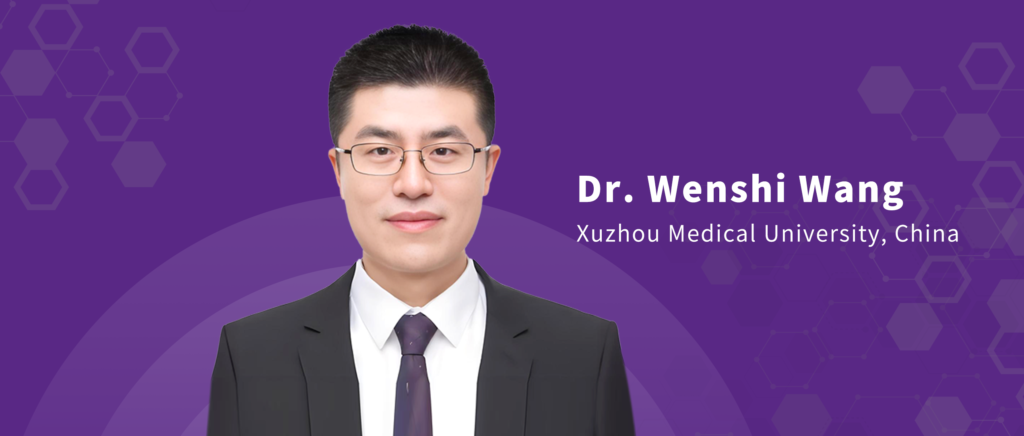
Dr. Wenshi Wang is the Principal Investigator of the hepatitis virus research group, Xuzhou Medical University, China. He obtained his Ph.D. from Erasmus University Rotterdam, the Netherlands, and completed post-doc research training at Heidelberg University, Germany in the field of hepatitis viruses. He has contributed more than 50 peer-reviewed publications, with 20 first or corresponding authorships in peer-reviewed academic journals such as Journal of Hepatology, Gastroenterology, Hepatology, Trends in Microbiology, Science Signaling, and JHEP Reports. He received the Kiem Award from the Royal Netherlands Society for Microbiology (2017), the EASL Sheila Sherlock Fellowship (2018) from the European Association for the Study of Liver, and the 1st Prize NVGE Gastro-intestinal Research Award from the Netherlands Society of Gastroenterology (2019). Currently, his group is committed to basic and translational research on hepatitis viruses with the following research focus:(1) Understanding the molecular and cellular mechanisms that orchestrate the hepatitis virus replication cycles; (2) Studying the host-virus interaction by employing molecular and cellular biology techniques; (3) Developing antiviral candidates and understanding their mode of action; (4) Studying the host metabolic changes and the possible consequences on virus infection.

ILTS 2023|Shifting Paradigms in Radiological Assessment of Tumor Load in Liver Transplantation for HCC

ILTS 2023|Shifting Paradigms in Radiological Assessment of Tumor Load in Liver Transplantation for HCC

Liver transplantation is a crucial option for treating Hepatocellular Carcinoma (HCC) as it not only removes the tumor but also addresses underlying liver disease. Accurate prediction of post-transplantation outcomes for patients with HCC tumors exceeding MELD standards or awaiting transplantation due to donor shortages is essential to enhance surgical success rates and optimize liver allocation. At the International Liver Transplantation Society (ILTS) Annual Meeting held in Rotterdam, the Netherlands, from May 3rd to 6th, 2023, Dr. Leonardo Centonze from Niguarda Hospital in Milan, Italy, presented a recent clinical study. The study suggests that dynamic grading based on the Liver Imaging Reporting and Data System (LI-RADS) has a significant impact on preoperative outcome prediction. The research indicates that for HCC patients with multiple nodules, every nodule in the liver (not just highly suspicious lesions) should be considered for preoperative evaluation. This will influence the accuracy of liver transplantation outcome prediction.
ILTS 2023 | New Approach for Early Detection of Hepatocellular Carcinoma – Biophysical Characteristics of Tumor Tissue and Serum

ILTS 2023 | New Approach for Early Detection of Hepatocellular Carcinoma – Biophysical Characteristics of Tumor Tissue and Serum

Biological physics is an interdisciplinary field that combines physics with biology, serving as an important branch of both life sciences and physics. Its aim is to elucidate the laws governing the motion of matter, energy, and information in biological systems within specific spatial and temporal contexts. However, the potential role of biophysical techniques in early cancer screening, particularly for liver cancer, remains a burgeoning research area with limited reports. At the International Liver Transplantation Society (ILTS) Annual Meeting held in Rotterdam, the Netherlands from May 3rd to 6th, 2023, Dr. Subathra Radhakrishnan from the Indian National Liver Foundation presented a study that suggests biophysical analysis may offer new means for non-invasive early diagnosis of Hepatocellular Carcinoma.
ILTS 2023 | Liver Resection or Thermal Ablation as a Bridge to Liver Transplantation for Hepatocellular Carcinoma – DELTAS-HCC Study

ILTS 2023 | Liver Resection or Thermal Ablation as a Bridge to Liver Transplantation for Hepatocellular Carcinoma – DELTAS-HCC Study

Liver transplantation is one of the curative treatment options for hepatocellular carcinoma (HCC). However, due to the limited availability of liver donors compared to the number of patients awaiting transplantation, only a small number of HCC patients can receive liver transplantation. Previous studies have shown that local treatment before liver transplantation in HCC patients can effectively prevent tumor progression, increase the transplant rate, and reduce the postoperative recurrence rate. Transarterial chemoembolization (TACE) and ablation techniques such as radiofrequency ablation (RFA), microwave ablation, and percutaneous ethanol injection are the most commonly used bridge therapies before liver transplantation. At the International Liver Transplantation Society (ILTS) annual meeting held in Rotterdam, Netherlands, from May 3 to 6, 2023, Dr. Catherine Lamarque and her colleagues from the Henri Mondor Hospital in France reported on a clinical study (DELTAS-HCC) that showed that liver resection or thermal ablation can be effective bridges to liver transplantation for HCC and do not adversely affect patient outcomes before and after transplantation.