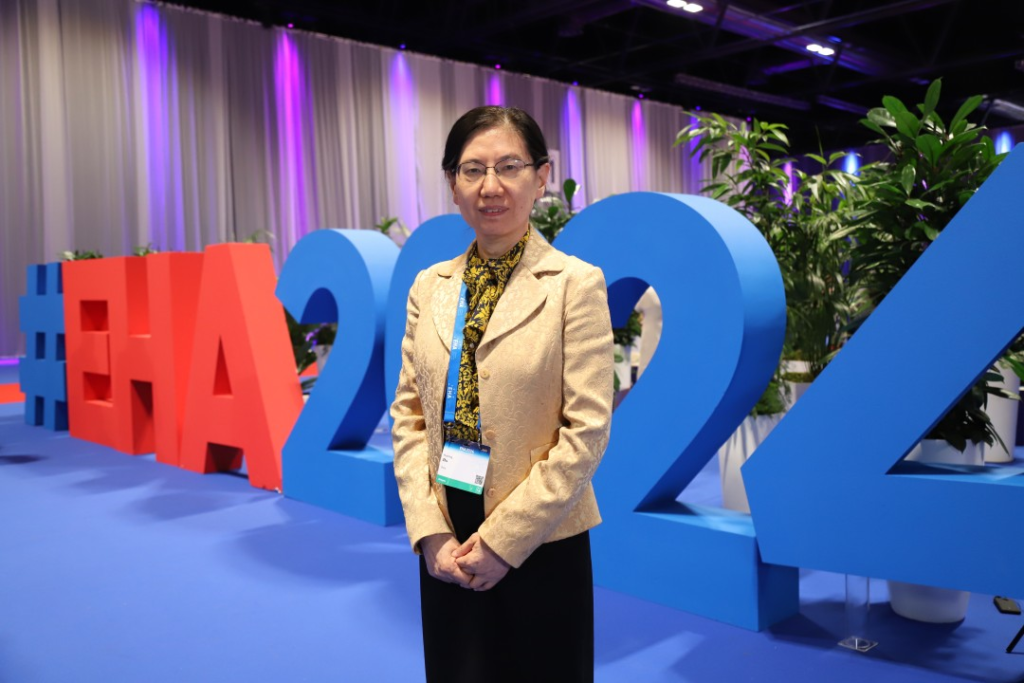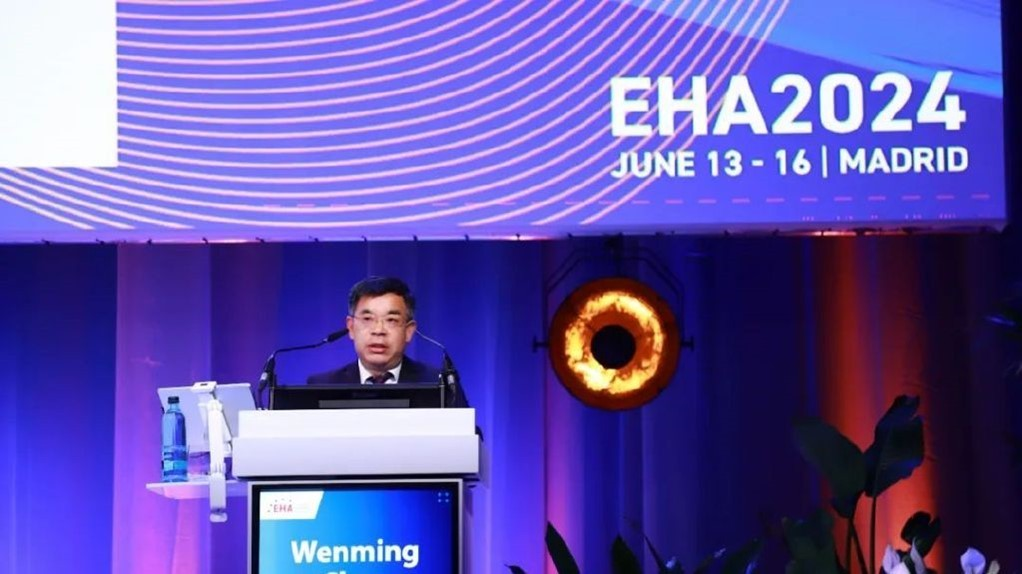
2024 CSCO Guidelines Conference | Prof. Jun Ma: The Chinese Society of Clinical Oncology (CSCO) Guidelines for Malignant Hematologic Diseases Promote Standardized Diagnosis and Treatment in China and Improve Clinical Outcomes

2024 CSCO Guidelines Conference | Prof. Jun Ma: The Chinese Society of Clinical Oncology (CSCO) Guidelines for Malignant Hematologic Diseases Promote Standardized Diagnosis and Treatment in China and Improve Clinical Outcomes

The "2024 Chinese Society of Clinical Oncology (CSCO) Guidelines for Malignant Hematologic Diseases" are set to be released, updating the latest treatment strategies and methods for malignant hematologic diseases. This is a significant event for the hematology field in China. "Oncology Frontier" conducted an exclusive interview with Professor Jun Ma from the Harbin Institute of Hematology and Oncology to discuss the CSCO guidelines and the treatment of hematologic diseases. The interview is summarized below.
2024 EBMT Review | Professor Jun Ma:CARTITUDE-4 Study—Comparison of Efficacy between Cilta-cel and Standard Treatments in Patients with Relapsed or Refractory Multiple Myeloma

2024 EBMT Review | Professor Jun Ma:CARTITUDE-4 Study—Comparison of Efficacy between Cilta-cel and Standard Treatments in Patients with Relapsed or Refractory Multiple Myeloma

From April 14 to 17, 2024, the 50th European Society for Blood and Marrow Transplantation (EBMT) Annual Meeting was grandly held in Glasgow, UK, a city renowned for its historical significance. This year marks the 50th anniversary of EBMT, and the event gathered leading figures in the field of hematopoietic stem cell transplantation and over 6,000 hematology experts from around the world. The attendees reviewed the remarkable achievements in the fields of hematology and bone marrow transplantation over the past 50 years and explored forward-looking patient management strategies. At the conference, chimeric antigen receptor T-cell (CAR-T) therapy, a highlight of this meeting, showcased a series of breakthroughs in the treatment of multiple myeloma and lymphoma, attracting significant attention. This issue features a special invitation to Professor Jun Ma from the Harbin Institute of Hematological Oncology to provide an insightful interpretation of five major research studies in the field of CAR-T cell therapy. Here, we present a compilation of these insights for our readers.
2024 EBMT Review | Professor Jun Ma:Development Study of Disease-Specific Composite Endpoints for CAR-T Cell Therapy in Large B-cell Lymphoma and Multiple Myeloma

2024 EBMT Review | Professor Jun Ma:Development Study of Disease-Specific Composite Endpoints for CAR-T Cell Therapy in Large B-cell Lymphoma and Multiple Myeloma

From April 14 to 17, 2024, the 50th European Society for Blood and Marrow Transplantation (EBMT) Annual Meeting was grandly held in Glasgow, UK, a city renowned for its historical significance. This year marks the 50th anniversary of EBMT, and the event gathered leading figures in the field of hematopoietic stem cell transplantation and over 6,000 hematology experts from around the world. The attendees reviewed the remarkable achievements in the fields of hematology and bone marrow transplantation over the past 50 years and explored forward-looking patient management strategies. At the conference, chimeric antigen receptor T-cell (CAR-T) therapy, a highlight of this meeting, showcased a series of breakthroughs in the treatment of multiple myeloma and lymphoma, attracting significant attention. This issue features a special invitation to Professor Jun Ma from the Harbin Institute of Hematological Oncology to provide an insightful interpretation of five major research studies in the field of CAR-T cell therapy. Here, we present a compilation of these insights for our readers.
EBMT China Voice | Dr. Yishan Ye : Comparative Study of Haploidentical, Sibling Matched, and Unrelated Matched Allogeneic Hematopoietic Stem Cell Transplantation in Core Binding Factor AML Patients in Second Complete Remission (CR2)

EBMT China Voice | Dr. Yishan Ye : Comparative Study of Haploidentical, Sibling Matched, and Unrelated Matched Allogeneic Hematopoietic Stem Cell Transplantation in Core Binding Factor AML Patients in Second Complete Remission (CR2)

Allogeneic hematopoietic stem cell transplantation (allo-HSCT) is a crucial therapeutic option for a variety of benign and malignant hematological diseases. In recent years, the proportion of haploidentical transplants has been increasing due to advancements in the technology. From April 14 to 17, 2024, the 50th European Society for Blood and Marrow Transplantation (EBMT) Annual Meeting was held in Glasgow, UK. The conference focused on the latest developments in stem cell transplantation and cellular therapy, pushing forward better clinical prognoses for hematologic patients. At this EBMT Annual Meeting, Professor Huang He's team from the First Affiliated Hospital of Zhejiang University School of Medicine was selected for one invited report, five oral presentations, and fifteen posters. "Oncology Outlook - Hematology News" invited Dr. Yishan Ye  from The First Affiliated Hospital of Zhejiang University School of Medicine to share insights and progress from his oral presentation on the study comparing haploidentical allo-HSCT with related/unrelated matched transplants, which potentially shows better prognostic outcomes.
EBMT Interview Highlight | Optimizing Outcomes After Transplantation: Updates to International Guidelines

EBMT Interview Highlight | Optimizing Outcomes After Transplantation: Updates to International Guidelines

In recent years, advancements in Hematopoietic Cell Transplantation (HCT) technology have significantly improved long-term survival rates, with about 80% of patients achieving disease-free survival for more than two years post-transplant. However, as time progresses, long-term survivors of transplantation still face the risk of chronic complications, which directly impact their quality of life and outcomes post-transplant. The 50th European Society for Blood and Marrow Transplantation (EBMT) annual meeting took place from April 14 to 17, 2024, in Glasgow, UK. At the meeting, Professor Rachel Phelan from the Children's Hospital of Wisconsin, a specialist in blood and marrow transplantation, introduced the recently updated "International Guidelines for Screening and Prevention Measures for Long-Term Survivors of Transplant and Cell Therapy" (Bone Marrow Transplant. 2024 Feb 27. Epub ahead of print). Hematology News invited Professor Phelan to share and interpret the key updates of the guidelines with a broad readership.
EBMT China Voice | Professor Yue Lu ‘s Team: Clinical Characteristics and Prognosis of Allogeneic Hematopoietic Stem Cell Transplantation Combined with Mucormycosis

EBMT China Voice | Professor Yue Lu ‘s Team: Clinical Characteristics and Prognosis of Allogeneic Hematopoietic Stem Cell Transplantation Combined with Mucormycosis

Mucormycosis is a group of rare and highly invasive fungal diseases, and its combination with allogeneic hematopoietic stem cell transplantation increases the difficulty of diagnosis and treatment. Previously, the difficulty in rapidly diagnosing mucormycosis often led to poor prognosis in patients with transplantation-associated mucormycosis. At the 50th European Society for Blood and Marrow Transplantation (EBMT) Annual Meeting, Dr. Xu Fang from Professor Yue Lu 's team at Hebei Yanda Lu Daopei Hospital reported a recent clinical study that analyzed the characteristics and prognostic factors of patients with allogeneic hematopoietic stem cell transplantation combined with mucormycosis.
EBMT Hot Commentary | Professor Jie Jin: Turning the Tide, Extending Survival — Pre-Transplant Salvage Chemotherapy for Relapsed/Refractory AML Based on Venetoclax

EBMT Hot Commentary | Professor Jie Jin: Turning the Tide, Extending Survival — Pre-Transplant Salvage Chemotherapy for Relapsed/Refractory AML Based on Venetoclax

Acute myeloid leukemia (AML) is a common and aggressive hematological malignancy with poor prognosis. For patients with relapsed/refractory (R/R) AML, allogeneic hematopoietic stem cell transplantation (allo-SCT) is one of the important treatment options. However, patients with R/R AML often face primary or secondary drug resistance and limited treatment options due to complications and physical condition, resulting in low re-induction remission rates. Therefore, selecting the appropriate chemotherapy regimen before transplantation to achieve deeper remission and secure better timing for transplantation, thereby optimizing the outcome of allo-SCT and extending patient survival, is a critical clinical issue. From April 14 to 17, 2024, the 50th European Society for Blood and Marrow Transplantation (EBMT) Annual Meeting was held in Glasgow, UK, focusing on the latest advances in stem cell transplantation and cellular therapy, and pushing forward better clinical outcomes for patients with hematological diseases and malignancies. In this issue, we are pleased to have Professor Jie Jin share her insights on the latest research in pre-transplant chemotherapy for patients with relapsed/refractory AML.
Relapsed and refractory AML is a very difficult clinical problem, and there is currently no unified and efficient treatment plan.

Relapsed and refractory AML is a very difficult clinical problem, and there is currently no unified and efficient treatment plan.

Relapsed and refractory acute myeloid leukemia (AML) presents one of the most formidable challenges in oncology, lacking a unified and efficient treatment strategy. Dr. Johannes Schetelig, Head of the Cell Therapy Unit at the Technical University of Dresden and Chair of the Clinical Trials Unit within the DKMS, offers invaluable insights into the complexities and evolving approaches in managing this condition. From the nuances of defining refractory AML at various stages to the critical decision-making involved in stem cell transplantation, Dr. Schetelig's expertise sheds light on current practices and future directions. This article delves into the multifaceted strategies for treating relapsed and refractory AML, focusing on patient suitability for stem cell transplantation, predictive clinical characteristics for better outcomes, and proactive measures to prevent relapse post-transplantation. 
VLA-4 Agonists – Enhancing Hematopoietic Stem Cell Engraftment, Accelerating Immune Reconstitution, and Increasing Treatment Success Rates for Patient

VLA-4 Agonists – Enhancing Hematopoietic Stem Cell Engraftment, Accelerating Immune Reconstitution, and Increasing Treatment Success Rates for Patient

Hematopoietic stem cell transplantation (HSCT) is an effective, and often the only, curative treatment for malignant hematological diseases such as leukemia. Key steps that impact the success of the transplantation include stem cell engraftment and the reconstitution of immune functions. From April 14 to 17, 2024, the 50th European Society for Blood and Marrow Transplantation (EBMT) annual meeting was grandly held in Glasgow, UK. The conference focused on the latest advancements in stem cell transplantation and cell therapy, driving better clinical outcomes for patients with hematological diseases. At this conference, a team led by Professor Xianmin Song from Shanghai First People's Hospital presented an oral report titled "VLA-4 Agonists Promote Engraftment and Cellular Immune Reconstitution in Allogeneic Hematopoietic Stem Cell Transplantation," which garnered widespread attention. Professor Song was specially invited to our live interview room to share the main findings of his research and provide a detailed explanation of the latest developments in the critical steps of allogeneic stem cell transplantation: graft engraftment and immune reconstitution.
EBMT 2024 | Professor Qingxiao Song: PI3Kδ Inhibitors Show High Potential in the Treatment of cGVHD

EBMT 2024 | Professor Qingxiao Song: PI3Kδ Inhibitors Show High Potential in the Treatment of cGVHD

Chronic graft-versus-host disease (cGVHD) is a clinical syndrome occurring after allogeneic hematopoietic stem cell transplantation (allo-HSCT), where the recipient’s organs are attacked by donor-derived lymphocytes during the reconstitution of the donor's immune system. This includes both classic cGVHD and overlapping syndromes and is one of the main complications of transplantation, with an incidence rate of 30% to 70%. The mechanisms behind cGVHD are complex, its clinical manifestations diverse, and the individual differences significant. The course of the disease can be prolonged and persistent; if not properly diagnosed and treated, it can severely affect the patient's quality of life and long-term survival. With the introduction of guidelines, there are now standardized diagnostic criteria and first-line treatment protocols for cGVHD, but there is still no consensus on second-line treatments. PI3Kδ inhibitors, which interfere with the proliferation and survival of lymphocytes by inhibiting the activity of the PI3Kδ enzyme and thus suppress tumor growth, have not only introduced new drugs and strategies for non-Hodgkin's lymphoma but have also shown therapeutic potential in the treatment of GVHD. At the recent 50th European Society for Blood and Marrow Transplantation (EBMT) annual meeting, a basic study from the Second Affiliated Hospital of Army Medical University was selected for an oral presentation (Abstract No: OS7-05) [1], showcasing the activity of PI3Kδ inhibitors in the treatment of cGVHD. "Oncology Frontier - Hematology Frontier" has invited Professor Qingxiao Song from The Second Affiliated Hospital of Army Medical University (Xinqiao Hospital) to interpret and comment on this research for our readers.there is still no consensus on second-line treatments. PI3Kδ inhibitors, which interfere with the proliferation and survival of lymphocytes by inhibiting the activity of the PI3Kδ enzyme and thus suppress tumor growth, have not only introduced new drugs and strategies for non-Hodgkin's lymphoma but have also shown therapeutic potential in the treatment of GVHD. At the recent 50th European Society for Blood and Marrow Transplantation (EBMT) annual meeting, a basic study from the Second Affiliated Hospital of Army Medical University was selected for an oral presentation (Abstract No: OS7-05) [1], showcasing the activity of PI3Kδ inhibitors in the treatment of cGVHD. "Oncology Frontier - Hematology Frontier" has invited Professor Qingxiao Song from The Second Affiliated Hospital of Army Medical University (Xinqiao Hospital) to interpret and comment on this research for our readers.