Olverembatinib (HQP1351), a well-tolerated and effective tyrosine kinase inhibitor for patients with T315I-mutated chronic myeloid leukemia: results of an open-label, multicenter phase 1/2 trial

Olverembatinib (HQP1351), a well-tolerated and effective tyrosine kinase inhibitor for patients with T315I-mutated chronic myeloid leukemia: results of an open-label, multicenter phase 1/2 trial

In 2022, a groundbreaking study led by Professor Xiaojun Huang from Peking University Institute of Hematology, was published in the prestigious Journal of Hematology & Oncology. The study is titled "Olverembatinib (HQP1351), a well-tolerated and effective tyrosine kinase inhibitor for patients with T315I-mutated chronic myeloid leukemia: results of an open-label, multicenter phase 1/2 trial." This research marks a pivotal advancement in the treatment of chronic myeloid leukemia (CML), particularly for patients harboring the T315I mutation, underscoring the potential of precision medicine in the fight against this challenging disease.
Mixed Chimerism and Its Impact on Long-term Failure-free Survival in Aplastic Anemia Patients Undergoing HLA-matched Donor Transplantation

Mixed Chimerism and Its Impact on Long-term Failure-free Survival in Aplastic Anemia Patients Undergoing HLA-matched Donor Transplantation

In January 2024, a groundbreaking study spearheaded by Professor Xiaojun Huang from Peking University Institute of Hematology, was featured in the distinguished international journal — Bone Marrow Transplantation . The research, titled "Mixed Chimerism and Its Influence on Long-term Failure-free Survival in Aplastic Anemia Patients Undergoing HLA-Matched Donor Transplantation" delivers new insights into the prognosis of aplastic anemia post-transplant. Professor Huang's study illuminates the complex relationship between mixed chimerism and long-term outcomes in patients, offering an invaluable contribution to the field of hematopoietic stem cell transplantation and the pursuit of enhanced treatment strategies.
Comparison of Haploidentical Hematopoietic Stem Cell Transplantation with Chemotherapy in Older Adults with Acute Myeloid Leukemia

Comparison of Haploidentical Hematopoietic Stem Cell Transplantation with Chemotherapy in Older Adults with Acute Myeloid Leukemia

In 2023, a groundbreaking study spearheaded by Professor XiaoJun Huang from Peking University Institute of Hematology, made its debut in a prestigious international academic journal——Bone Marrow Transplantation. This pivotal research, entitled "Comparison of Haploidentical Hematopoietic Stem Cell Transplantation with Chemotherapy in Older Adults with Acute Myeloid Leukemia" offers a novel perspective on treatment efficacy for Acute Myeloid Leukemia (AML) in the elderly population. The study meticulously explores the viability and outcomes of using haploidentical donors for stem cell transplantation compared to traditional chemotherapy approaches, marking a significant advancement in the therapeutic landscape for older AML patients.
Impacts of Early Therapy Response, Interval to Therapy Interruption, and Cumulative Therapy Interruption Duration on Outcome of Ibrutinib Therapy in Relapsed/Refractory Chronic Lymphocytic Leukemia

Impacts of Early Therapy Response, Interval to Therapy Interruption, and Cumulative Therapy Interruption Duration on Outcome of Ibrutinib Therapy in Relapsed/Refractory Chronic Lymphocytic Leukemia

In July 2023, a groundbreaking study led by Professor Xiaojun Huang from Peking University Institute of Hematology was published in a prestigious academic journal ——Annals of Hematolog. The study, titled "Impacts of Early Therapy Response, Interval to Therapy Interruption, and Cumulative Therapy Interruption Duration on Outcome of Ibrutinib Therapy in Relapsed/Refractory Chronic Lymphocytic Leukemia" marks a pivotal advancement in the treatment and management of chronic lymphocytic leukemia (CLL) or small lymphocytic lymphoma (SLL). This research, conducted in collaboration with experts like Shenmiao Yang, Nan Li, Rong Zhu, Yu Feng, Jianmin Zhuo, and the internationally renowned hematologist Robert Peter Gale, leverages data from a multicenter phase 3 study to enhance our understanding of ibrutinib therapy in CLL/SLL, particularly regarding the effects of therapy interruptions on patient outcomes.
External validation of the predictive scoring systems formolecular responses in chronic myeloid leukaemia receivinginitial imatinib-therapy

External validation of the predictive scoring systems formolecular responses in chronic myeloid leukaemia receivinginitial imatinib-therapy

In July 2023, a significant study led by Professor Xiaojun Huang from Peking University Institute of Hematology was published in Leukemia, focusing on chronic myeloid leukemia (CML) treatment with imatinib. This research introduced and validated a predictive scoring system to forecast molecular responses in CML patients. The study, involving an external validation on a cohort of 2,184 patients, demonstrated the efficacy of this model in stratifying patients into risk categories for more personalized treatment approaches. Through rigorous statistical analysis, including ROC curves and decision curve analyses, Huang and his team's work stands as a pivotal contribution to optimizing CML management and enhancing patient care outcomes.
Refractory patients with favorable/intermediate-risk acute myeloid leukemia benefit from azacytidine maintenance therapy following allogeneic hematopoietic stem cell transplantation

Refractory patients with favorable/intermediate-risk acute myeloid leukemia benefit from azacytidine maintenance therapy following allogeneic hematopoietic stem cell transplantation

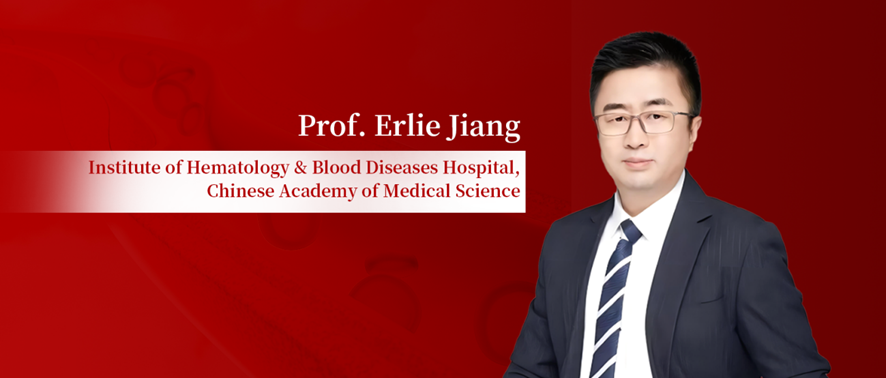
In September 2023, a study led by professor Erlie Jiang from Institute of Hematology & Blood Diseases Hospital, Chinese Academy of Medical Science published in Hematological Oncology,  focused on the effectiveness of azacytidine (AZA) maintenance therapy post-allogeneic hematopoietic stem cell transplantation (allo-HSCT) in patients with acute myeloid leukemia (AML). Through propensity score matching, the research compared 78 treated patients with 102 historical controls, revealing that AZA significantly improves relapse-free survival without severe adverse effects. This study, by demonstrating the potential of AZA maintenance to reduce relapse in AML patients, marks a significant contribution to the field of hematological oncology and opens new avenues for personalized post-transplant care.
The Composite Immune Risk Score predicts overall survivalafter allogeneichematopoietic stem cell transplantation: A retrospective analysis of 1838 cases

The Composite Immune Risk Score predicts overall survivalafter allogeneichematopoietic stem cell transplantation: A retrospective analysis of 1838 cases

In November 2022, professor Erlie Jiang and his team from Institute of Hematology & Blood Diseases Hospital, Chinese Academy of Medical Science published a crucial study in the American Journal of Hematology,  focusing on the impact of the Composite Immune Risk Score on survival after allogeneic hematopoietic stem cell transplantation (allo-HSCT). Analyzing 1838 cases, the study highlighted the score's potential to predict overall survival, offering a new tool for personalized post-transplant care. This research marks a significant advancement in understanding and managing hematological malignancies, promising to improve patient outcomes.
Outcomes of acute myeloid leukemia patients undergoing allogeneichematopoietic stem cell transplantation: validation, comparison and improvement of 2022 ELN genetic risk system

Outcomes of acute myeloid leukemia patients undergoing allogeneichematopoietic stem cell transplantation: validation, comparison and improvement of 2022 ELN genetic risk system

In February 2024, professor Erlie Jiang and colleagues from Institute of Hematology & Blood Diseases Hospital, Chinese Academy of Medical Science published a pivotal study in Experimental Hematology & Oncology , focusing on the validation and enhancement of the 2022 European LeukemiaNet (ELN) genetic risk system for acute myeloid leukemia (AML) patients undergoing allogeneic hematopoietic stem cell transplantation. By analyzing 600 AML patients, the study not only validated the ELN-2022 system against its 2017 version but also improved its prognostic accuracy by incorporating minimal residual disease (MRD) status. This research marks a significant advancement in the personalized treatment planning and prognosis of AML patients