Pinnacle Conversation | Advancements in the Diagnosis and Treatment of Metabolism-Related Fatty Liver Disease: Discussing New Developments, Sharing Experiences from Singapore and the United States, and Addressing Global Progress

Pinnacle Conversation | Advancements in the Diagnosis and Treatment of Metabolism-Related Fatty Liver Disease: Discussing New Developments, Sharing Experiences from Singapore and the United States, and Addressing Global Progress

Non-alcoholic fatty liver disease (NAFLD)/metabolic-associated fatty liver disease (MAFLD) is on the rise globally and has become the leading cause of chronic liver disease in China, posing a significant threat to public health. Establishing diagnostic models based on risk factors to assist clinical diagnosis and classification, or developing non-invasive assessment methods, is an important prerequisite for identifying more patients and effectively intervening in the disease process.
Dr. Taisheng Li: The Evolving “Chinese Approach” to HIV/AIDS Diagnosis and Treatment

Dr. Taisheng Li: The Evolving “Chinese Approach” to HIV/AIDS Diagnosis and Treatment

Editor's Note: Since the discovery of the first AIDS patient in China in 1985, an enduring battle, devoid of gunfire, has persisted for nearly forty years. Generation after generation of Chinese experts in AIDS prevention and control have tirelessly explored a "Chinese approach" to AIDS diagnosis and treatment that suits the national context. With changing treatment models and philosophies, the connotations of the "Chinese approach" to AIDS diagnosis and treatment have continually been updated and enriched. During the recent "21st National Conference on Viral Hepatitis and Liver Diseases, as well as the 2023 Annual Conference of the Chinese Medical Association Hepatology Branch and the Annual Conference of the Chinese Medical Association Infectious Diseases Branch," Dr. Taisheng Li, Director of the Infectious Diseases Branch of the Chinese Medical Association, presented an insightful report on "The Establishment and Application of the 'Chinese Approach' to AIDS Diagnosis and Treatment."
IDWeek Commentary | Dr. Mei Zeng: Racing Against Time! Developing a Predictive Model for Early Identification of Severe Infections in Newborns

IDWeek Commentary | Dr. Mei Zeng: Racing Against Time! Developing a Predictive Model for Early Identification of Severe Infections in Newborns

Half of all global child deaths under the age of 5 are caused by infections, and half of all sepsis patients worldwide are children, especially newborns. These alarming statistics highlight the significant challenge of infection treatment in pediatric clinical practice. At the recent IDWeek 2023 in the United States, a predictive model for severe infection in infants under 90 days of age, based on clinical data and inflammatory biomarkers, was reported. This predictive model may aid in the early identification of newborns at high risk of severe infection, allowing timely clinical intervention to reduce the risk of disease progression. Dr. Mei Zeng from the Children's Hospital of Fudan University/National Children's Medical Center provides an introduction and commentary on this research.

Multiple HIV Research Achievements by Dr. Yaokai Chen’s Team from Chongqing Public Health Medical Center Was Selected for the 2023 IDWeek

Editor's Note: The IDWeek in the United States is one of the largest infectious disease academic conferences globally, often referred to as the "Oscars" of the infectious disease field. Numerous cutting-edge research findings would be shared and discussed at this highly anticipated academic event. During the recent 2023 IDWeek, Dr. Yaokai Chen's team from Chongqing Public Health Medical Center had four HIV-related research findings selected for the conference. One of these was presented as a Rapid-Fire Poster, while the other three were included in poster presentations.
IDWeek Commentary | Dr. Hongmei Xu: CMV PCR Agreement between Blood and Dried Blood Spots in Infants with Congenital Cytomegalovirus Infection

IDWeek Commentary | Dr. Hongmei Xu: CMV PCR Agreement between Blood and Dried Blood Spots in Infants with Congenital Cytomegalovirus Infection

Infants can be infected with congenital cytomegalovirus (CMV) through vertical mother-to-child transmission, and CMV infection screening is required for some newborns with specific indications. Polymerase chain reaction (PCR) is a commonly used clinical method for qualitative or quantitative diagnosis of CMV, and it can test specimens such as urine, plasma, and dried blood spots, each with its own advantages and disadvantages. A recent study evaluating the consistency of plasma PCR and dried blood spot PCR for CMV infection diagnosis was presented at the 2023 IDWeek. Dr. Hongmei Xu from Children's Hospital of Chongqing Medical University introduces and comments on this study.
Dr. Lungen Lu: Intermittent Fasting vs. Standard Caloric Restriction – A Better Approach to Improving NAFLD Fibrosis and Metabolism

Dr. Lungen Lu: Intermittent Fasting vs. Standard Caloric Restriction – A Better Approach to Improving NAFLD Fibrosis and Metabolism

Dietary adjustments currently stand as the primary treatment for Non-Alcoholic Fatty Liver Disease (NAFLD). At the 58th European Association for the Study of the Liver (EASL) Annual Meeting (EASL 2023), Deepankshi Aggarwal from India presented their team's latest findings in an oral presentation. They discussed how time-restricted intermittent fasting may be superior to standard caloric restriction in improving the metabolic status and liver fibrosis of NAFLD patients. Dr. Lungen Lu's team from the First People's Hospital of Shanghai Jiao Tong University School of Medicine offered insights into this research.
Dr.Jinshui Pan’s Team: Revealing the Heavy Tumor Burden Caused by Metabolic Risk Factors Worldwide (1990-2019)

Dr.Jinshui Pan’s Team: Revealing the Heavy Tumor Burden Caused by Metabolic Risk Factors Worldwide (1990-2019)

Non-alcoholic fatty liver disease (NAFLD) is becoming the most common chronic liver disease, often coexisting with various metabolic risk factors, which are significantly associated with the risk of various tumors. Dr.Jinshui Pan and ProfessoDr. Shang Weng from the Liver Disease Center of Fujian Medical University Affiliated First Hospital, along with Dr.  Meizhu Hong from Mengchao Hepatobiliary Hospital, conducted an analysis and assessment of the global burden of metabolic-related tumors from 1990 to 2019 based on the Global Burden of Disease (GBD) database for 2019. The research paper was published in the journal Med, under Cell Press, with an impact factor of 17 in 2023. Additionally, these findings were selected for presentation at the 58th Annual Meeting of the European Association for the Study of the Liver (EASL 2023) and the EASL Congress 2023.
Dr.Wai-Kay Seto’s team Multiple Studies on Hepatic Diseases Management with New Hepatitis B Drugs Fatty Liver Monitoring and Liver Cancer Risk Factors

Dr.Wai-Kay Seto’s team Multiple Studies on Hepatic Diseases Management with New Hepatitis B Drugs Fatty Liver Monitoring and Liver Cancer Risk Factors

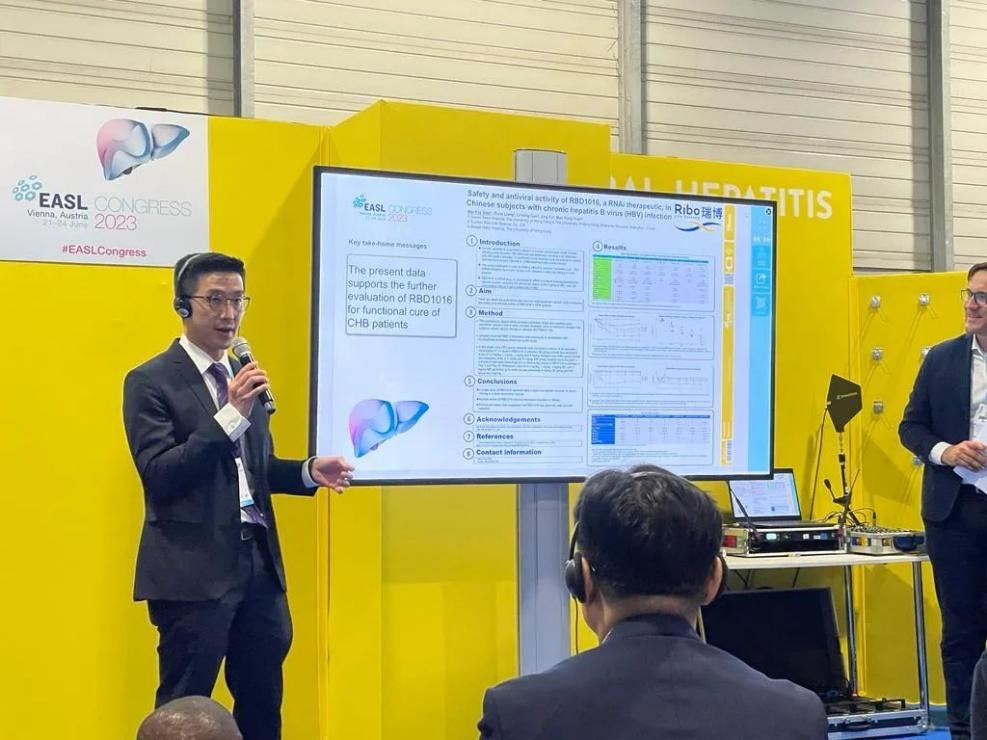
The 58th Annual Meeting of the European Association for the Study of the Liver (EASL2023) and the EASL Congress 2023 have come to a close. During this conference, Dr. Wai-Kay Seto and his research team from The University of Hong Kong Shenzhen Hospital/ The University of Hong Kong presented several studies. Hepatology Digest had the privilege of inviting Professor Wai-Kay Seto to introduce three of the significant studies: the impact of blood sugar control on reducing the risk of digestive tract tumors in diabetes patients [1], preliminary safety and antiviral activity analysis of the Chinese-developed siRNA new drug RBD1016 in the Chinese chronic hepatitis B population [2], and a new technique for portable assessment of fatty liver [3]. The details of these studies are as follows:
Dr. Wenshi Wang’s Team: Three Latest Research Findings on Hepatitis D and Hepatitis E Included in Conference Exchange

Dr. Wenshi Wang’s Team: Three Latest Research Findings on Hepatitis D and Hepatitis E Included in Conference Exchange

Hepatitis D (HDV) is a viral hepatitis caused by hepatitis D virus (HDV) infection, often occurring as a co-infection or superinfection with hepatitis B virus (HBV). Approximately 90% of chronic hepatitis B patients who become co-infected with HDV develop chronic hepatitis, increasing the risk of adverse outcomes such as liver failure, cirrhosis, and liver cancer. Due to the historical underestimation of HDV prevalence and disease burden, it has not received the attention it deserves. Hepatitis E virus (HEV) infection is a major cause of acute hepatitis globally, with no specific antiviral drugs available.
ESMO Expert Commentary | Roxadustat Non-inferior to Standard Treatment, Poised to Transform Clinical Practice in Chemotherapy-Induced Anemia

ESMO Expert Commentary | Roxadustat Non-inferior to Standard Treatment, Poised to Transform Clinical Practice in Chemotherapy-Induced Anemia

Platinum-based, taxane, anthracycline, and other chemotherapy drugs are commonly used in the treatment of various cancers such as breast and lung cancer. However, these chemotherapy agents, known marrow suppressors, can lead to chemotherapy-induced anemia (CIA), resulting in a decline in functional capacity and diminished quality of life for patients. This year's ESMO conference revealed the results of a Phase III clinical study on roxadustat in treating CIA in patients with non-myeloid malignancies, offering a more convenient treatment option for CIA patients. "Oncology Frontier" is honored to invite Professor Yongmei Yin from Jiangsu Provincial People's Hospital and Professor Jian Zhang from Fudan University Cancer Hospital to share insights into the current challenges in CIA treatment and the significance of this study for CIA patients.