SIBCS 2025丨Jun-jie Li: Riding China’s Wave of Innovation—Leveraging the SIBCS Platform to Drive Comprehensive Advances in Breast Cancer Care

SIBCS 2025丨Jun-jie Li: Riding China’s Wave of Innovation—Leveraging the SIBCS Platform to Drive Comprehensive Advances in Breast Cancer Care

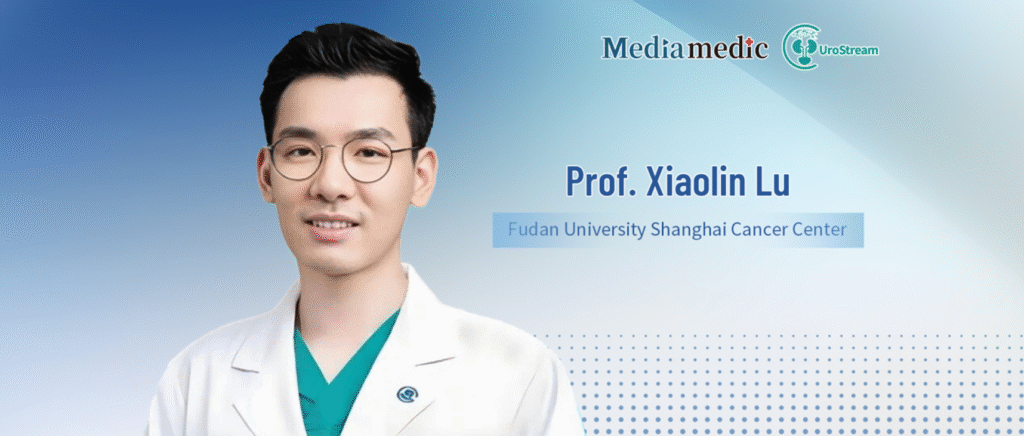
The 20th Shanghai International Breast Cancer Symposium (SIBCS), jointly hosted by the Shanghai Anti-Cancer Association and the Breast Cancer Committee of the China Anti-Cancer Association, was held from November 13–15, 2025 in Shanghai. During the meeting, Professor Jun-jie Li from Fudan University Shanghai Cancer Center delivered a keynote lecture entitled “Two Decades of Shared Progress: The Journey of China’s Original Innovation and the Rise of SIBCS.” Following the presentation, Oncology Frontier interviewed Professor Li to further discuss the latest advances of China’s original innovative drugs in breast cancer, and to explore how SIBCS enables cross-generational academic exchange and fosters synergistic development between Chinese innovations and the SIBCS platform.
ESMO China–International Dialogue | Meeting at the Summit: How China’s Innovative ADCs sac-TMT and A166 Are Reshaping the Breast Cancer Treatment Landscape 

ESMO China–International Dialogue | Meeting at the Summit: How China’s Innovative ADCs sac-TMT and A166 Are Reshaping the Breast Cancer Treatment Landscape 

 At the 2025 European Society for Medical Oncology (ESMO) Annual Congress, Chinese innovative drugs and clinical research drew global attention. During the meeting, Xichun Hu, Professor at Fudan University Shanghai Cancer Center, presented a Late-Breaking Abstract (LBA) detailing the pivotal phase III study in which China’s first original HER2-targeted antibody–drug conjugate (ADC), A166 (budotituzumab vedotin), successfully challenged T-DM1 in the second-line setting for HER2-positive breast cancer. Based on this study, A166 received approval from the National Medical Products Administration (NMPA) on October 17, 2025, bringing a new standard-of-care option to clinical practice. 
APASL 2025 Expert Interview | Prof. George Lau: Dilemmas and Breakthroughs in Clinical Cure of Chronic Hepatitis B and Liver Cancer Prevention

APASL 2025 Expert Interview | Prof. George Lau: Dilemmas and Breakthroughs in Clinical Cure of Chronic Hepatitis B and Liver Cancer Prevention

At the 34th Annual Meeting of the Asian Pacific Association for the Study of the Liver (APASL 2025), Professor George Lau, Chairman of Hong Kong Humanity Medical Group and Director of Humanity Medical Clinical Research Center, shared important insights on cuttingedge topics including clinical cure of chronic hepatitis B (CHB) and liver cancer prevention. With the WHO’s 2030 goal to eliminate CHB approaching, China’s CHB prevention and treatment efforts face new opportunities and challenges. In this exclusive interview, drawing on his extensive clinical experience, Professor Lau systematically outlines key breakthroughs and remaining dilemmas in the fields of CHB clinical cure and liver cancer prevention, offering valuable professional perspectives to advance China’s work in CHB and liver cancer control.
ILCA Roundtable | MDT: Optimizing HCC Treatment Strategies – Insights from the TALENT Series Studies

ILCA Roundtable | MDT: Optimizing HCC Treatment Strategies – Insights from the TALENT Series Studies

In recent years, advances in systemic therapy have offered hope for advanced liver cancer patients, but traditional single treatments remain limited, highlighting the need for new approaches. Combining systemic therapy with local treatments has become a key trend, with multidisciplinary team (MDT) collaboration now a global standard. Experts from surgery, interventional radiology, oncology, and more work together to design optimal, personalized treatment plans—from diagnosis and strategy development to timing of therapy and long-term follow-up.
Professor Alejandro Madrigal: The Path to Breakthrough for the Localization of CAR-T Cell Therapy in Latin America 

Professor Alejandro Madrigal: The Path to Breakthrough for the Localization of CAR-T Cell Therapy in Latin America 

In the global wave of medical innovation, emerging therapies such as CAR-T cell therapy have brought revolutionary hope for major diseases, including malignancies. However, their widespread adoption and application face significant regional imbalances, with low- and middle-income countries encountering numerous structural barriers in accessing these frontier technologies. From November 13 to 16, 2025, the 2025 International Conference on Cell and Immunotherapy (CTI 2025) was held in Hangzhou, Zhejiang. During the conference, Oncology Frontier - Hematology specially invited Professor Alejandro Madrigal from University College London (UCL) to discuss, from an international perspective and using Mexico as a case study, the core challenges Latin America faces in promoting equitable access to medical resources and introducing cutting-edge therapies.