Breaking Diagnostic Bottlenecks: The IBMDX Study Reveals 37% Diagnostic Yield and Health Economic Value of Whole Genome Sequencing (WGS) in Inherited Bone Marrow Failure Syndromes

Breaking Diagnostic Bottlenecks: The IBMDX Study Reveals 37% Diagnostic Yield and Health Economic Value of Whole Genome Sequencing (WGS) in Inherited Bone Marrow Failure Syndromes

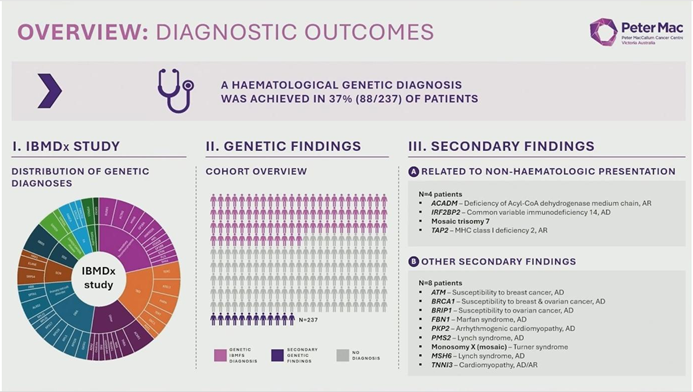
At the 2025 American Society of Hematology (ASH) Annual Meeting, Dr. Lucy Fox from the Peter MacCallum Cancer Centre (Australia) presented the highly anticipated results of the IBMDX study. This landmark trial evaluated the clinical utility and economic impact of "Upfront Whole Genome Sequencing (WGS)" in patients with suspected Inherited Bone Marrow Failure Syndromes (IBMFS). The findings suggest a paradigm shift is underway: WGS not only achieves a diagnostic yield of 37%—surpassing traditional panels and exome sequencing—but also uncovers complex genomic mechanisms previously invisible to standard testing.
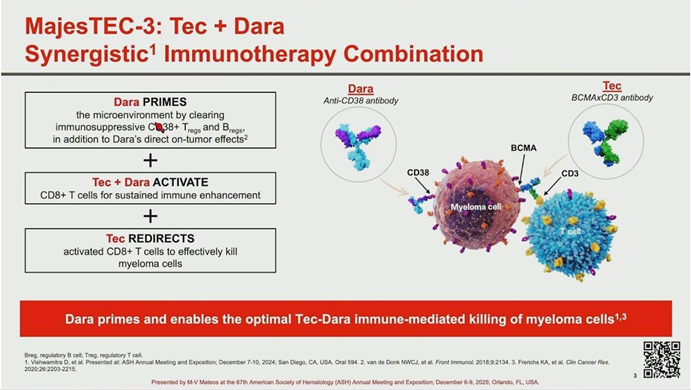
HR of 0.17! Tech-Dara: A Potent BCMA/CD38 Dual-Targeting Immunotherapy Combination Leads a New Paradigm in Second-Line MM Treatment—MAJEStec-3 Study Heavily Released

HR of 0.17! Tech-Dara: A Potent BCMA/CD38 Dual-Targeting Immunotherapy Combination Leads a New Paradigm in Second-Line MM Treatment—MAJEStec-3 Study Heavily Released

At the Late-Breaking Abstract (LBA) session of the 2025 American Society of Hematology (ASH) Annual Meeting, Dr. María-Victoria Mateos, representing the research team, unveiled the highly anticipated results of the MAJEStec-3 study. This marks the first reported Phase III clinical trial of a BCMA-targeted bispecific antibody. Comparing the combination of Teclistamab and Daratumumab ("Tech-Dara") against standard-of-care regimens (Dara-Pd or Dara-Vd) in patients with relapsed/refractory multiple myeloma (RRMM), the study delivered historic results. The Tech-Dara combination achieved a Hazard Ratio (HR) for progression-free survival of 0.17—the most profound efficacy signal reported to date for BCMA-targeted therapies—signaling a potential "functional cure" for patients with early relapse.
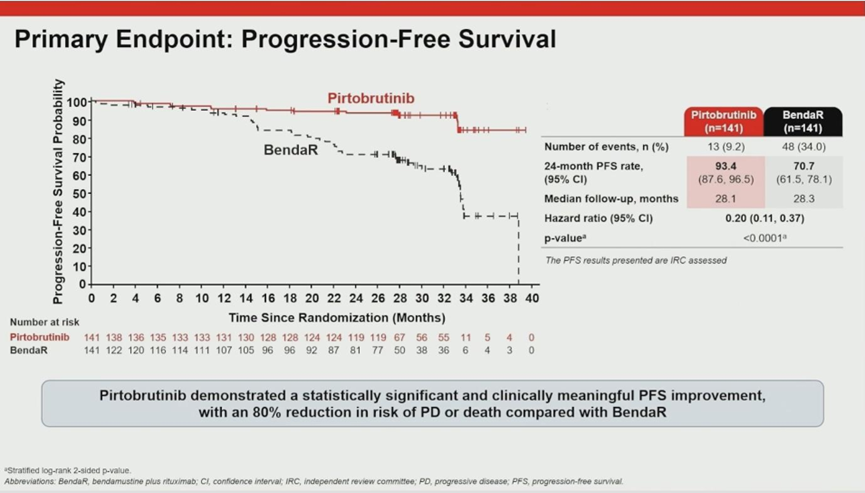
80% Reduction in Risk of Disease Progression or Death! Stunning Head-to-Head Phase III Data of Pirtobrutinib in First-Line CLL/SLL

80% Reduction in Risk of Disease Progression or Death! Stunning Head-to-Head Phase III Data of Pirtobrutinib in First-Line CLL/SLL

At the 2025 American Society of Hematology (ASH) Annual Meeting, Professor Wojciech Jurczak from the Maria Sklodowska-Curie National Research Institute of Oncology (Poland) presented the highly anticipated results of a global Phase III clinical trial. This study is the first head-to-head comparison evaluating the efficacy and safety of the non-covalent BTK inhibitor, pirtobrutinib, against the standard immunochemotherapy regimen of bendamustine plus rituximab (BR) in patients with treatment-naive chronic lymphocytic leukemia (CLL) and small lymphocytic lymphoma (SLL).
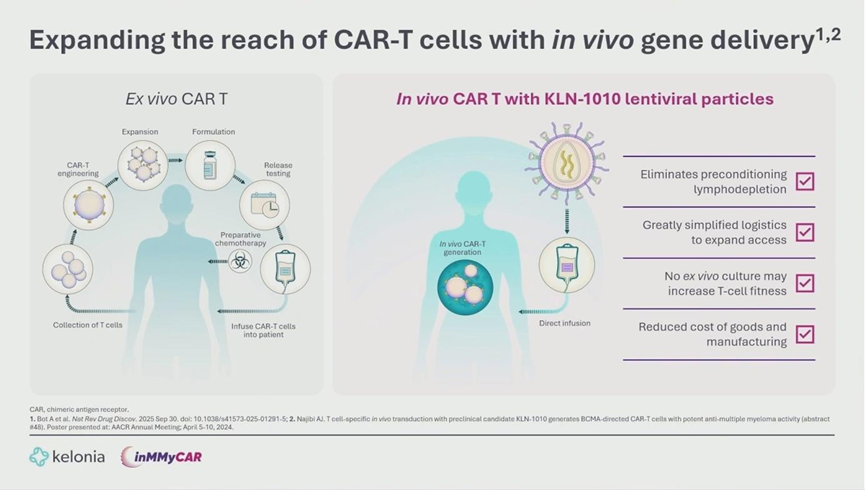
Breaking Ex Vivo Limitations: In Vivo Gene Delivery CAR-T Therapy (KLN-1010) Achieves 100% MRD Negativity in RRMM Patients Without Lymphodepletion

Breaking Ex Vivo Limitations: In Vivo Gene Delivery CAR-T Therapy (KLN-1010) Achieves 100% MRD Negativity in RRMM Patients Without Lymphodepletion

At the 67th American Society of Hematology (ASH) Annual Meeting in 2025, a groundbreaking Late-Breaking Abstract (LBA) presented by Professor Phoebe Joy Ho (Royal Prince Alfred Hospital, Australia) signaled a potential paradigm shift in the treatment of multiple myeloma. The preliminary results from the Phase 1 inMMyCAR study of KLN-1010—the first in vivo anti-BCMA CAR-T therapy—demonstrated that deep molecular responses can be achieved without the complex logistics of ex vivo manufacturing or the toxicities associated with lymphodepleting chemotherapy.
ASH Peak Dialogue | Professors Jing-Zhou Hou & Dehui Zou:Decoding Breakthroughs at the Frontiers of Lymphoma and Sharing New Sino-US Practices

ASH Peak Dialogue | Professors Jing-Zhou Hou & Dehui Zou:Decoding Breakthroughs at the Frontiers of Lymphoma and Sharing New Sino-US Practices

Lymphoma diagnosis and treatment are entering a phase of accelerated evolution, with breakthrough therapies and innovative research continuously reshaping clinical practice. From December 6 to 9, 2025, the 67th Annual Meeting of the American Society of Hematology (ASH) was grandly held in Orlando. At this year’s congress, multidimensional and in-depth innovations emerged across both aggressive lymphoma precision therapy and long-term disease management for indolent lymphomas.
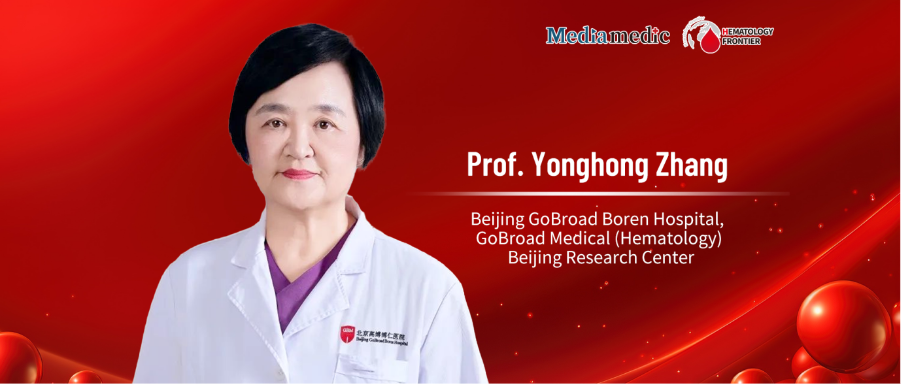
Professor Zhang Yonghong: Two Decades of Transformation in Precision Diagnosis and Treatment of Pediatric Lymphoma in China

Professor Zhang Yonghong: Two Decades of Transformation in Precision Diagnosis and Treatment of Pediatric Lymphoma in China

For many years, the treatment of pediatric lymphoma has been challenged by marked variability in therapeutic response and poor outcomes in relapsed or refractory cases. Under the leadership of Professor Zhang Yonghong, his team has driven the development of standardized and precision-based treatment strategies through long-term research and clinical innovation. In particular, they have achieved major breakthroughs in the management of relapsed and refractory pediatric lymphoma. By integrating molecular biology–based risk stratification and pioneering the application of CAR-T therapy, the team has significantly improved treatment outcomes, elevating the overall standard of pediatric lymphoma care in China. In this issue, Hematology Frontier invited Professor Zhang Yonghong to share insights into his team’s exploration and innovation in precision diagnosis and treatment of pediatric lymphoma, as well as his perspectives on future directions.
58.4-Month Follow-up Update: KEYNOTE-859 Asian Subgroup Solidifies Pembrolizumab Plus Chemotherapy as First-Line Standard for Gastric Cancer

58.4-Month Follow-up Update: KEYNOTE-859 Asian Subgroup Solidifies Pembrolizumab Plus Chemotherapy as First-Line Standard for Gastric Cancer

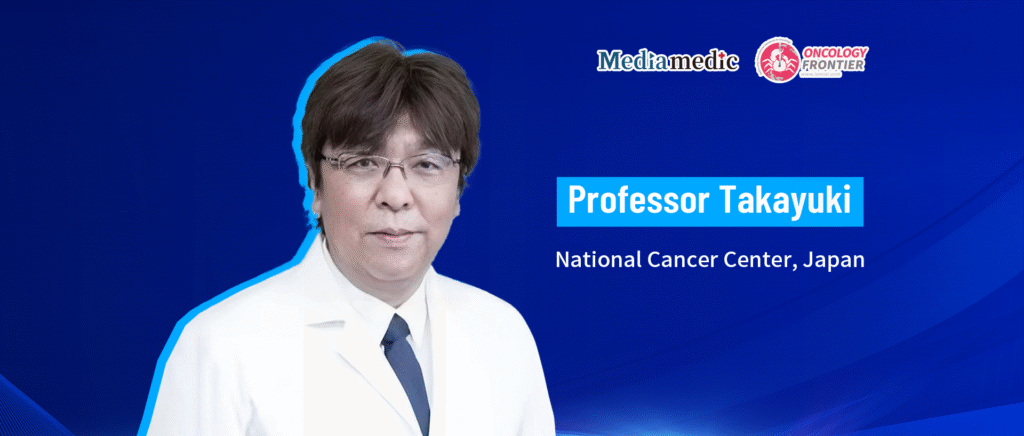
At the recent ESMO-ASIA Congress, Professor Takayuki delivered an in-depth interpretation of the latest follow-up data from the Asian subgroup of the KEYNOTE-859 study. The presentation explored the long-term clinical value of pembrolizumab plus chemotherapy as a first-line treatment for Asian patients with advanced gastric or gastroesophageal junction (G/GEJ) adenocarcinoma, providing a comprehensive look at the regimen's durable efficacy over a 5-year timeframe.