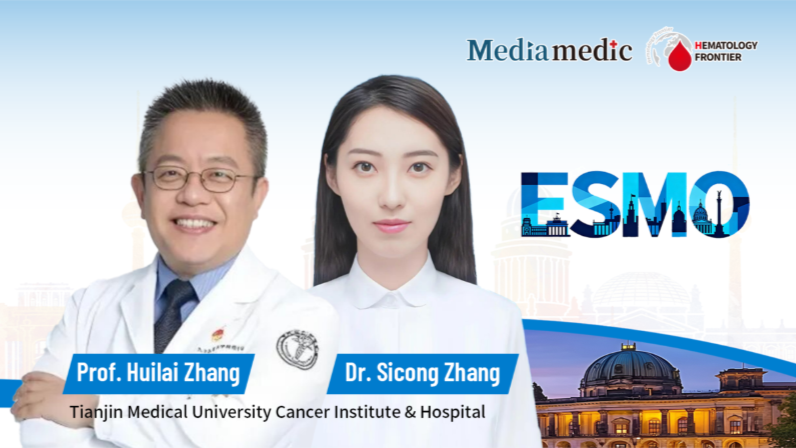
ESMO China Voice | Dr. Sicong Zhang: Refractory DLBCL Patients Share Similar Immune Signatures

ESMO China Voice | Dr. Sicong Zhang: Refractory DLBCL Patients Share Similar Immune Signatures
The European Society for Medical Oncology (ESMO) Congress 2025 was grandly held in Berlin, marking another wave of scientific innovation across the field of oncology.In hematology, several exciting advances drew attention—from uncovering the mechanisms of CAR-T resistance and exploring dual-target immunotherapies, to studies on precision treatment discontinuation in multiple myeloma and single-cell immune atlas mapping that deepens our understanding of hematologic malignancies. Together, these studies highlight continuous innovation in medical science and bring new hope for improving diagnosis and treatment in hematologic diseases.To further focus on major breakthroughs in hematology and foster academic exchange, Oncology Frontier – Hematology News invited Dr. Sicong Zhang, from Professor Huilai Zhang’s research group at Tianjin Medical University Cancer Institute and Hospital, to discuss the innovation and clinical significance of a new study presented at ESMO 2025, as well as to share his insights into future trends in the field.
ESMO China Voice | Prof. Liang Wang: CD19/CD22 Bispecific CAR-T Therapy Demonstrates Remarkable Efficacy and Safety in R/R LBCL

ESMO China Voice | Prof. Liang Wang: CD19/CD22 Bispecific CAR-T Therapy Demonstrates Remarkable Efficacy and Safety in R/R LBCL

In hematology, this year’s highlights encompassed several cutting-edge research directions—from unraveling the mechanisms of CAR-T resistance and exploring dual-target immunotherapies that may enhance precision and efficacy, to studies on treatment-free remission in multiple myeloma, and the creation of single-cell immune atlases offering novel insights into hematologic disease mechanisms. These achievements collectively reflect the continued progress and innovation in biomedical science and bring new hope for patients with hematologic malignancies.
Professor Li Jin: Asian Clinical Oncology Experts Converge at FACO Conference to Jointly Promote Regional Collaboration and Advance the Level of Diagnosis and Treatment for Common Asian Cancers 

Professor Li Jin: Asian Clinical Oncology Experts Converge at FACO Conference to Jointly Promote Regional Collaboration and Advance the Level of Diagnosis and Treatment for Common Asian Cancers 

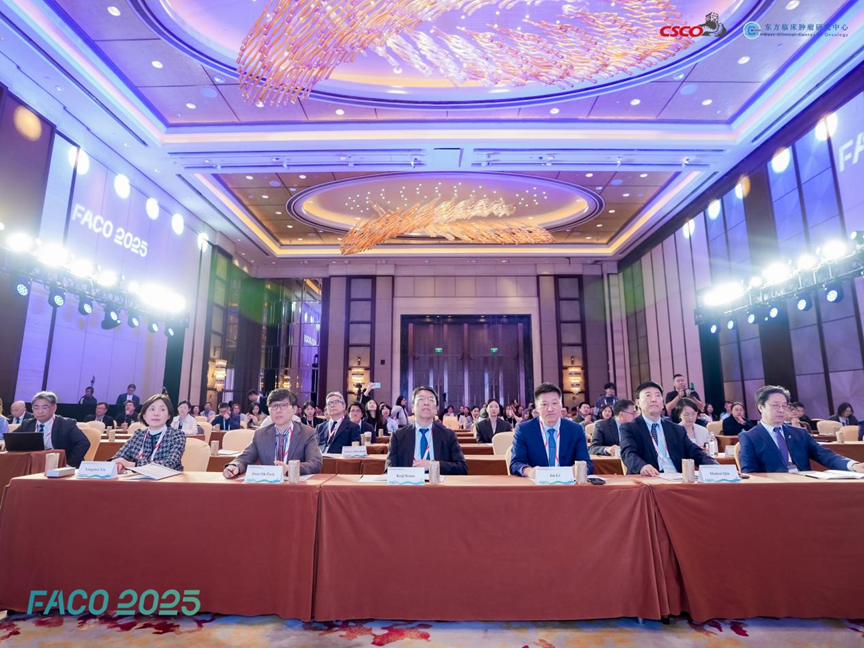
The 13th International Conference of the Federation of Asian Clinical Oncology (FACO 2025) will be grandly held in Shanghai from October 24 to 25, 2025. The conference is jointly organized by the Federation of Asian Clinical Oncology (FACO), the Chinese Society of Clinical Oncology (CSCO), the Beijing CSCO Clinical Oncology Research Foundation, and the Eastern Clinical Oncology Research Center (ECCO). The theme is "Asian Clinical Oncology – Cooperation and Innovation," aiming to promote collaboration in drug research and new drug development, combine surgical and/or radiotherapy methods to jointly explore more efficient treatment options, and enhance the overall standards and effectiveness of cancer treatment.
The 11th Qingdao Breast Disease Conference | Professor Jian Yin: Optimizing the Management of Complications in Implant-Based Breast Reconstruction

The 11th Qingdao Breast Disease Conference | Professor Jian Yin: Optimizing the Management of Complications in Implant-Based Breast Reconstruction

The 11th Qingdao Breast Disease Conference and the 9th “Langya Forum” were recently held in the beautiful coastal city of Qingdao. The event brought together leading experts and emerging talents in breast oncology from across China and beyond to share cutting-edge research, discuss innovative diagnostic and therapeutic strategies, and chart the future of breast disease management.
Oriental Insight | Professor Juliang Zhang: Insights into Adjuvant Intensified Therapy for HR+/HER2- Breast Cancer

Oriental Insight | Professor Juliang Zhang: Insights into Adjuvant Intensified Therapy for HR+/HER2- Breast Cancer

Hormone receptor–positive, HER2-negative (HR+/HER2−) breast cancer is the most common molecular subtype of breast cancer. Although patients with this subtype generally have a favorable prognosis, its high heterogeneity means that some individuals remain at risk of disease recurrence.In recent years, adjuvant treatment strategies have been continuously refined — evolving from standard endocrine therapy to the incorporation of CDK4/6 inhibitors — significantly improving patient outcomes.In this edition of Oncology Frontier, Professor Juliang Zhang from the Department of Breast, Thyroid, and Vascular Surgery, Xijing Hospital, Air Force Medical University, shares his insights on adjuvant intensified therapy for HR+/HER2− breast cancer.