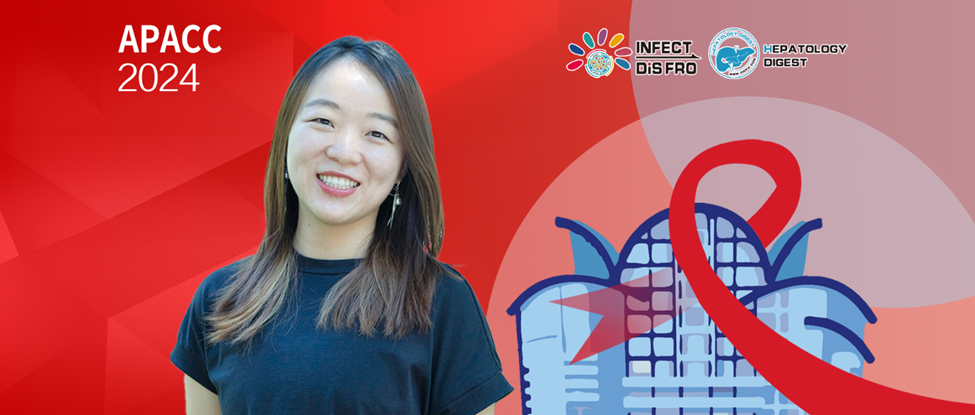
APACC On-site Report | Dr. Ye Zhang: “Pay it Forward” – A New Strategy to Increase STD Testing Rates

APACC On-site Report | Dr. Ye Zhang: “Pay it Forward” – A New Strategy to Increase STD Testing Rates

In the era of 5G, the consumption and entertainment habits of sexually active young people have changed significantly, including activities such as drinking coffee, shopping, watching movies, and taking selfies. It is essential to continuously explore and improve strategies for testing and preventing sexually transmitted diseases (STDs) that are tailored to the times and local conditions. At the recent 9th Asia Pacific AIDS & Co-infections Conference (APACC 2024), Dr. Ye Zhang from the Kirby Institute at the University of New South Wales, Australia, presented "Innovations in Implementation Strategies of Delivery Models," introducing the "Pay it Forward" strategy and sharing more insights in an interview with Infectious Diseases Frontier.
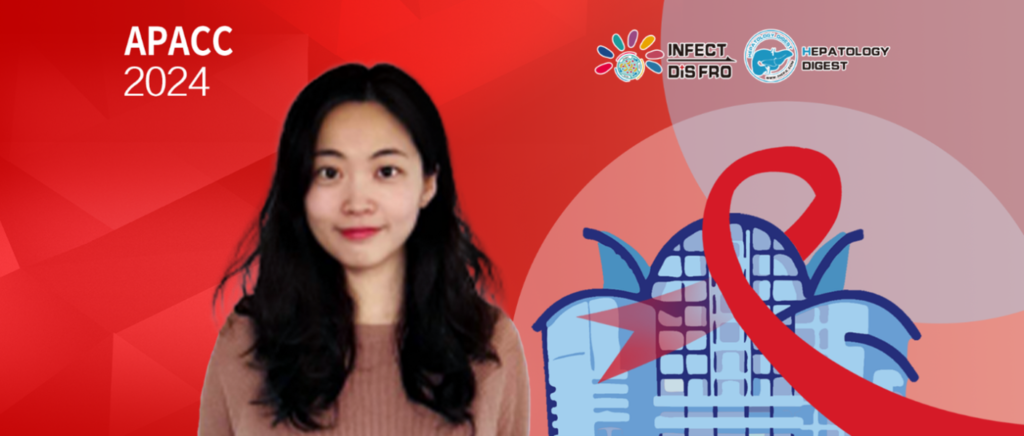
Dr. Brigitte Quenum: Breaking the “isolated island” model and integrating resources to address HIV prevention and control challenges in Asia and the Pacific

Dr. Brigitte Quenum: Breaking the “isolated island” model and integrating resources to address HIV prevention and control challenges in Asia and the Pacific

Recently, at the 9th Asia-Pacific AIDS& Co- Infections Conference 2024 (APACC 2024), Dr. Brigitte Quenum, UNAIDS Regional Office for Asia and the Pacific, delivered a speech entitled "Challenges & Success in the Region" and in an interview with Infectious Disease Frontier,she introduced the challenges and solutions of HIV/AIDS prevention and treatment in the Asia- Pacific region, with particular emphasis on breaking the "isolated island" model of government or community fighting alone and achieving the integration of multiple resources.
APACC Live Report: Dr. Rongqiu Liu from Professor Hua You’s Team Shares Research Findings and Management Strategies for HIV-Associated Malignancies

APACC Live Report: Dr. Rongqiu Liu from Professor Hua You’s Team Shares Research Findings and Management Strategies for HIV-Associated Malignancies

For HIV patients, encountering malignancies is akin to a double blow, exacerbating their already challenging condition. HIV-infected individuals commonly face opportunistic diseases such as diffuse large B-cell lymphoma (DLBCL) and Burkitt lymphoma (BL). Enhancing early diagnosis and treatment of HIV-associated tumors and refining clinical management strategies are critical areas for clinical and research exploration. At the recent 9th Asia Pacific AIDS and Co-infections Conference (APACC 2024), Dr. Rongqiu Liu from Professor Hua You’s team at Children's Hospital of Chongqing Medical University presented two studies on risk prediction models for HIV-associated lymphomas and received conference funding support. "Infectious Diseases Frontier" interviewed Dr. Liu on-site to discuss her team’s research findings and management strategies for patients with HIV-associated malignancies.
Optimizing Antibiotic Dosage in Obese and Underweight Patients: Insights from Professor Wenxiang Huang ‘s Presentation at ESCMID Global 2024

Optimizing Antibiotic Dosage in Obese and Underweight Patients: Insights from Professor Wenxiang Huang ‘s Presentation at ESCMID Global 2024

From April 27th to 30th, 2024, the 34th European Congress of Clinical Microbiology and Infectious Diseases (ESCMID Global 2024) took place in Barcelona, Spain, known as the "Pearl of the Iberian Peninsula." ESCMID Global, formerly known as ECCMID, stands as one of the most influential international conferences in the field of infectious diseases. Often, clinical trials of antibiotics exclude special populations such as obese or underweight individuals, resulting in limited evidence for their treatment strategies. At this conference, several studies and advancements regarding antibiotic management and prescription, including interventions, monitoring, influences, decision support/predictive tools, and behavioral aspects, were reported. Below is a summary of the insights shared by Professor Wenxiang Huang  from the Department of Geriatrics at The First Affiliated Hospital of Chongqing Medical University.
Professor Hongfei Duan:Advances in Diagnosis and Treatment of Mycobacterium avium Complex (MAC) Pulmonary Disease

Professor Hongfei Duan:Advances in Diagnosis and Treatment of Mycobacterium avium Complex (MAC) Pulmonary Disease

Non-tuberculous mycobacteria (NTM) refers to all mycobacteria other than Mycobacterium tuberculosis and Mycobacterium leprae. NTM most commonly affect the lungs, causing NTM pulmonary disease (NTM-PD), which can even lead to disseminated disease in immunocompromised individuals. In recent years, with changes in the environment, updates in detection technology, and increased awareness among physicians, the incidence of NTM-PD has been steadily increasing, with Mycobacterium avium complex (MAC) pulmonary disease being the most common worldwide. At the recent Fourth National Conference of the Chinese Medical Association on Bacterial and Fungal Infections (BISC 2024), Professor Hongfei Duan from the Department of Tuberculosis, Beijing Chest Hospital, Capital Medical University, delivered a fascinating presentation titled "Advances in Diagnosis and Treatment of Mycobacterium avium Complex Pulmonary Disease," elucidating and analyzing the current status, challenges, and progress in the diagnosis and treatment of MAC pulmonary disease.
Chinese CAR-T Cell Therapy Phase 1 Study Shows Promise for HIV Functional Cure

Chinese CAR-T Cell Therapy Phase 1 Study Shows Promise for HIV Functional Cure

In a pioneering clinical trial, a novel multifunctional CAR-T cell treatment has demonstrated remarkable efficacy and safety in HIV-1 infected patients, potentially paving the way for a functional cure for HIV/AIDS. Published in Cell Discovery, the phase I study introduced M10 CAR-T cells, engineered to incorporate endogenous broadly neutralizing antibodies (bNAbs) and the follicle-homing receptor CXCR5.
WHO Reports on Rising HIV Drug Resistance Amid Integrase Inhibitor Use

WHO Reports on Rising HIV Drug Resistance Amid Integrase Inhibitor Use

The World Health Organization (WHO) has released a concise report highlighting a concerning trend in HIV drug resistance (HIVDR) in the integrase strand transfer inhibitors (INSTI) era. The report notes the high efficacy of dolutegravir (DTG)-based antiretroviral therapy (ART) in suppressing viral loads, exceeding 90%. However, it warns that HIVDR to DTG is emerging at higher rates than clinical trials predicted, with resistance levels ranging from 3.9% to 19.6% among surveyed populations.