Pre-TIPS Assessment of Liver-Related Vascular Morphology Can Predict Overt Hepatic Encephalopathy

Pre-TIPS Assessment of Liver-Related Vascular Morphology Can Predict Overt Hepatic Encephalopathy

Portal hypertension can lead to complications such as variceal bleeding and ascites. Transjugular intrahepatic portosystemic shunt (TIPS) creates an artificial channel between the hepatic vein and portal vein to reduce portal pressure. TIPS is the only minimally invasive method that can reduce or even normalize portal pressure and is effective in controlling variceal bleeding and refractory ascites. However, American, Chinese, and European guidelines recommend endoscopic treatment, non-selective beta-blockers, and paracentesis as the first-line treatments for variceal bleeding and ascites related to portal hypertension, with TIPS recommended as an alternative treatment. One of the main reasons is that TIPS can induce overt hepatic encephalopathy (HE), with an incidence rate of 10% to 50%, negatively affecting patients' quality of life and increasing mortality. Even with multiple treatments, the recurrence rate of HE remains high. These factors make predicting the risk of overt HE crucial for determining patient eligibility for TIPS. Recently, a study by Dr. Ligong Lu from Zhuhai People's Hospital, published in Hepatology International, explored the feasibility of using liver vascular assessments to predict HE, providing evidence to support the selection of suitable patients for TIPS treatment.
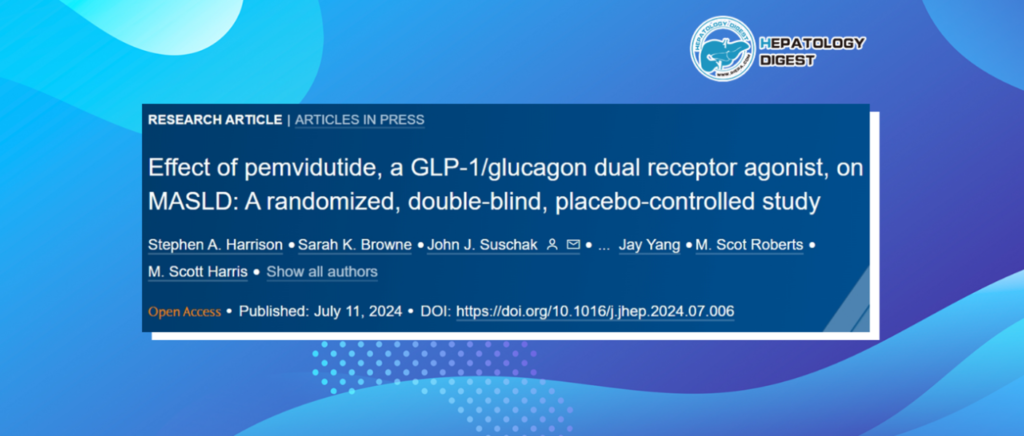
JOH丨GLP-1R/GCGR Dual Agonist Offers New Approach for Treating MASLD

JOH丨GLP-1R/GCGR Dual Agonist Offers New Approach for Treating MASLD

It is estimated that 25% of adults worldwide are affected by metabolic dysfunction-associated steatotic liver disease (MASLD). MASLD is characterized by at least 5% liver fat content in individuals who do not consume alcohol or consume very little. MASLD represents the liver manifestation of metabolic syndrome and is closely associated with obesity, insulin resistance, and type 2 diabetes (T2DM). About 20% to 30% of MASLD patients progress to metabolic dysfunction-associated steatohepatitis (MASH), characterized by steatosis, inflammation, and hepatocellular ballooning, with or without fibrosis. It is estimated that 20% of MASH patients will further develop end-stage liver disease. A weight loss of 3% to 5% can improve MASLD, while a weight loss of ≥10% is associated with MASH regression and fibrosis regression, indicating the critical role of obesity in the progression of these diseases. Recently, a study published in the Journal of Hepatology suggests that a GLP-1R/GCGR dual agonist may provide an effective treatment for MASLD and obesity.
N-Glycan Markers for Non-Invasive Diagnosis of Liver Fibrosis

N-Glycan Markers for Non-Invasive Diagnosis of Liver Fibrosis

As of 2022, there are 257.5 million people worldwide who are HBsAg positive. Decompensated cirrhosis and hepatocellular carcinoma (HCC) are the leading causes of death among chronic HBV patients. Liver biopsy is the "gold standard" for diagnosing fibrosis stages, but its invasive nature makes many patients reluctant to undergo the procedure. Recently, a study published in Hepatology International explored the value of serum N-glycan markers in diagnosing liver fibrosis.
Does Post-TIPS Hepatic Encephalopathy Increase Mortality in Cirrhotic Patients?

Does Post-TIPS Hepatic Encephalopathy Increase Mortality in Cirrhotic Patients?

Recently, a study by Italian scholar Dr. Silvia Nardelli, published in the Journal of Hepatology, found that even if cirrhotic patients develop overt hepatic encephalopathy (OHE) after undergoing transjugular intrahepatic portosystemic shunt (TIPS) surgery, their mortality rate does not significantly increase. This conclusion challenges previous perceptions of the negative impact of OHE in non-TIPS contexts, offering new hope and management strategies for cirrhotic patients.
New Staging of Hepatocellular Carcinoma Using Radiomics Published in eClinical Medicine by Liver Disease Center of Nanfang Hospital

New Staging of Hepatocellular Carcinoma Using Radiomics Published in eClinical Medicine by Liver Disease Center of Nanfang Hospital

Hepatocellular carcinoma (HCC) is the third leading cause of cancer-related deaths worldwide. Early detection, diagnosis, and intervention can significantly reduce mortality rates. HCC development is driven by a series of complex processes, often starting from hepatitis and cirrhosis. During this progression, subtle changes in cellular gene expression, major shifts in molecular signaling pathways, and significant changes in tissue structure and organ function collectively accelerate HCC formation and progression, leading to changes in liver imaging. Researchers have used radiomics and deep learning technologies to timely and accurately identify and intervene in the formation stage of HCC, named the Transition Stage, potentially revolutionizing early prevention and intervention strategies for HCC.
Hepatology | Long-term Prognosis and HCC Risk Stratification in Compensated Advanced Chronic Liver Disease Post-HCV Clearance

Hepatology | Long-term Prognosis and HCC Risk Stratification in Compensated Advanced Chronic Liver Disease Post-HCV Clearance

Chronic hepatitis C virus (HCV) infection is a major cause of cirrhosis and hepatocellular carcinoma (HCC). In recent years, the treatment of HCV infection has undergone revolutionary changes, transforming chronic HCV infection into a curable disease. Although direct-acting antiviral (DAA) therapy can effectively clear HCV, improve liver fibrosis, and reduce the risk of HCC, certain factors such as age, liver fibrosis, metabolic diseases, genetic factors, and treatment regimens still put some patients at high risk for HCC even after HCV clearance. A recent study on the long-term prognosis of patients with advanced chronic liver disease post-HCV cure reveals that these patients continue to face risks of hepatic decompensation and HCC. This finding is crucial for developing long-term management strategies for cured HCV patients.
Dr. Jia Fan, Dr. Jian Zhou, and Dr. Xinrong Yang’s Team: ctDNA Detection for Postoperative Minimal Residual Disease in Liver Cancer

Dr. Jia Fan, Dr. Jian Zhou, and Dr. Xinrong Yang’s Team: ctDNA Detection for Postoperative Minimal Residual Disease in Liver Cancer

Liver cancer is a highly prevalent and poorly prognosed malignancy, with a postoperative recurrence rate as high as 60%-70%. Postoperative minimal residual disease (MRD) is the main culprit behind cancer recurrence and metastasis, but currently, methods to detect MRD in liver cancer are very limited. At the 2024 American Society of Clinical Oncology (ASCO) Annual Meeting, a prospective study reported by Dr. Jia Fan, Dr. Jian Zhou, and Dr. Xinrong Yang’s team from Zhongshan Hospital affiliated with Fudan University shows that circulating tumor DNA (ctDNA) can serve as an ideal marker for detecting postoperative MRD in liver cancer, effectively warning of recurrence and metastasis. Furthermore, ctDNA monitoring of MRD can guide postoperative adjuvant therapy decisions and monitor the efficacy of drug treatments, thereby aiding in the precise management of liver cancer throughout the postoperative period and significantly improving patient prognosis.
CDL·Issue 18

CDL·Issue 18

Diabetes and liver disease are common chronic diseases in China. They interact with each other in terms of pathogenesis, clinical manifestations, and therapeutic targets, often serving as mutual risk factors. Effective co-management can help reduce the disease burden. To support the development of diabetes and liver disease co-management in China, this journal, in collaboration with the China Diabetes and Liver Disease Co-Management Initiative (CDL), presents the CDL Literature Monthly Review. Each month, we share relevant literature on the mechanisms of disease, diagnostic and therapeutic advancements concerning diabetes combined with liver disease, and invite experts in the field to provide commentary. We hope this review offers valuable insights and assistance to researchers, clinical practitioners, and front-line medical workers engaged in scientific research and clinical treatment.
Chinese guidelines on the management of ascites in cirrhosis

Chinese guidelines on the management of ascites in cirrhosis

In 2023, the Chinese Society of Hepatology of the Chinese Medical Association updated the 2017 guidelines on managing ascites and associated complications in cirrhosis. These revised guidelines, now termed "Guidelines on the Management of Ascites in Cirrhosis," provide comprehensive recommendations for the diagnosis and treatment of cirrhotic ascites, spontaneous bacterial peritonitis (SBP), and hepatorenal syndrome (HRS). This article summarizes these guidelines, emphasizing the importance of evidence-based practices and individualized patient care.
Professor Yutao Zhan: Monitoring and Prevention of NAFLD-Related Liver Cancer

Professor Yutao Zhan: Monitoring and Prevention of NAFLD-Related Liver Cancer

In recent years, the burden of non-alcoholic fatty liver disease (NAFLD) and liver cancer has become increasingly heavy, with a growing incidence of NAFLD-related hepatocellular carcinoma (HCC). Recently, Professor Yutao Zhan from Beijing Tongren Hospital delivered a fascinating presentation titled "Advances in Research on NAFLD-Related Liver Cancer." The presentation comprehensively analyzed the prevention and control strategies for NAFLD-related liver cancer from the perspectives of risk factors, monitoring, and prevention. Here, we summarize the key points from Professor Zhan's report.