ISTH Academician’s Voices | Academician Heyu Ni: Leading Thrombosis Research and Uniting Global Chinese Scientists in Advancing International Research

ISTH Academician’s Voices | Academician Heyu Ni: Leading Thrombosis Research and Uniting Global Chinese Scientists in Advancing International Research

The 32nd International Society on Thrombosis and Haemostasis (ISTH 2024) Congress was held in Bangkok, Thailand, from June 22 to June 26, 2024. As the most influential event in the field of thrombosis and hemostasis, the ISTH Congress attracts thousands of top experts and scholars from around the world with its profound academic impact and rich content. During this prestigious event, Oncology Frontier-Hematology Frontier had the honor of interviewing Academician Heyu Ni from the Canadian Academy of Health Sciences, who also served as the Chair of the Joint ISTH Congress and Global Chinese Thrombosis and Hemostasis Conference. In this interview, Academician Ni shared his extensive academic experience and unique insights, providing us with valuable academic reflections and perspectives. We have organized this interview into an article for our readers.
ISTH China’s Voice | Professor Xuefeng Wang’s Team: Single-cell sequencing of PBMCs from hemophilia A and hemophilia B patients with inhibitors reveals different immune responses to FVIII and FIX after replacement therapy

ISTH China’s Voice | Professor Xuefeng Wang’s Team: Single-cell sequencing of PBMCs from hemophilia A and hemophilia B patients with inhibitors reveals different immune responses to FVIII and FIX after replacement therapy

The 32nd International Society on Thrombosis and Haemostasis (ISTH 2024) Congress was held in Bangkok, Thailand, from June 22 to June 26, 2024. As the most influential event in the field of thrombosis and hemostasis, the ISTH Congress attracts thousands of top experts and scholars worldwide with its profound academic impact and rich content. The "ISTH China's Voices" column of Oncology Frontier-Hematology Frontier aims to showcase outstanding research achievements from the Chinese academic community at ISTH. In this issue, we present a research finding from Dr. Enhao Li of Professor Xuefeng Wang's team at Ruijin Hospital, Shanghai Jiaotong University School of Medicine. Dr. Li's oral presentation at ISTH delved into the differential immune responses to FVIII and FIX in hemophilia A (HA) and hemophilia B (HB) patients, providing valuable academic insights for the hematology field.
ISTH Academician’s Voices | Academician Heyu Ni: Leading Thrombosis Research and Uniting Global Chinese Scientists in Advancing International Research

ISTH Academician’s Voices | Academician Heyu Ni: Leading Thrombosis Research and Uniting Global Chinese Scientists in Advancing International Research

The 32nd International Society on Thrombosis and Haemostasis (ISTH 2024) Congress was held in Bangkok, Thailand, from June 22 to June 26, 2024. As the most influential event in the field of thrombosis and hemostasis, the ISTH Congress attracts thousands of top experts and scholars from around the world with its profound academic impact and rich content. During this prestigious event, Oncology Frontier-Hematology Frontier had the honor of interviewing Academician Heyu Ni from the Canadian Academy of Health Sciences, who also served as the Chair of the Joint ISTH Congress and Global Chinese Thrombosis and Hemostasis Conference. In this interview, Academician Ni shared his extensive academic experience and unique insights, providing us with valuable academic reflections and perspectives. We have organized this interview into an article for our readers.
Xinghai Forum: Professors Pengfei Qiu and Hao Wang Share Research Progress on ctDNA Monitoring in Breast Cancer

Xinghai Forum: Professors Pengfei Qiu and Hao Wang Share Research Progress on ctDNA Monitoring in Breast Cancer

Circulating tumor DNA (ctDNA) testing allows for continuous dynamic monitoring of tumor genetic variations without relying on tissue samples. This liquid biopsy technology has been widely used in clinical breast cancer research for prognosis and treatment evaluation, but there are still no standards for ctDNA testing, including population selection, testing frequency, and testing methods. At the recent 5th Comprehensive Cancer Treatment Academic Conference of the Dalian Xinghai Medical Forum, Oncology Frontier invited Professor Pengfei Qiu from Shandong Cancer Hospital, and Professor Hao Wang fro
EHA International Perspective | Professor John Gribben Awarded the José Carreras Prize, Shares Key Factors Advancing Hematology

EHA International Perspective | Professor John Gribben Awarded the José Carreras Prize, Shares Key Factors Advancing Hematology

At the recently held 29th Annual Congress of the European Hematology Association (EHA), Professor John Gribben, former chairman of EHA and head of the Hematological Center at Barts Cancer Institute, Queen Mary University of London, was awarded the José Carreras Prize for his outstanding contributions in the field of immunology research. "Oncology Frontier-Hematology Frontier" specially invited Professor John Gribben to share his research findings and his feelings about the award. In addition, Professor John Gribben also discussed the significance of patient-centered treatment in the field of hematology and emphasized the importance of global cooperation and inclusive clinical trials to advance the field and provide the best care for patients worldwide.
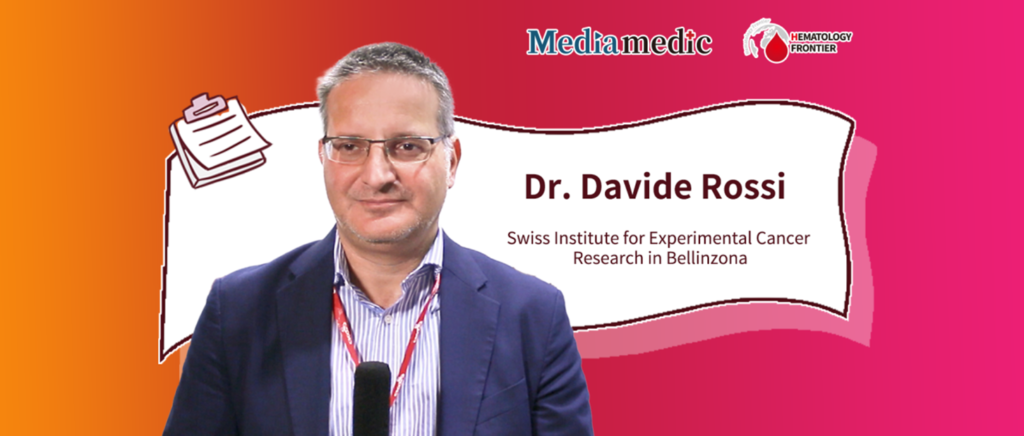
EHA International Perspective | Professor Jean-Pierre Bourquin: Advances in Drug Resistance Research for Acute Lymphoblastic Leukemia (ALL)

EHA International Perspective | Professor Jean-Pierre Bourquin: Advances in Drug Resistance Research for Acute Lymphoblastic Leukemia (ALL)

Acute Lymphoblastic Leukemia (ALL), as an aggressive form of blood cancer, poses a serious threat to patients' lives. Despite significant progress in treatment in recent years, drug resistance remains a major obstacle to improving patient survival rates and quality of life. At the recently held 29th Annual Congress of the European Hematology Association (EHA 2024), the research findings of Professor Jean-Pierre Bourquin from the Universitätsspital Zürich, Zürich, Switzerland , were particularly significant. The research has not only made important contributions to understanding the complex biological mechanisms of ALL but also achieved breakthrough progress in the study of drug resistance. "Oncology Frontier - Hematology Frontier" specially invited Professor Bourquin to share the core theme of precision hematology and his key findings in the research of ALL drug resistance at the venue.
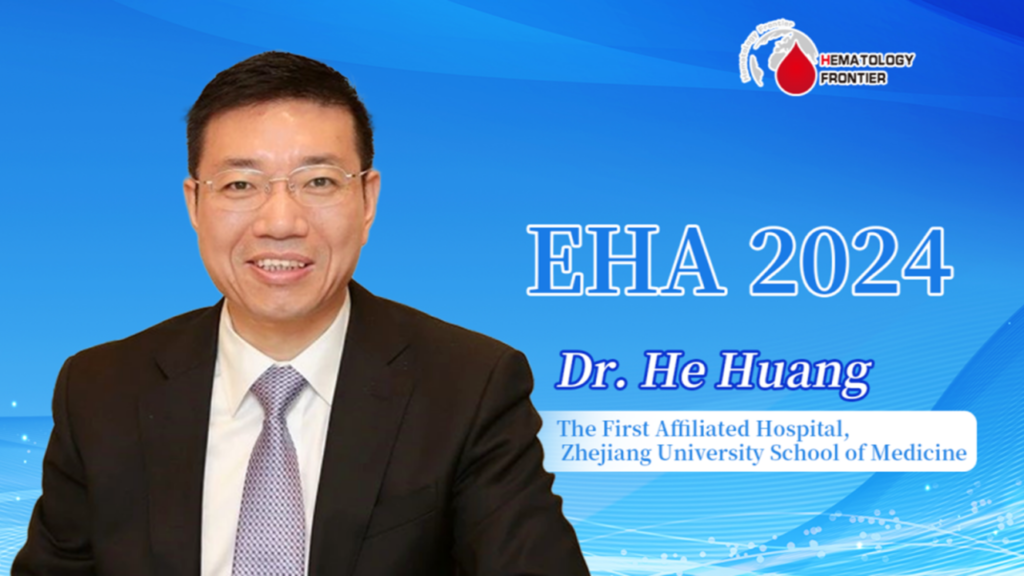
EHA 2024 | Conference Chairman Professor Antonio Almeida: Join Hands to Create the Future of Hematology Together

EHA 2024 | Conference Chairman Professor Antonio Almeida: Join Hands to Create the Future of Hematology Together

The 29th Annual Congress of the European Hematology Association (EHA) was held in Madrid, Spain, from June 13 to 16, 2024. This conference is the largest international event in the field of European hematology, attracting numerous internationally renowned experts and scholars every year to share and discuss innovative ideas, the latest scientific research, and clinical research results in the field of hematology. At this conference, "Oncology Frontier - Hematology Frontier" specially invited Professor Antonio Almeida, the Chairman of the EHA Conference and the founding dean of the Hospital da Luz and Católica Medical School in Lisbon, Portugal, Lisbon, Portugal, to discuss the main highlights and important progress of the conference, covering a range of topics including breakthrough research, international cooperation, and the future challenges in the field of hematology.
Exosome miRNAs Profiling in Serum and Prognostic Evaluation in Patients with Multiple Myeloma

Exosome miRNAs Profiling in Serum and Prognostic Evaluation in Patients with Multiple Myeloma

In the rapidly advancing fields of hematology and oncology, understanding the intricate mechanisms of diseases like multiple myeloma (MM) is crucial for developing innovative treatment strategies. One such area of significant interest is the role of exosomal microRNAs (exo-miRNAs) in the tumor microenvironment and their potential as biomarkers for disease prognosis. The recent study led by Professor Lugui Qiu from the Institute of Hematology & Blood Diseases Hospital, Chinese Academy of Medical Sciences & Peking Union Medical College, alongside their esteemed colleagues, offers groundbreaking insights into this domain.
Heterogeneity analysis of the CEBPAdm AML based on bZIP region mutations

Heterogeneity analysis of the CEBPAdm AML based on bZIP region mutations

In the evolving landscape of hematology, a recent study led by Professor Jianxiang Wang from the Institute of Hematology & Blood Diseases Hospital, Chinese Academy of Medical Sciences & Peking Union Medical College, investigated the heterogeneity of double-mutated CEBPA (CEBPAdm) acute myeloid leukemia (AML). Analyzing 2211 newly diagnosed AML patients, the study found that 10.8% had CEBPAdm, with 94.14% exhibiting bZIP region mutations (CEBPAdmbZIP) and 5.86% without (CEBPAdmnonbZIP). The research revealed significant differences in GATA2 mutation incidence (30.29% in CEBPAdmbZIP vs. 0% in CEBPAdmnonbZIP) and shorter overall survival for patients with CEBPAdmnonbZIP. These findings highlight the necessity of considering CEBPAdm with and without bZIP mutations as distinct entities, guiding more precise treatment approaches.
Immune Checkpoint Expression Patterns on T Cell Subsets in Light-Chain Amyloidosis: VISTA, PD-1, and TIGIT as Potential Therapeutic Targets

Immune Checkpoint Expression Patterns on T Cell Subsets in Light-Chain Amyloidosis: VISTA, PD-1, and TIGIT as Potential Therapeutic Targets

In the dynamic field of hematology and oncology, innovative treatments for systemic amyloid light chain (AL) amyloidosis are essential. Recent research, led by Professor Yangqiu Li from the Institute of Hematology, School of Medicine, Jinan University, explores immune checkpoint expression patterns in AL amyloidosis. This study investigates VISTA+, PD-1+, Tim-3+, and TIGIT+ T cells in newly diagnosed patients, highlighting the immunosuppressive environment of the disease. The findings reveal the potential of targeting VISTA, PD-1, and TIGIT to reverse T-cell exhaustion, offering new therapeutic avenues.