EBMT Hot Review | Professor Depei Wu: PT-Cy Regimen for GVHD Prevention May Lead to T-Cell Diversity Deficiency, Significantly Impacting Efficacy and Safety

EBMT Hot Review | Professor Depei Wu: PT-Cy Regimen for GVHD Prevention May Lead to T-Cell Diversity Deficiency, Significantly Impacting Efficacy and Safety

Graft-versus-host disease (GVHD) is one of the major complications following allogeneic hematopoietic stem cell transplantation (allo-HSCT), exhibiting diverse clinical manifestations with prolonged course. Improper diagnosis and treatment can not only affect patients' quality of life but also have a significant impact on long-term survival. With the continuous improvement of modern transplant technology, patients' demand for post-transplant quality of life is increasing, emphasizing the importance of GVHD prevention and treatment. From April 14th to 17th, 2024, the 50th Annual Meeting of the European Society for Blood and Marrow Transplantation (EBMT2024) was held in Glasgow, UK. On the second day of the conference, Leslie Kean and colleagues from the Dana-Farber/Boston Children's Cancer and Blood Disorders Center in the United States orally presented a clinical study (Abstract No. GS02-02), suggesting that the post-transplant cyclophosphamide (PT-Cy) regimen, while effectively controlling unrelated donor GVHD, may increase the risk of grade 2 or higher infections. Through further large-scale T-cell receptor (TCR) sequencing (TCR-seq), researchers found that PT-Cy significantly reduces patients' TCR diversity, which may be a contributing factor to the higher incidence of infections. We are pleased to invite Professor Depei Wu from The First Affiliated Hospital of Soochow University to provide insightful commentary on this study.
EBMT China’s Voice | Professor Deyan Liu’s Team: Allogeneic Hematopoietic Stem Cell Transplantation Significantly Improves Survival Rates for Patients with Therapy-Related Myeloid Neoplasms

EBMT China’s Voice | Professor Deyan Liu’s Team: Allogeneic Hematopoietic Stem Cell Transplantation Significantly Improves Survival Rates for Patients with Therapy-Related Myeloid Neoplasms

Therapy-related myeloid neoplasms (t-MN) are a distinct type of myeloid tumor that occur after cytotoxic or radiation therapy. In the 2022 WHO classification of hematopoietic and lymphoid tissue tumors, these were termed secondary myeloid neoplasms, including those related to cytotoxic treatment and genetic susceptibility. Compared to newly diagnosed AML, therapy-related AML (t-AML) has a poorer prognosis, including poor chemotherapy response, low rates of remission, and overall lower survival rates. From April 14-17, 2024, the 50th European Society for Blood and Marrow Transplantation (EBMT 2024) held its annual meeting in Glasgow, UK. Dr. Yan Shu from the team of Professor Deyan Liu at Hebei Yanda Lu Daopei Hospital presented a clinical study (abstract number 391) that demonstrated allogeneic hematopoietic stem cell transplantation significantly improved survival rates in patients with t-MN.
EBMT China’s Voice | Professor Hui Wang’s Team: Significance of Cytokines and T Cell Subsets in the Process of CD7 CAR-T Therapy

EBMT China’s Voice | Professor Hui Wang’s Team: Significance of Cytokines and T Cell Subsets in the Process of CD7 CAR-T Therapy

From April 14th to 17th, 2024, the 50th Annual Meeting of the European Society for Blood and Marrow Transplantation (EBMT) was held in Glasgow, United Kingdom. The conference focused on the latest advances in stem cell transplantation and cell therapy, driving towards better clinical outcomes for patients with hematologic diseases and blood tumors. At this year's conference, a study by Professor Hui Wang's team from Beijing Lu Daopei Hematology Research Institute was included for poster presentation, revealing the significance of cytokines and T cell subsets in the process of CD7 CAR-T therapy. This journal invited Professor Hui Wang to share the research findings and their clinical significance with colleagues.
EBMT China’s Voice | Professors Ke Xiaoyan and Hu Kai’s Team Present Two Studies Showing Improved Survival in Lymphoma and Multiple Myeloma Patients with Combined Autologous Hematopoietic Stem Cell Transplantation and CAR-T Cell Therapy

EBMT China’s Voice | Professors Ke Xiaoyan and Hu Kai’s Team Present Two Studies Showing Improved Survival in Lymphoma and Multiple Myeloma Patients with Combined Autologous Hematopoietic Stem Cell Transplantation and CAR-T Cell Therapy

The 50th Annual Meeting of the European Society for Blood and Marrow Transplantation (EBMT) was held from April 14th to 17th in Glasgow, United Kingdom, showcasing the latest advancements in stem cell transplantation and cell therapy. These advancements are driving better clinical outcomes for patients with hematological diseases and blood cancers. At this year's conference, two studies conducted by Professor Ke Xiaoyan from Peking University Third Hospital/Beijing Chaoyang Hospital and Professor Hu Kai from Beijing Chaoyang Hospital were presented, highlighting how combined autologous hematopoietic stem cell transplantation and CAR-T cell therapy can improve survival rates for lymphoma and multiple myeloma patients.
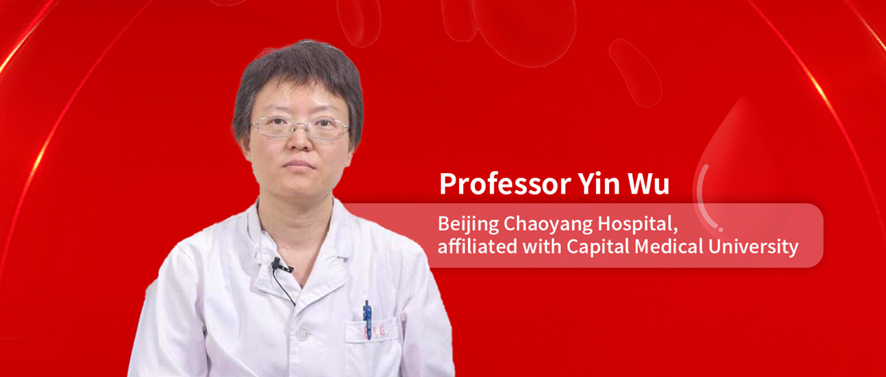
Professor Yin Wu: Diagnosis and Treatment Evaluation of Multiple Myeloma: Examination and Application

Professor Yin Wu: Diagnosis and Treatment Evaluation of Multiple Myeloma: Examination and Application

Every March is the international "Myeloma Awareness Month". In order to better serve patients with multiple myeloma, recently, the Hematology Department of Beijing Chaoyang Hospital, affiliated with Capital Medical University, held a series of activities for Multiple Myeloma Awareness Month. The aim is to enhance public awareness of multiple myeloma through a combination of online and offline approaches, calling for attention to the new trend of long-term survival in multiple myeloma and establishing a new concept of comprehensive management throughout the disease course. During the event, Professor Yin Wu from Beijing Chaoyang Hospital, affiliated with Capital Medical University, shared the exciting content titled "Diagnosis and Treatment Evaluation of Multiple Myeloma: Examination and Application". Below is a summary of the presentation.
EBMT China’s Voice | Professor Chunfu Li ‘s Team: Relationship between Immune Reconstitution, Graft-versus-Host Disease, and Viral Infections in Patients with Beta-Thalassemia Major Treated with Different Sources of Stem Cell Transplantation

EBMT China’s Voice | Professor Chunfu Li ‘s Team: Relationship between Immune Reconstitution, Graft-versus-Host Disease, and Viral Infections in Patients with Beta-Thalassemia Major Treated with Different Sources of Stem Cell Transplantation

Allogeneic hematopoietic stem cell transplantation (HSCT) is the classical treatment for curing beta-thalassemia major. With the continuous maturity of HSCT technology and supportive therapy over the past two decades, the choice of HSCT methods has expanded from classical matched sibling donor transplantation to matched unrelated donor transplantation and haploidentical transplantation. The commonly used stem cell types have also gradually transitioned from bone marrow hematopoietic stem cells to mobilized peripheral blood stem cells. Additionally, cord blood stem cells from related or unrelated donors have been widely used. From April 14th to 17th, 2024, the 50th Annual Meeting of the European Society for Blood and Marrow Transplantation (EBMT) was held in Glasgow, United Kingdom. The conference focused on the latest advances in stem cell transplantation and cell therapy, driving towards better clinical outcomes for patients with hematological diseases and hematologic malignancies. At the meeting, Professor Chunfu Li from the Southern Chunfu (Pediatric) Hematology Research Institute, High-performance Medicine (Hematology) Guangdong Research Center, reported a clinical study comparing immune reconstitution, graft-versus-host disease (GVHD), and viral infections in patients with beta-thalassemia major treated with stem cell transplantation from different sources. The following is a compiled summary of the content for readers' enjoyment.
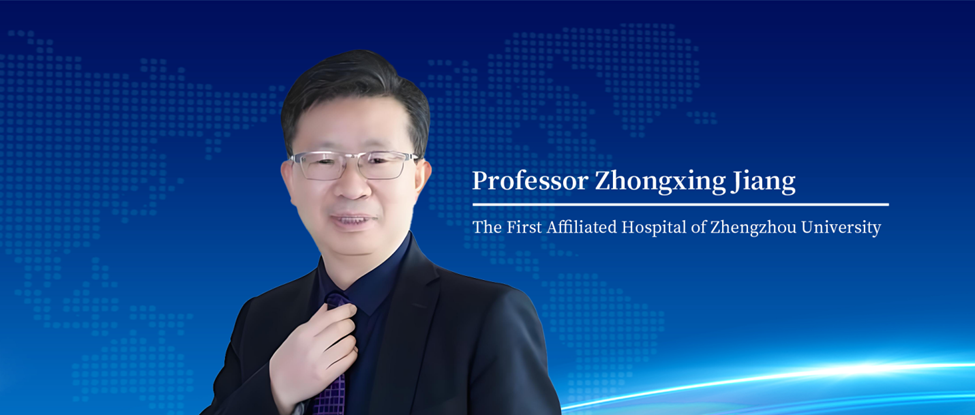
Professor Zhongxing Jiang: Focusing on the diagnosis and treatment of chronic disease-related anemia to improve patient quality of life | The 19th National Conference on Red Blood Cell Diseases (Anemia) by the Chinese Medical Association

Professor Zhongxing Jiang: Focusing on the diagnosis and treatment of chronic disease-related anemia to improve patient quality of life | The 19th National Conference on Red Blood Cell Diseases (Anemia) by the Chinese Medical Association

Chronic disease-related anemia, as one of the most common types of anemia, is the most common type of anemia among hospitalized patients and elderly individuals. Chronic disease-related anemia is usually accompanied by underlying diseases, with complex causes and diverse symptoms, distributed across multiple departments. Clinical doctors should pay sufficient attention to it in order to achieve better treatment outcomes. At the recent 19th National Conference on Red Blood Cell Diseases (Anemia) hosted by the Chinese Medical Association, Professor Zhongxing Jiang from The First Affiliated Hospital of Zhengzhou University shared the progress and prospects of the diagnosis and treatment of chronic disease-related anemia with Oncology Frontier - Hematology Frontier.
EBMT China’s Voice | Professor Yue Lu: Haploidentical Hematopoietic Stem Cell Transplantation Using Non-Direct Related Donors vs. Direct Related Donors – Similarity in Efficacy and Safety

EBMT China’s Voice | Professor Yue Lu: Haploidentical Hematopoietic Stem Cell Transplantation Using Non-Direct Related Donors vs. Direct Related Donors – Similarity in Efficacy and Safety

In recent years, haploidentical donor hematopoietic stem cell transplantation has gradually been developed in malignant hematologic tumors, greatly solving the problem of previous donor shortages. From April 14th to 17th, 2024, the 50th Annual Meeting of the European Society for Blood and Marrow Transplantation (EBMT) was held in Glasgow, the third-largest city in the UK. At this EBMT Annual Meeting, Professor Yue Lu from Lu Daopei Hospital reported on a latest clinical research result. The study confirmed that in haploidentical hematopoietic stem cell transplantation, using non-direct related donors can be comparable to direct related donors in terms of efficacy and safety. This also provides further evidence to expand the range of selectable donors in clinical practice. Our journal invited Professor Yue Lu to share the important results and clinical significance of this study with colleagues.
EBMT China’s Voice | Professors XiaoyanKe and KaiHu’s Team Present Two Studies Showing Improved Survival in Lymphoma and Multiple Myeloma Patients with Combined Autologous Hematopoietic Stem Cell Transplantation and CAR-T Cell Therapy

EBMT China’s Voice | Professors XiaoyanKe and KaiHu’s Team Present Two Studies Showing Improved Survival in Lymphoma and Multiple Myeloma Patients with Combined Autologous Hematopoietic Stem Cell Transplantation and CAR-T Cell Therapy

The 50th Annual Meeting of the European Society for Blood and Marrow Transplantation (EBMT) was held from April 14th to 17th in Glasgow, United Kingdom, showcasing the latest advancements in stem cell transplantation and cell therapy. These advancements are driving better clinical outcomes for patients with hematological diseases and blood cancers. At this year's conference, two studies conducted by Professor Xiaoyan Ke from Peking University Third Hospital/Beijing Chaoyang Hospital and Professor Kai Hu from Beijing Chaoyang Hospital were presented, highlighting how combined autologous hematopoietic stem cell transplantation and CAR-T cell therapy can improve survival rates for lymphoma and multiple myeloma patients.