NEJM: Dr. Ruihua Xu’s Team Offers a New Targeted Therapy for Advanced Gastric Cancer Patients Worldwide

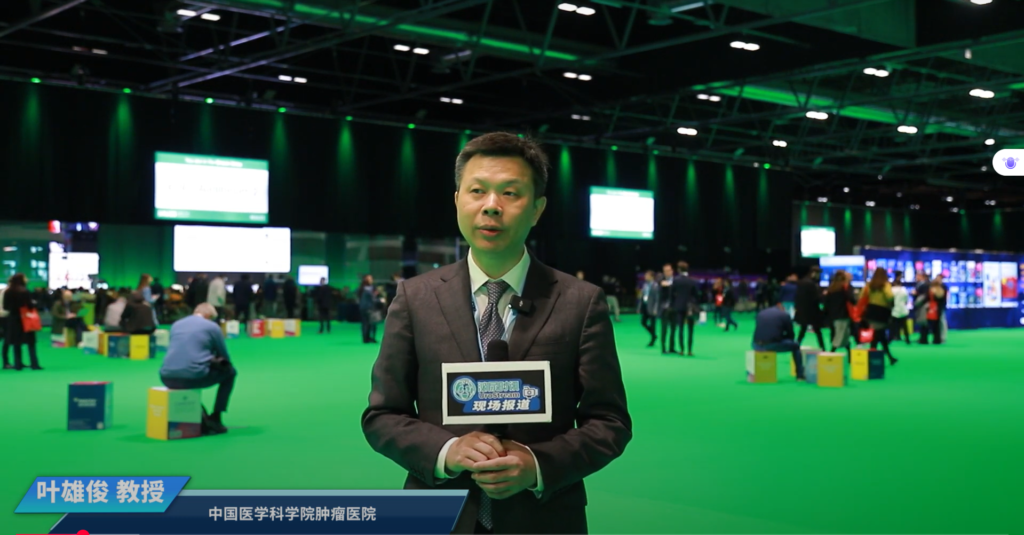
NEJM: Dr. Ruihua Xu’s Team Offers a New Targeted Therapy for Advanced Gastric Cancer Patients Worldwide

Gastric cancer is the fifth most common malignancy globally. For advanced gastric cancer, systemic treatments such as chemotherapy and targeted therapies are the primary treatment options. However, HER2-negative advanced gastric cancer patients have long lacked effective targeted drugs. Claudin 18.2 (CLDN18.2) is a tight junction protein, and nearly 40% of patients with HER2-negative gastric cancer exhibit high expression of CLDN18.2. Zolbetuximab, a monoclonal antibody targeting CLDN18.2, can mediate antibody-dependent cellular cytotoxicity (ADCC) and complement-dependent cytotoxicity (CDC) effects in CLDN18.2-positive gastric cancer cells.
China’s Benchmark, Sharing Global Insights—CSCO BC Experts, Led by Dr. Zefei Jiang, Share “Chinese Wisdom” in Breast Cancer Diagnosis and Treatment

China’s Benchmark, Sharing Global Insights—CSCO BC Experts, Led by Dr. Zefei Jiang, Share “Chinese Wisdom” in Breast Cancer Diagnosis and Treatment

The Breast Cancer Committee of the Chinese Society of Clinical Oncology (CSCO BC) has developed the CSCO Breast Cancer Diagnosis and Treatment Guidelines (hereafter referred to as the CSCO BC Guidelines), which have become a crucial reference for Chinese clinicians, serving as a "navigation tool" for clinical decision-making. With the rapid progress of clinical oncology, especially the continuous emergence of original Chinese research and treatment strategies, the CSCO BC Guidelines have not only stayed at the forefront of international developments but have also incorporated more "Chinese characteristics." This has attracted increasing attention from international experts. Recently, the English version of the CSCO BC Guidelines was published in the Translational Breast Cancer Research (TBCR), further showcasing China's experience and wisdom in breast cancer management to the global oncology community. Oncology Frontier invited Dr. Zefei Jiang, Dr. Chunfang Hao, Dr. Xu Liang, Dr. Jin Yang, Dr. Min Yan, and Dr. Yueping Liu to provide an overview of the key updates to the CSCO BC Guidelines and share their insights with international peers through this global platform.
ASCO GU 2025 | MD Anderson Cancer Center: Should Patients with Kidney or Bladder Cancer Receive Immunoadjuvant Therapy?

ASCO GU 2025 | MD Anderson Cancer Center: Should Patients with Kidney or Bladder Cancer Receive Immunoadjuvant Therapy?

Kidney cancer and urothelial carcinoma are among the most common malignancies of the urinary system and are known for their strong immunogenicity. This characteristic theoretically makes them ideal candidates for immune checkpoint inhibitors. However, results from multiple phase III randomized controlled trials (RCTs) have failed to demonstrate a significant overall survival (OS) benefit for immunotherapy in these cancers. The question remains: how should clinicians approach immunoadjuvant therapy in clinical practice? During the recent ASCO GU Annual Meeting, leading urologic oncology experts from MD Anderson Cancer Center shared their insights.
 New Insights into Young-Onset Bladder Cancer

 New Insights into Young-Onset Bladder Cancer

A groundbreaking genomic study on clinically advanced urothelial bladder cancer (CAUBC) in young-onset bladder cancer (YOUC) patients is reshaping our understanding of age-related tumor biology. Analyzing 9,411 cases, researchers discovered distinct genetic and mutational differences between younger (<50) and older (>50) patients, revealing key insights that could transform treatment strategies.
ASCO GU 2025 | An Alternative ADT Option for Patients with Metastatic Prostate Cancer: Transdermal Estrogen

ASCO GU 2025 | An Alternative ADT Option for Patients with Metastatic Prostate Cancer: Transdermal Estrogen

Androgen deprivation therapy (ADT) remains the cornerstone treatment for patients with metastatic prostate cancer. However, it is frequently associated with adverse effects such as vasomotor symptoms, including hot flashes, fatigue, and bone density loss, which significantly impact patients' quality of life. The rapid advancements in therapeutic strategies for advanced prostate cancer have led to investigations into alternative approaches. A study presented at the 2025 ASCO GU Annual Meeting introduced transdermal estrogen as a potential ADT alternative, offering a new option for metastatic prostate cancer patients.
SABCS 2024 | Professor Matteo Lambertini: Optimizing Treatment Strategies for BRCA-Mutated Breast Cancer and Highlights of the SABCS Conference

SABCS 2024 | Professor Matteo Lambertini: Optimizing Treatment Strategies for BRCA-Mutated Breast Cancer and Highlights of the SABCS Conference

In the field of breast cancer, the treatment of patients with BRCA gene mutations has always been a research hotspot. Recently, at the SABCS conference, Professor Matteo Lambertini from the San Martino Hospital of the University of Genoa, Italy, shared the latest findings on the treatment of BRCA-mutated breast cancer in depth (abstract number: GS1-08). This study aims to explore the impact of risk-reducing surgeries (including prophylactic mastectomy and prophylactic salpingo-oophorectomy) on the survival outcomes of young patients with BRCA-mutated breast cancer. The researchers collected and analyzed data from 5,290 young patients with BRCA-mutated breast cancer from 109 centers worldwide, providing important evidence for the cancer risk management strategies of this specific patient population. Oncology Frontier interviewed Professor Matteo Lambertini on-site at the SABCS conference and invited him to share the highlights of the conference that he focused on.
ASCO GU 2025 | Professor Toni Choueiri on the Future of Casdatifan in Clear Cell Renal Cell Carcinoma

ASCO GU 2025 | Professor Toni Choueiri on the Future of Casdatifan in Clear Cell Renal Cell Carcinoma

The VHL-HIF pathway is one of the most commonly activated pathways in clear cell renal cell carcinoma (ccRCC). Loss of von Hippel-Lindau (VHL) gene function leads to the stabilization of hypoxia-inducible factors HIF-1α and HIF-2α, driving tumor growth and progression. The development of HIF-2α inhibitors, including belzutifan and casdatifan, has introduced new therapeutic strategies for ccRCC.At the 2025 ASCO GU Annual Meeting, Professor Toni Choueiri from Dana-Farber Cancer Institute presented phase I study results on casdatifan, offering insights into its clinical activity and potential role in renal cell carcinoma treatment.