Dr.Jinshui Pan’s Team: Revealing the Heavy Tumor Burden Caused by Metabolic Risk Factors Worldwide (1990-2019)

Dr.Jinshui Pan’s Team: Revealing the Heavy Tumor Burden Caused by Metabolic Risk Factors Worldwide (1990-2019)

Non-alcoholic fatty liver disease (NAFLD) is becoming the most common chronic liver disease, often coexisting with various metabolic risk factors, which are significantly associated with the risk of various tumors. Dr.Jinshui Pan and ProfessoDr. Shang Weng from the Liver Disease Center of Fujian Medical University Affiliated First Hospital, along with Dr.  Meizhu Hong from Mengchao Hepatobiliary Hospital, conducted an analysis and assessment of the global burden of metabolic-related tumors from 1990 to 2019 based on the Global Burden of Disease (GBD) database for 2019. The research paper was published in the journal Med, under Cell Press, with an impact factor of 17 in 2023. Additionally, these findings were selected for presentation at the 58th Annual Meeting of the European Association for the Study of the Liver (EASL 2023) and the EASL Congress 2023.
Dr.Wai-Kay Seto’s team Multiple Studies on Hepatic Diseases Management with New Hepatitis B Drugs Fatty Liver Monitoring and Liver Cancer Risk Factors

Dr.Wai-Kay Seto’s team Multiple Studies on Hepatic Diseases Management with New Hepatitis B Drugs Fatty Liver Monitoring and Liver Cancer Risk Factors

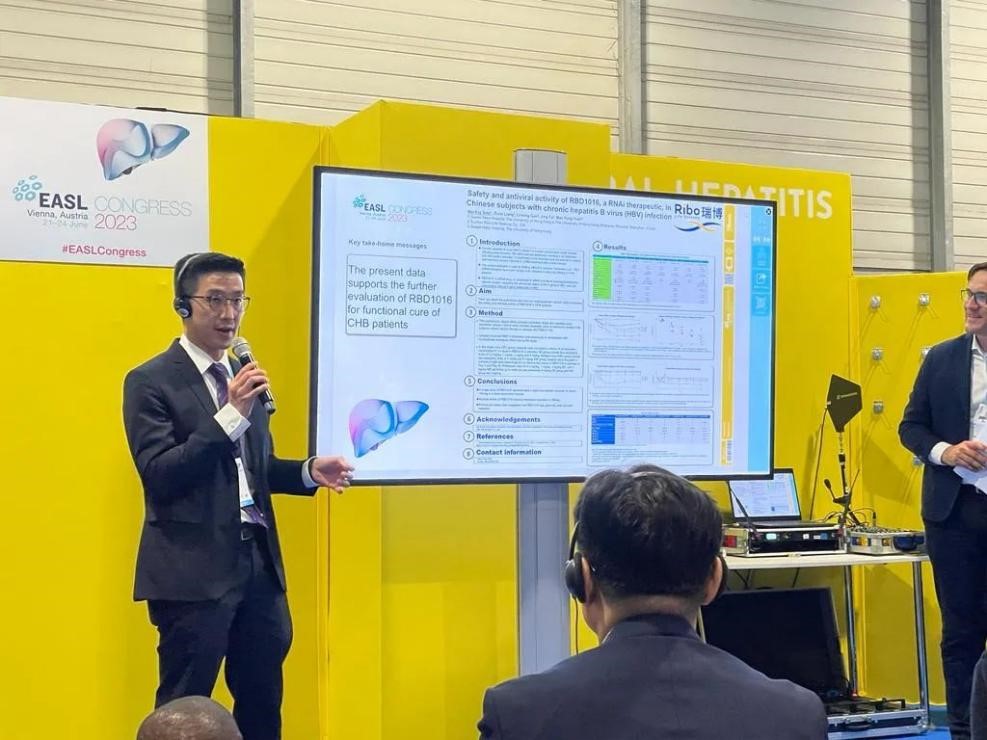
The 58th Annual Meeting of the European Association for the Study of the Liver (EASL2023) and the EASL Congress 2023 have come to a close. During this conference, Dr. Wai-Kay Seto and his research team from The University of Hong Kong Shenzhen Hospital/ The University of Hong Kong presented several studies. Hepatology Digest had the privilege of inviting Professor Wai-Kay Seto to introduce three of the significant studies: the impact of blood sugar control on reducing the risk of digestive tract tumors in diabetes patients [1], preliminary safety and antiviral activity analysis of the Chinese-developed siRNA new drug RBD1016 in the Chinese chronic hepatitis B population [2], and a new technique for portable assessment of fatty liver [3]. The details of these studies are as follows:
Dr. Wenshi Wang’s Team: Three Latest Research Findings on Hepatitis D and Hepatitis E Included in Conference Exchange

Dr. Wenshi Wang’s Team: Three Latest Research Findings on Hepatitis D and Hepatitis E Included in Conference Exchange

Hepatitis D (HDV) is a viral hepatitis caused by hepatitis D virus (HDV) infection, often occurring as a co-infection or superinfection with hepatitis B virus (HBV). Approximately 90% of chronic hepatitis B patients who become co-infected with HDV develop chronic hepatitis, increasing the risk of adverse outcomes such as liver failure, cirrhosis, and liver cancer. Due to the historical underestimation of HDV prevalence and disease burden, it has not received the attention it deserves. Hepatitis E virus (HEV) infection is a major cause of acute hepatitis globally, with no specific antiviral drugs available.
ESMO Expert Commentary | Roxadustat Non-inferior to Standard Treatment, Poised to Transform Clinical Practice in Chemotherapy-Induced Anemia

ESMO Expert Commentary | Roxadustat Non-inferior to Standard Treatment, Poised to Transform Clinical Practice in Chemotherapy-Induced Anemia

Platinum-based, taxane, anthracycline, and other chemotherapy drugs are commonly used in the treatment of various cancers such as breast and lung cancer. However, these chemotherapy agents, known marrow suppressors, can lead to chemotherapy-induced anemia (CIA), resulting in a decline in functional capacity and diminished quality of life for patients. This year's ESMO conference revealed the results of a Phase III clinical study on roxadustat in treating CIA in patients with non-myeloid malignancies, offering a more convenient treatment option for CIA patients. "Oncology Frontier" is honored to invite Professor Yongmei Yin from Jiangsu Provincial People's Hospital and Professor Jian Zhang from Fudan University Cancer Hospital to share insights into the current challenges in CIA treatment and the significance of this study for CIA patients.
Dr. Chao Wu: Current State and Prospects of Clinical Cure for Hepatitis B

Dr. Chao Wu: Current State and Prospects of Clinical Cure for Hepatitis B

Clinical cure of hepatitis B has been a hot topic in the field of viral hepatitis, and the 58th Annual Meeting of the European Association for the Study of the Liver (EASL 2023) and the 2023 EASL Congress unveiled numerous advancements in new drug research. Dr. Chao Wu and his team from the Department of Infectious Diseases at the Affiliated Drum Tower Hospital of Nanjing Medical University have been engaged in both clinical and basic research on viral hepatitis. In the 2023 EASL Congress, their team contributed 14 research findings, with three of them receiving the Young Investigator Awards. Hepatology Digest invited Dr. Chao Wu to discuss the current state of clinical cure for hepatitis B and analyze future prospects, as well as his thoughts on the overall development of liver diseases.
Dr. Yong-an Ye’s Team: Predicting Virological Recurrence in Chronic Hepatitis B with Machine Learning After Entecavir Discontinuation

Dr. Yong-an Ye’s Team: Predicting Virological Recurrence in Chronic Hepatitis B with Machine Learning After Entecavir Discontinuation

Currently, most chronic hepatitis B (CHB) patients cannot achieve a cure. While guidelines suggest that some CHB patients can discontinue nucleos(t)ide analogs (NAs) after consolidation therapy, virological recurrence remains common. Early virological recurrence typically predicts disease flare-up; however, there are limited biomarkers for assessing the risk of virological recurrence after treatment cessation. Dr. Yong-an Ye 's team at the Dongzhimen Hospital of Beijing University of Chinese Medicine (Chinese Institute of Traditional Chinese Medicine for Liver Diseases) conducted a prospective randomized controlled trial (RCT) and constructed a new predictive model based on serological markers to identify the risk of early virological recurrence in Chinese CHB patients after discontinuing entecavir (ETV). The findings were presented in poster format during the 58th European Association for the Study of the Liver (EASL) International Liver Congress 2023
Dr. Minghua Zheng’s Team: AI-Based Digital Pathology Provides New Insights into NASH Fibrosis Reversal Induced by Lifestyle Intervention

Dr. Minghua Zheng’s Team: AI-Based Digital Pathology Provides New Insights into NASH Fibrosis Reversal Induced by Lifestyle Intervention

Non-Alcoholic Steatohepatitis (NASH) is a common cause of chronic liver disease, and the degree of liver fibrosis is an important factor determining its clinical prognosis. Lifestyle intervention is the cornerstone of NASH treatment and can improve liver fibrosis. However, the specific effects of lifestyle intervention on micro-level liver fibrosis reversal are not clear. Dr. Minghua Zheng's team at the First Affiliated Hospital of Wenzhou Medical University used quantitative digital pathology technology qFibrosis to assess liver fibrosis characteristics in depth and explore the impact of the intensity of lifestyle intervention on NASH fibrosis. The relevant results were selected for poster presentation at the 58th Annual Meeting of the European Association for the Study of the Liver (EASL2023) and the 2023 EASL Congress.
ESMO Big Shot Interview | Professor Feng Wang: Significant Efficacy of Sintilimab Combined with Apatinib and Bevacizumab in the Treatment of MSS/pMMR Metastatic Colorectal Cancer, Promising Future

ESMO Big Shot Interview | Professor Feng Wang: Significant Efficacy of Sintilimab Combined with Apatinib and Bevacizumab in the Treatment of MSS/pMMR Metastatic Colorectal Cancer, Promising Future

The 2023 European Society for Medical Oncology (ESMO) Annual Meeting was held in Madrid, Spain from October 20 to 24. The Oncology Frontier Reporting Team delved into the frontiers of international advancements, witnessing the progress of China's anti-cancer efforts on the global stage. Professor Feng Wang from Sun Yat-sen University Cancer Center presented an important oral report at this conference. In an interview with "Oncology Frontier," Professor Feng Wang shared insights into two studies and highlights in the field of gastric cancer at the ESMO conference. This issue compiles relevant content for readers.