Progress of ctDNA in predicting prognosis of patients with urological tumors

Progress of ctDNA in predicting prognosis of patients with urological tumors

Circulating tumor DNA (ctDNA) for predicting tumor prognosis and guiding individualized treatment is a hot topic in malignant tumor research. ctDNA exists in the peripheral blood of tumor patients in a cell-free state and can dynamically evaluate the tumor condition, overcoming tumor heterogeneity biases. The 2023 American Association for Cancer Research (AACR) Annual Meeting was held from April 14 to 19, 2023, in Orlando, USA. In this AACR conference, three ctDNA-related studies evaluated its application value in urological tumors.
Exploring New Breast Cancer Risk Genes, Biomarkers, and Prognostic Models at AACR 2023

Exploring New Breast Cancer Risk Genes, Biomarkers, and Prognostic Models at AACR 2023

The American Association for Cancer Research (AACR) held its annual conference from April 14th to 19th, 2023 in Orlando, USA. With numerous reports on clinical, fundamental, and translational cancer research presented each year, this year's AACR conference delved deep into the realm of breast cancer. Research focused on the analysis of various susceptibility genes and risk-related biomarkers, aiming to discover new therapeutic targets and develop prognostic models, with the hope of providing improved services for patients.
Emerging Lymphoma Therapies at AACR 2023: Promising Results in CD19 Immunotherapy, CAR-T Cells, and Dual-Specific Antibodies

Emerging Lymphoma Therapies at AACR 2023: Promising Results in CD19 Immunotherapy, CAR-T Cells, and Dual-Specific Antibodies

The 2023 American Association for Cancer Research (AACR) Annual Meeting was held in Orlando, USA, from April 14 to 19, 2023. Every year, the AACR Congress reports numerous clinical, basic, and translational studies on cancer, especially innovative therapies in the preliminary phase I/II research stages. At this year's AACR conference, three clinical trials were reported in the lymphoma field, including anti-CD19 immunotherapy Tafasitamab, CD19/CD20 CAR naive/memory T cells, and bispecific quadrivalent antibody (innate cell engager) AFM13.
Combining PD-1 Monoclonal Antibody and HDAC Inhibitor with Conventional P-Gemox Significantly Improves the Treatment Outcome for NK/T Cell Lymphoma

Combining PD-1 Monoclonal Antibody and HDAC Inhibitor with Conventional P-Gemox Significantly Improves the Treatment Outcome for NK/T Cell Lymphoma

From June 17th to 23rd, 2023, the 17th International Conference on Malignant Lymphoma (ICML) was held grandly in Lugano, Switzerland. As the world's largest conference on malignant lymphoma, ICML has become an essential event in the field of lymphoma research and treatment over the past decades, aiming to present and discuss the latest basic, translational, and clinical research on lymphoma. NK/T cell lymphoma is a relatively rare hematological malignancy with no standardized treatment regimen. At this conference, Dr. Huiqiang Huang from the Cancer Center of Sun Yat-sen University,China,  gave an enlightening lecture on the treatment strategy for NK/T cell lymphoma. Oncology Frontier has specially interviewed Professor Huang and compiled the contents as follows:
ILTS 2023 | Liver Resection or Thermal Ablation as a Bridge to Liver Transplantation for Hepatocellular Carcinoma – DELTAS-HCC Study

ILTS 2023 | Liver Resection or Thermal Ablation as a Bridge to Liver Transplantation for Hepatocellular Carcinoma – DELTAS-HCC Study

Liver transplantation is one of the curative treatment options for hepatocellular carcinoma (HCC). However, due to the limited availability of liver donors compared to the number of patients awaiting transplantation, only a small number of HCC patients can receive liver transplantation. Previous studies have shown that local treatment before liver transplantation in HCC patients can effectively prevent tumor progression, increase the transplant rate, and reduce the postoperative recurrence rate. Transarterial chemoembolization (TACE) and ablation techniques such as radiofrequency ablation (RFA), microwave ablation, and percutaneous ethanol injection are the most commonly used bridge therapies before liver transplantation. At the International Liver Transplantation Society (ILTS) annual meeting held in Rotterdam, Netherlands, from May 3 to 6, 2023, Dr. Catherine Lamarque and her colleagues from the Henri Mondor Hospital in France reported on a clinical study (DELTAS-HCC) that showed that liver resection or thermal ablation can be effective bridges to liver transplantation for HCC and do not adversely affect patient outcomes before and after transplantation.
EASL Secretary-General: Doctor Thomas Berg Discusses Highlights of the Conference, NAFLD Renaming, and Future Directions for Fatty Liver and Hepatitis

EASL Secretary-General: Doctor Thomas Berg Discusses Highlights of the Conference, NAFLD Renaming, and Future Directions for Fatty Liver and Hepatitis

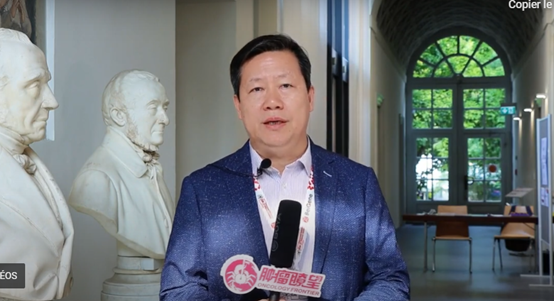
The 58th Annual Meeting of the European Association for the Study of the Liver (EASL 2023) and the EASL Congress 2023 have brought forth a splendid academic gathering for the global hepatology community. The Hepatology Digest reporting team had the privilege of interviewing Doctor Thomas Berg, EASL Secretary-General and Head of the Hepatology Department at Leipzig University Hospital. He shared with us the highlights of this conference, his perspective on significant research developments, thoughts on the renaming of Non-Alcoholic Fatty Liver Disease (NAFLD), and insights into the future research directions for fatty liver and hepatitis B.
WHO to Release New Hepatitis B Guidelines, Focusing on Expanding Treatment Eligibility and Simplifying Diagnosis and Treatment Pathways

WHO to Release New Hepatitis B Guidelines, Focusing on Expanding Treatment Eligibility and Simplifying Diagnosis and Treatment Pathways

At the 58th European Association for the Study of the Liver (EASL) Annual Meeting (EASL 2023) and EASL Congress 2023, Doctor Philippa Easterbrook, Senior Scientist at the Global Hepatitis Programme of the Department of HIV at the World Health Organization (WHO) headquarters in Geneva, attended the WHO-ECDC Joint Forum. She discussed the new directions being drafted in WHO's updated Hepatitis B guidelines, focusing on expanding simplified treatment criteria, service delivery, and innovative diagnostics. Hepatology Digest had the privilege to interview Doctor Philippa Easterbrook about WHO's 2030 goals, the progress of the new Hepatitis B guidelines, essential information, and the global challenges and opportunities in addressing Hepatitis B prevention and control.
Dr. Bo Dai: Research Progress in ASCO-GU 2023 prostate cancer

Dr. Bo Dai: Research Progress in ASCO-GU 2023 prostate cancer

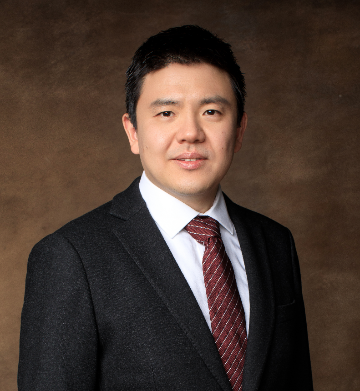
The American Society of Clinical Oncology (ASCO) Genitourinary Cancers Symposium for 2023 (ASCO-GU 2023) kicked off on February 16th in San Francisco, USA. Numerous innovative treatment studies have emerged in the fields of metastatic hormone-sensitive prostate cancer (mHSPC), metastatic castration-resistant prostate cancer (mCRPC), non-metastatic castration-resistant prostate cancer (nmCRPC), and early/localized prostate cancer. These studies encompass a wide range of therapies, including androgen deprivation therapy (ADT), novel hormonal therapy (NHT), PARP inhibitors (PARPi), immunotherapy, nuclear medicine therapy, and localized treatments.