Crossing the Boundary Between Medicine and Reality: EMN Chairman Pieter Sonneveld’s In-depth Analysis of Immunotherapy Innovation and Reimbursement Dilemmas in Multiple Myeloma

Crossing the Boundary Between Medicine and Reality: EMN Chairman Pieter Sonneveld’s In-depth Analysis of Immunotherapy Innovation and Reimbursement Dilemmas in Multiple Myeloma

The treatment landscape for multiple myeloma (MM) has undergone revolutionary changes over the past two decades, transitioning from the traditional chemotherapy era to a golden age of precision targeting and immunotherapy. However, does immense success in clinical evidence translate to broad benefits for patients? At the 29th Annual Congress of the European Hematology Association (EHA), Professor Pieter Sonneveld, Professor of Hematology at the Erasmus University of Rotterdam Medical Center and Chairman of the European Myeloma Network (EMN), delivered a keynote speech. He not only reviewed the new benchmarks for frontline treatment represented by the PERSEUS study but also provided a forward-looking perspective on the "fragmented" reality of innovative drug accessibility across European countries. This summary aims to comprehensively present Professor Sonneveld's profound reflections on MM treatment evolution, the clinical application of MRD, and the challenges of health technology assessment.
Frontiers of EHA 2026: Professor Pratima Chowdary Interprets the New Paradigm of Personalized Hemophilia Treatment

Frontiers of EHA 2026: Professor Pratima Chowdary Interprets the New Paradigm of Personalized Hemophilia Treatment

At the 2026 European Hematology Association (EHA) Annual Meeting, Professor Pratima Chowdary from the Katherine Dormandy Haemophilia and Thrombosis Centre at Royal Free Hospital, University College London (UCL), delivered an in-depth presentation titled "The future of hemophilia care: Entering an era of personalized medicine." Professor Chowdary reviewed the evolution of hemophilia care over nearly a century, focusing on the reshaping of clinical practice by extended half-life (EHL) coagulation factors, bispecific antibodies, rebalancing therapies, and gene therapy. She emphasized how to achieve precise personalized medicine through the quality framework of "Structure-Process-Outcome" amidst the current surge of innovative drugs.
2026 EHA Academic Frontier: Professor Stephen Ansell Deeply Analyzes the Biological Characteristics and Immune Microenvironment Remodeling of Classical Hodgkin Lymphoma

2026 EHA Academic Frontier: Professor Stephen Ansell Deeply Analyzes the Biological Characteristics and Immune Microenvironment Remodeling of Classical Hodgkin Lymphoma

At the 2026 European Hematology Association (EHA) Annual Meeting, world-renowned lymphoma expert Professor Stephen Ansell from the Mayo Clinic (Rochester, Minnesota, USA) was invited to deliver a keynote speech titled "Deciphering HL biology." Professor Ansell systematically reviewed the molecular origins of Reed-Sternberg (RS) cells in classical Hodgkin lymphoma (cHL), the abnormal activation of key signaling pathways, the complex interactions within the immune microenvironment (TME), and how these biological features drive current immunotherapy strategies while revealing future challenges in drug resistance.
EHA 2026 | Interpretation by Professor Todd Knepper: Molecular Surveillance and Clinical Trajectories of Donor-Derived Clonal Hematopoiesis after Allogeneic Hematopoietic Stem Cell Transplantation

EHA 2026 | Interpretation by Professor Todd Knepper: Molecular Surveillance and Clinical Trajectories of Donor-Derived Clonal Hematopoiesis after Allogeneic Hematopoietic Stem Cell Transplantation

At the 2026 European Hematology Association (EHA) Annual Meeting, Professor Todd Knepper from Moffitt Cancer Center shared a thematic report on "Post-Transplant Molecular Surveillance Reveals Divergent Clinical Trajectories of Donor-Derived Clonal Hematopoiesis (DD-CHIP)." Through high-throughput sequencing (NGS) technology, this study explored the incidence, molecular landscape, and differentiated impact of DD-CHIP on clinical outcomes in recipients of transplants for myeloid malignancies.
Frontline Perspectives from EHA 2026: Iterations in CAR-T Manufacturing Processes and Innovations in Engineering Platforms for Multiple Myeloma

Frontline Perspectives from EHA 2026: Iterations in CAR-T Manufacturing Processes and Innovations in Engineering Platforms for Multiple Myeloma

The treatment of multiple myeloma (MM) has entered the era of immunotherapy. In particular, the emergence of Chimeric Antigen Receptor T-cell (CAR-T) therapy has significantly improved the prognosis of patients with relapsed/refractory multiple myeloma (R/R MM). However, challenges such as resistance caused by antigen loss, prolonged manufacturing cycles (vein-to-vein time), and potential severe toxicities remain major hurdles in clinical practice. At a recent academic conference, Professor Yi Lin, the Jess S. Jackson Family Professor of Cancer Research at Mayo Clinic, shared in-depth insights on the theme "CAR-T Cell Manufacturing: Scientific Progress and Technological Innovation." This article aims to extract the core academic viewpoints from Professor Yi Lin's report and explore how iterations in CAR-T manufacturing processes translate into clinical benefits.
2026 EHA Academic Feast: Multiple Myeloma Treatment Enters a New Era of Precision Stratification—From Reshaping ASCT Status to Breaking the Deadlock in Ultra-High Risk Strategies

2026 EHA Academic Feast: Multiple Myeloma Treatment Enters a New Era of Precision Stratification—From Reshaping ASCT Status to Breaking the Deadlock in Ultra-High Risk Strategies

In June 2026 local time, the European Hematology Association (EHA) Annual Congress was grandly held. In the Multiple Myeloma (MM) session, top global hematology experts engaged in in-depth dialogues regarding the treatment pathways for newly diagnosed multiple myeloma (NDMM), liquid biopsy for prognostic assessment, and intensified treatment regimens for ultra-high risk patients. This session was chaired by Professor Pieter Sonneveld from the Erasmus University Medical Center (Erasmus MC) in the Netherlands. It covered core topics such as the value of autologous stem cell transplantation (ASCT) in the era of quadruplet regimens, the clinical application of circulating tumor cells (CTC), and precision strikes for ultra-high risk patients.
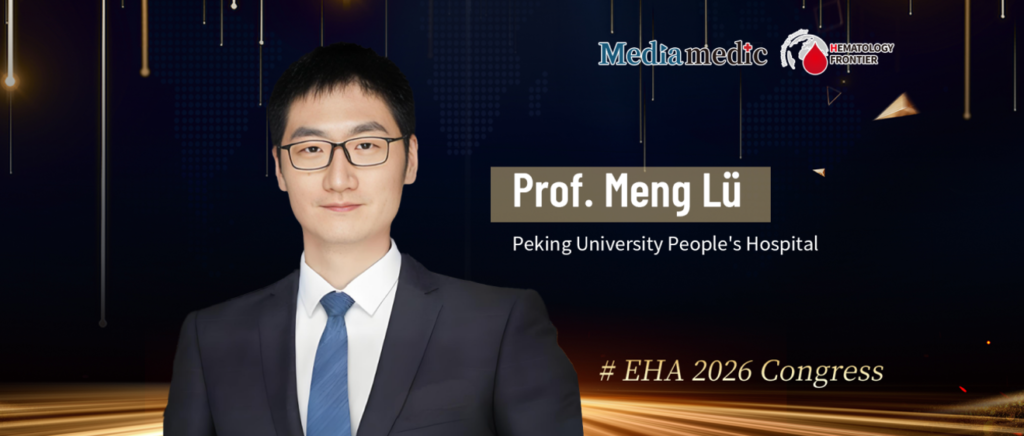
EHA Echoes · Voices from China | Prof. Meng Lü: CAR-T vs Antibody-Based Therapy as a Bridge to Transplantation—Defining the Optimal Stratified Approach for R/R B-ALL

EHA Echoes · Voices from China | Prof. Meng Lü: CAR-T vs Antibody-Based Therapy as a Bridge to Transplantation—Defining the Optimal Stratified Approach for R/R B-ALL

In the era of rapidly evolving immunotherapy, determining the optimal bridging strategy to hematopoietic stem cell transplantation (HSCT) for patients with relapsed/refractory (R/R) B-cell acute lymphoblastic leukemia (B-ALL) remains a major clinical challenge. At EHA 2026, Prof. Meng Lü and colleagues from Peking University People's Hospital presented an important oral study based on a large patient cohort, comparing the efficacy of CAR-T therapy and antibody-based immunotherapy as bridging treatments before transplantation and identifying key factors influencing post-transplant outcomes.
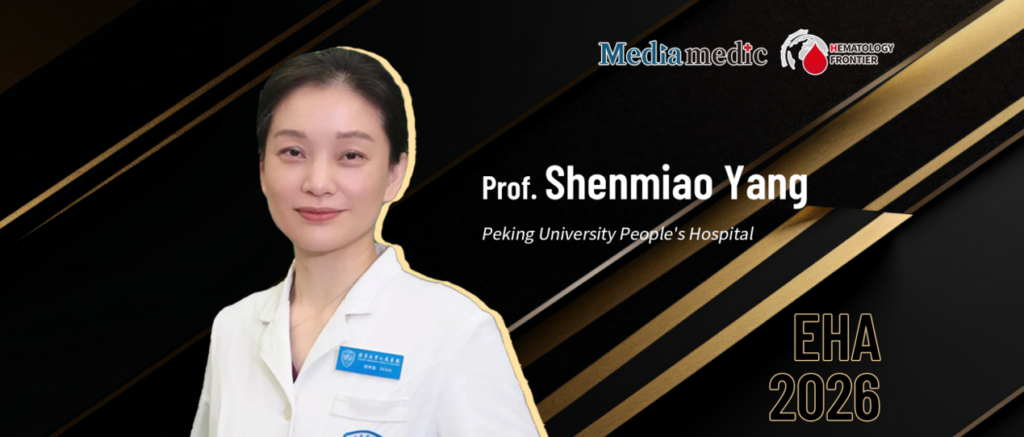
EHA Insights | Prof. Shenmiao Yang: Toward a Cure—New Strategies in CLL Through Targeted Combination Therapy

EHA Insights | Prof. Shenmiao Yang: Toward a Cure—New Strategies in CLL Through Targeted Combination Therapy

As targeted therapies continue to transform the treatment landscape of chronic lymphocytic leukemia (CLL), therapeutic goals are evolving beyond long-term disease control toward deeper remissions, fixed-duration treatment strategies, and even the possibility of functional cure. At EHA 2026, several landmark studies provided important evidence supporting this paradigm shift.
Predicting a 92% pCR: Preoperative Radiotherapy Acts as an “Immune Primer” for High-Risk TNBC in the TBCRC-053 Trial

Predicting a 92% pCR: Preoperative Radiotherapy Acts as an “Immune Primer” for High-Risk TNBC in the TBCRC-053 Trial

the field of breast cancer, Triple-Negative Breast Cancer (TNBC) has become a clinical challenge due to its high aggressiveness and lack of effective targets. Although the KEYNOTE-522 study established the standard status of Immune Checkpoint Inhibitors (ICI) combined with chemotherapy in perioperative TNBC, high-risk patients with lymph node-positive and T3/T4 stage disease still face a high risk of recurrence. Recently, Professor Alice Y. Ho from Duke University reported the latest results of the TBCRC-053 (P-RAD) study at an academic conference. This study explores the clinical value of preoperative radiotherapy as an "Immune Primer" combined with Pembrolizumab and chemotherapy in high-risk TNBC.
Breaking the Dilemma of Margins in Breast-Conserving Surgery: SHAVE Series Research Confirms CSM Significantly Reduces Re-excision Rates, but Long-term Survival Benefit Remains Dominated by Radiotherapy

Breaking the Dilemma of Margins in Breast-Conserving Surgery: SHAVE Series Research Confirms CSM Significantly Reduces Re-excision Rates, but Long-term Survival Benefit Remains Dominated by Radiotherapy

At the recent American Society of Clinical Oncology (ASCO) Annual Meeting, Professor Anees B. Chagpar, a Professor of Surgery at the Yale School of Medicine, delivered an important special report titled "Does resection of cavity shave margins impact survival in breast cancer patients?". Based on the famous SHAVE and SHAVE2 randomized controlled trials, the report explored the advantages of Cavity Shave Margins (CSM) in breast-conserving surgery (BCS) regarding the reduction of positive margin rates and re-excision rates. For the first time, it disclosed detailed long-term impacts on patients' 5-year local recurrence (LR) rates, disease-free survival (DFS), and overall survival (OS), providing key evidence-based support for treatment de-escalation and multi-modal synergy in the field of breast surgery.