EASL Express丨Latest Advances in Bulevirtide Treatment for Chronic Hepatitis D

EASL Express丨Latest Advances in Bulevirtide Treatment for Chronic Hepatitis D

Hepatitis D virus (HDV) is a defective virus that requires the hepatitis B surface antigen (HBsAg) to replicate. Co-infection with HBV and HDV is considered the most severe form of chronic viral hepatitis, accelerating liver-related mortality and the development of hepatocellular carcinoma (HCC). At the 2024 European Association for the Study of the Liver (EASL) annual meeting held in Milan, Italy from June 5-8, the latest research on the treatment of chronic hepatitis D (CHD) with Bulevirtide (BLV) drew significant attention. These studies not only provide new strategies and evidence-based medicine for CHD treatment but also lay the foundation for future research. This article compiles and organizes three key studies presented at the conference for our readers.

EASL Exclusive Interview丨Professor Jun Li: Comprehensive Research on Acute-on-Chronic Liver Failure from Pathogenesis to Clinical Treatment

EASL Exclusive Interview丨Professor Jun Li: Comprehensive Research on Acute-on-Chronic Liver Failure from Pathogenesis to Clinical Treatment

Acute-on-chronic liver failure (ACLF) is a complex syndrome characterized by acute liver function deterioration based on chronic liver disease, accompanied by high mortality rates of liver and extra-hepatic organ failure. The short-term mortality rate of comprehensive internal medicine treatment ranges from 50% to 90%. Due to its high mortality and complex pathogenesis, research and treatment strategies for ACLF are particularly crucial. From June 5-8, 2024, the European Association for the Study of the Liver (EASL) Annual Meeting was held in Milan, Italy, where Professor Jun Li 's team from the First Affiliated Hospital of Zhejiang University School of Medicine presented five research findings related to ACLF. Hepatology Digest invited Professor Jun Li to introduce the highlights and significance of these studies, share his conference insights, and discuss the future development of the ACLF field. The following is the interview transcript.
EASL China Voice丨Professor Shuangsuo Dang’s Team Showcases Three Achievements in Milan

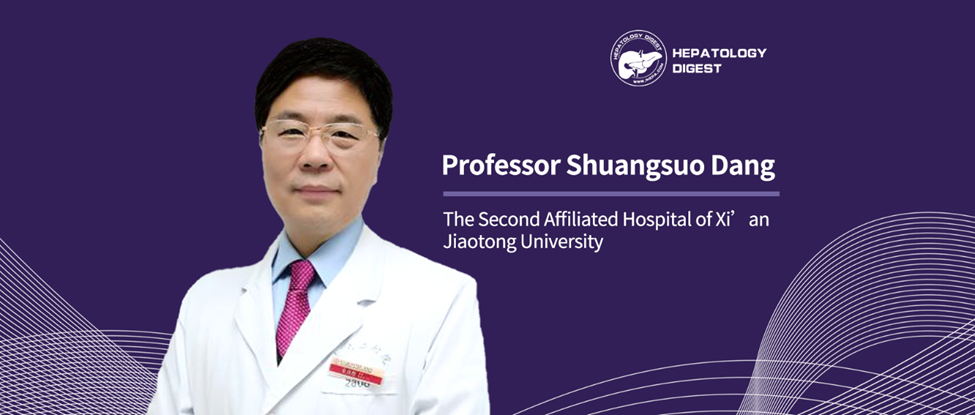
EASL China Voice丨Professor Shuangsuo Dang’s Team Showcases Three Achievements in Milan

From June 5-8, 2024, the European Association for the Study of the Liver (EASL) Annual Meeting was successfully held in Milan, Italy. During this event, the team led by Professor Shuangsuo Dang from the Department of Infectious Diseases at the Second Affiliated Hospital of Xi’an Jiaotong University presented three significant clinical and basic research findings: real-world antiviral treatment for chronic hepatitis B (CHB), mechanisms and treatment of metabolic-associated fatty liver disease (MAFLD), and risk factors and mechanisms of hepatocellular carcinoma (HCC). This report covers these studies for our readers.
EASL Special Report丨Focus on the Management of Hepatitis B, Cirrhosis, and Portal Hypertension

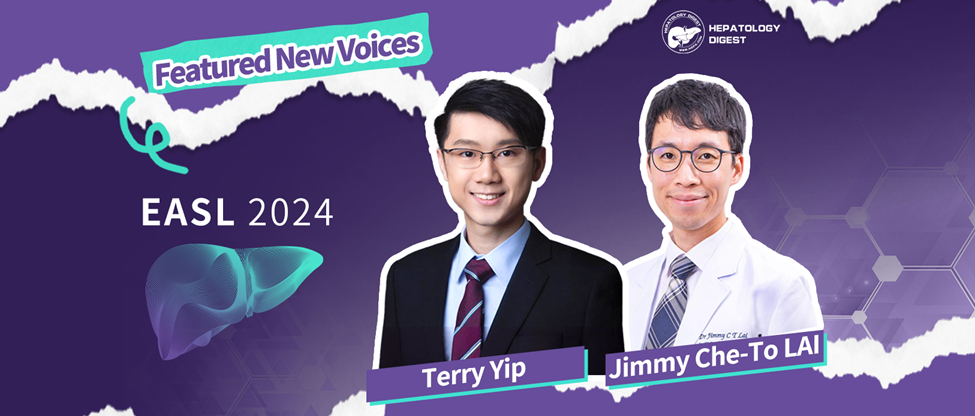
EASL Special Report丨Focus on the Management of Hepatitis B, Cirrhosis, and Portal Hypertension

Editor's Note: From June 5-8, 2024, the European Association for the Study of the Liver (EASL) Annual Meeting was held in Milan, Italy. Over 7,000 hepatology experts from around the world gathered for this academic event. On the first day, the conference focused on various fields including chronic hepatitis B, cirrhosis, and portal hypertension. Hepatology Digest invited two young experts from the Chinese University of Hong Kong, Professor Terry Yip and Dr. Jimmy Che-To Lai, to share their insights and experiences.
EASL China Voice | Professors Jie Li, Julie Zhu, and Minghua Zheng: New Combined Non-Invasive Score Using PRO-C3 and GP73 Shows Significant Advantage in Assessing Liver Fibrosis in Chronic Hepatitis B

EASL China Voice | Professors Jie Li, Julie Zhu, and Minghua Zheng: New Combined Non-Invasive Score Using PRO-C3 and GP73 Shows Significant Advantage in Assessing Liver Fibrosis in Chronic Hepatitis B

Liver biopsy is the "gold standard" for diagnosing liver fibrosis, but due to its high cost, invasive nature, and other disadvantages, it is not widely used. Currently, various non-invasive tests (NITs) based on serum biochemical indicators and/or imaging have been developed to evaluate liver stiffness and diagnose liver fibrosis, aiming to identify high-risk populations early for timely intervention and management. However, the diagnostic performance of various NITs varies, and some diagnostic devices are not easily accessible. Finding an NIT with high accuracy and accessibility is a clinical challenge.
EASL Highlights | EASL-EASD-EASO Jointly Release Clinical Practice Guidelines for Metabolic Associated Fatty Liver Disease

EASL Highlights | EASL-EASD-EASO Jointly Release Clinical Practice Guidelines for Metabolic Associated Fatty Liver Disease

On June 7, 2024, at 5:30 PM in Milan, Italy, the European Association for the Study of the Liver (EASL), the European Association for the Study of Diabetes (EASD), and the European Association for the Study of Obesity (EASO) jointly released the latest Clinical Practice Guidelines for the management of Metabolic Associated Fatty Liver Disease (MASLD) at the EASL 2024 Annual Meeting. The guidelines cover a wide range of topics from the use of non-invasive diagnostic tools to treatment strategies, emphasizing the importance of treating obesity and diabetes and multidisciplinary collaboration in the management of MASLD. These guidelines have been simultaneously published online in the official journals of EASL, EASD, and EASO, such as the Journal of Hepatology.
ASCO Hot Review | Professor Yu Chen: Safety and Efficacy of CXCR1/2 Inhibitor SX-682 in Combination with Pembrolizumab in Metastatic Melanoma Patients

ASCO Hot Review | Professor Yu Chen: Safety and Efficacy of CXCR1/2 Inhibitor SX-682 in Combination with Pembrolizumab in Metastatic Melanoma Patients

As immunotherapy continues to make breakthroughs in treating malignant tumors, it has significantly improved the survival rates of melanoma patients. However, there remains an urgent need to develop new drugs and optimize immunotherapy strategies for patients resistant or intolerant to current treatments. At the ongoing 2024 American Society of Clinical Oncology (ASCO) Annual Meeting, several studies focused on new treatment strategies for immunotherapy-resistant melanoma patients. Oncology Frontier invited Professor Yu Chen from Fujian Cancer Hospital to analyze these cutting-edge studies, revealing the important roles and potential applications of new therapies in this challenging melanoma subtype.
ASCO China Voice | Professor Min Yan: Utidelone Combined with Bevacizumab is Safe and Effective for Treating Brain Metastases in HER2-Negative Breast

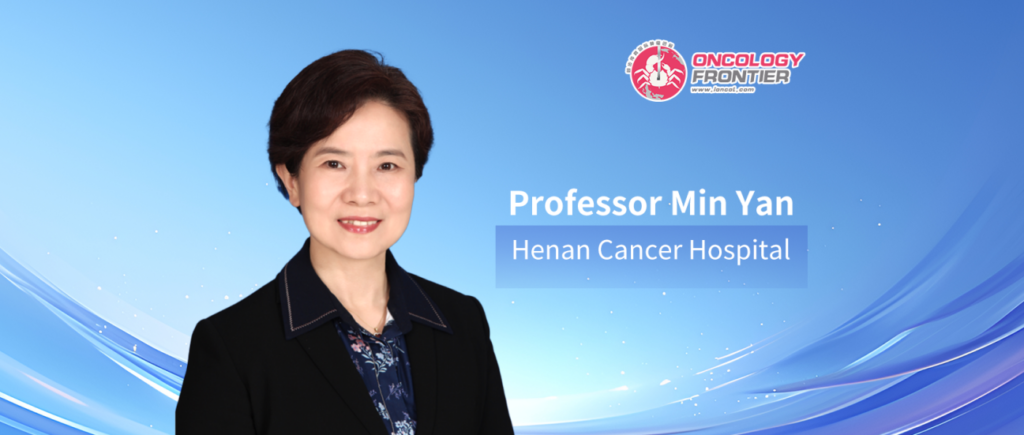
ASCO China Voice | Professor Min Yan: Utidelone Combined with Bevacizumab is Safe and Effective for Treating Brain Metastases in HER2-Negative Breast

Brain metastasis from breast cancer has a high incidence, second only to lung cancer . Previous studies have shown that patients with brain metastases have poorer survival compared to those without brain metastases, with HER2-negative breast cancer brain metastasis patients having an even worse prognosis . Due to the blood-brain barrier (BBB), many drug treatments have limited intracranial objective response rates (ORR). Utidelone, a novel microtubule inhibitor developed in China, has shown potential for treating brain metastases due to its unique physicochemical properties that allow it to penetrate the BBB. At the 2024 American Society of Clinical Oncology (ASCO) Annual Meeting, a multicenter phase II study led by Professor Min Yan from Henan Cancer Hospital was selected for presentation. This study explored the efficacy and safety of utidelone combined with bevacizumab in treating HER2-negative breast cancer brain metastases. "Oncology Frontier" invited Professor Min Yan to discuss the progress in treating breast cancer brain metastases, the study design and findings, and future perspectives.
ASCO Hot Review | Professor Yu Chen: Safety and Efficacy of CXCR1/2 Inhibitor SX-682 in Combination with Pembrolizumab in Metastatic Melanoma Patients with Disease Progression on Anti-PD-1 Therapy

ASCO Hot Review | Professor Yu Chen: Safety and Efficacy of CXCR1/2 Inhibitor SX-682 in Combination with Pembrolizumab in Metastatic Melanoma Patients with Disease Progression on Anti-PD-1 Therapy

As immunotherapy continues to make breakthroughs in treating malignant tumors, it has significantly improved the survival rates of melanoma patients. However, there remains an urgent need to develop new drugs and optimize immunotherapy strategies for patients resistant or intolerant to current treatments. At the ongoing 2024 American Society of Clinical Oncology (ASCO) Annual Meeting, several studies focused on new treatment strategies for immunotherapy-resistant melanoma patients. Oncology Frontier invited Professor Yu Chen from Fujian Cancer Hospital to analyze these cutting-edge studies, revealing the important roles and potential applications of new therapies in this challenging melanoma subtype.
ASCO Highlights | Professor Peng Yuan: Patient-Reported Outcomes from the TROPION-Breast01 Study on Dato-DXd for HR+/HER2- Breast Cancer

ASCO Highlights | Professor Peng Yuan: Patient-Reported Outcomes from the TROPION-Breast01 Study on Dato-DXd for HR+/HER2- Breast Cancer

The 2024 American Society of Clinical Oncology (ASCO) Annual Meeting was held in Chicago, USA, from May 31 to June 4. At this year’s ASCO conference, the TROPION-Breast01 study (Oral Abstract Session: Abstract No. 1006) once again attracted attention and discussion. Professor Sonia Pernas from the Institut Català d'Oncologia presented a special report on June 1 from 16:24 to 16:36 (Beijing time: June 2, 05:24 to 05:36, Hall B1 | Live Stream). "Oncology Frontier" invited Professor Peng Yuan from the Chinese Academy of Medical Sciences Cancer Hospital to interpret the findings.