EASL2024 Interview | Dr. Terry Yip: Prognostic significance of a change in liver stiffness measurement in patients with metabolic dysfunction-associated steatotic liver disease (MASLD)

EASL2024 Interview | Dr. Terry Yip: Prognostic significance of a change in liver stiffness measurement in patients with metabolic dysfunction-associated steatotic liver disease (MASLD)

With the rapid development of modern medical technology, non-invasive assessment methods have attracted more and more attention. In the field of metabolically associated fatty liver disease (MAFLD), liver hardness measurement (LSM) has become an important indicator for non-invasive assessment of liver-related events. At the annual meeting of the European Association for the Study of the Liver (EASL) this year, Dr.Terry Yip of the Chinese University of Hong Kong presented an exciting research result, which explored the prognostic significance of liver hardness measurement in patients with MAFLD through a large-scale international collaborative study. The study provides a new perspective for clinicians and patients, revealing the great potential of non-invasive assessment in the management of liver disease.
Professor Yongxian Hu: Advances in CD7 CAR-T Cell Therapy丨2024 Nanjing Lymphoma Forum

Professor Yongxian Hu: Advances in CD7 CAR-T Cell Therapy丨2024 Nanjing Lymphoma Forum

With the continuous advancement of immunotherapy technologies, CD7 CAR-T cell therapy is emerging as a new option for treating leukemia and lymphoma, showing significant potential. Recent clinical studies have revealed multiple new developments in CD7 CAR-T cell therapy. However, challenges remain, such as improving safety, reducing side effects, and optimizing treatment protocols to enhance long-term efficacy. At the recent "2024 Nanjing Lymphoma Forum," Professor Yongxian Hu from The First Affiliated Hospital of Zhejiang University School of Medicine delivered an excellent report titled "New Advances in CD7 CAR-T Cell Therapy." Following the forum, Hematology Frontier invited Professor Hu for an interview to further discuss this topic.
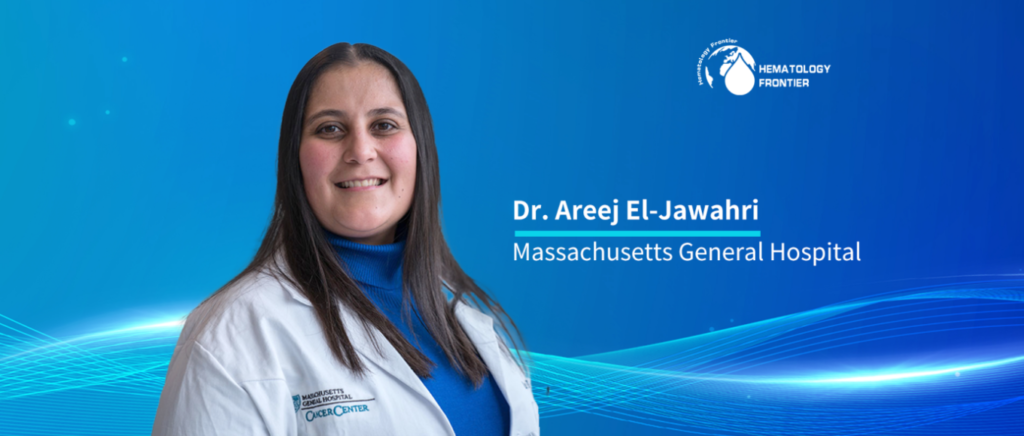
ASCO International Perspectives丨Dr. Areej El-Jawahri: Collaborative Palliative Care Optimizes End-of-Life Strategies for AML and MDS Patients

ASCO International Perspectives丨Dr. Areej El-Jawahri: Collaborative Palliative Care Optimizes End-of-Life Strategies for AML and MDS Patients

At the 2024 American Society of Clinical Oncology (ASCO) Annual Meeting, a multicenter randomized clinical trial was presented, focusing on a collaborative palliative care and oncology model for patients with acute myeloid leukemia (AML) and high-risk myelodysplastic syndrome (MDS) receiving non-intensive treatment (Abstract LBA6508). Dr. Areej El-Jawahri from Massachusetts General Hospital shared her professional insights on this study and end-of-life (EOL) care strategies in an exclusive interview with Hematology Frontier. Here, we present the key points to convey cutting-edge international perspectives.
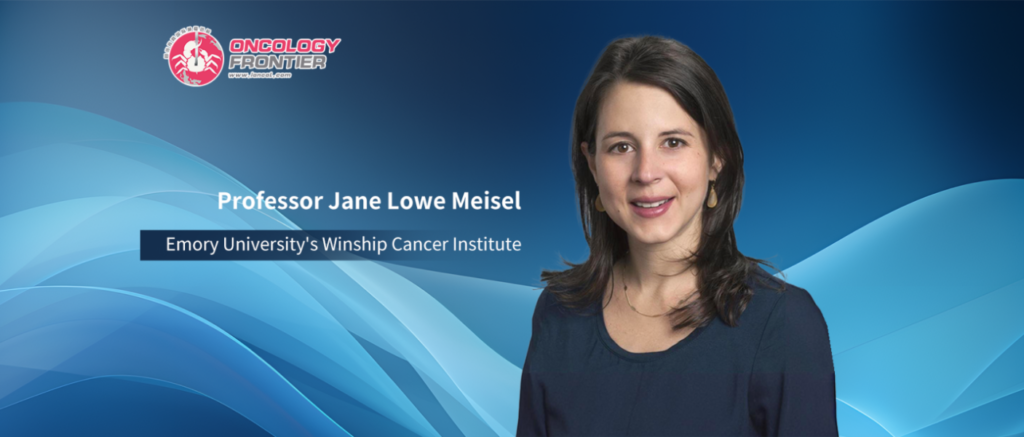
ASCO 2024丨Professor Meisel Discusses I-SPY2.2 Study on TROP-2 ADC Neoadjuvant Therapy

ASCO 2024丨Professor Meisel Discusses I-SPY2.2 Study on TROP-2 ADC Neoadjuvant Therapy

With advancements in medical research and technology, new therapies for complex diseases like breast cancer are continually emerging. Dato-DXd, a novel antibody-drug conjugate (ADC), shows potential in the treatment of breast cancer. The I-SPY2.2 trial, presented at ASCO 2024, utilizes an innovative trial design to demonstrate the efficacy of Dato-DXd as a monotherapy in HR-HER2-negative breast cancer, particularly in TNBC patients and those with positive immune markers. Oncology Frontier interviewed Professor Jane Lowe Meisel from Emory University's Winship Cancer Institute to delve into the innovative I-SPY 2.2 trial and its implications for personalized neoadjuvant therapy in high-risk breast cancer patients.
ASCO China Voice | Professor Min Yan: Utidelone Combined with Bevacizumab is Safe and Effective for Treating Brain Metastases in HER2-Negative Breast

ASCO China Voice | Professor Min Yan: Utidelone Combined with Bevacizumab is Safe and Effective for Treating Brain Metastases in HER2-Negative Breast

Brain metastasis from breast cancer has a high incidence, second only to lung cancer . Previous studies have shown that patients with brain metastases have poorer survival compared to those without brain metastases, with HER2-negative breast cancer brain metastasis patients having an even worse prognosis . Due to the blood-brain barrier (BBB), many drug treatments have limited intracranial objective response rates (ORR). Utidelone, a novel microtubule inhibitor developed in China, has shown potential for treating brain metastases due to its unique physicochemical properties that allow it to penetrate the BBB. At the 2024 American Society of Clinical Oncology (ASCO) Annual Meeting, a multicenter phase II study led by Professor Min Yan from Henan Cancer Hospital was selected for presentation. This study explored the efficacy and safety of utidelone combined with bevacizumab in treating HER2-negative breast cancer brain metastases. "Oncology Frontier" invited Professor Min Yan to discuss the progress in treating breast cancer brain metastases, the study design and findings, and future perspectives.
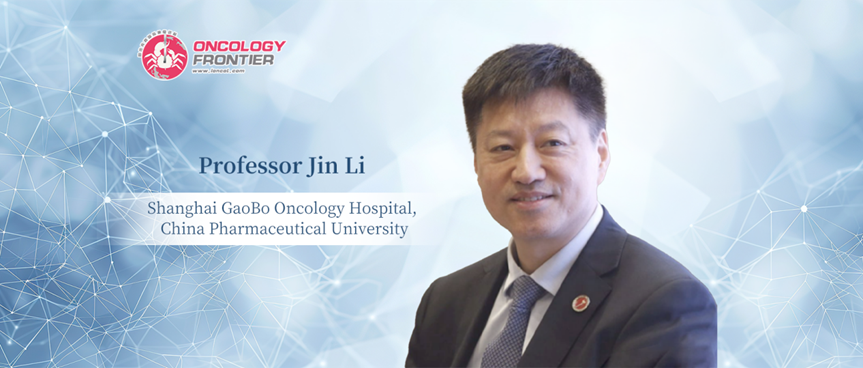
ASCO Researchers Speak丨Professor Jin Li: Utidelone Becomes a New First-Line Combination Therapy Option for Advanced Gastric Cancer

ASCO Researchers Speak丨Professor Jin Li: Utidelone Becomes a New First-Line Combination Therapy Option for Advanced Gastric Cancer

At the 2024 American Society of Clinical Oncology (ASCO) annual meeting, a multi-center study led by Professor Jin Li from Shanghai GaoBo Oncology Hospital, China Pharmaceutical University, reported that utidelone demonstrated significant anti-tumor activity in various pre-treated advanced solid tumors, particularly in first-line treatment of advanced gastric cancer. Oncology Frontier invited Professor Jin Li to further interpret the study
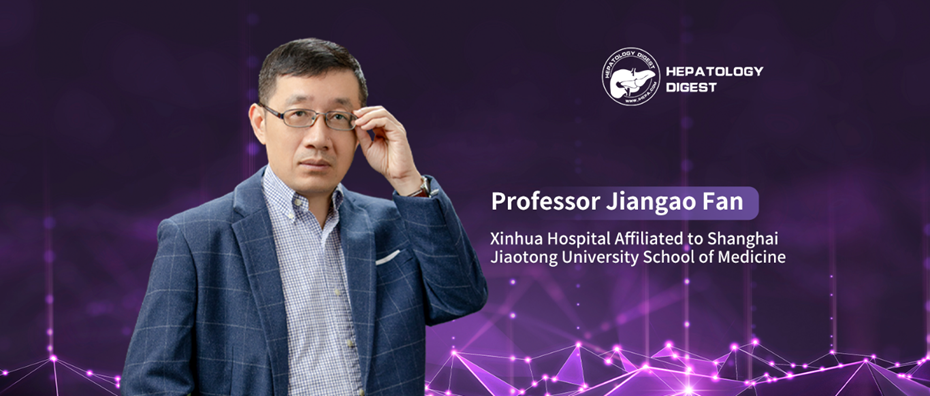
EASL China Voice丨Professor Jian Gao Fan: Selective THR-β Agonist ASC41 Significantly Reduces Liver Fat and ALT Levels in MASH Patients After 12 Weeks

EASL China Voice丨Professor Jian Gao Fan: Selective THR-β Agonist ASC41 Significantly Reduces Liver Fat and ALT Levels in MASH Patients After 12 Weeks

From June 5 to 8, 2024, the European Association for the Study of the Liver (EASL) Annual Meeting was held in Milan, Italy. This major event brought together over 7,000 professionals, including clinicians, researchers, healthcare workers, patient representatives, and industry experts. During the conference, Professor Jian Gao Fan from the Xinhua Hospital Affiliated to Shanghai Jiao Tong University School of Medicine presented a poster titled “ASC41, a selective THR-β agonist significantly reduces liver fat and ALT in biopsy-confirmed MASH patients after 12-week treatment: an interim analysis of a 52-week serial liver biopsy study,” which attracted considerable attention. Professor Fan shared with us the main findings and clinical significance of this research.
EASL Featured New Voices丨Functional Cure of Chronic Hepatitis B: A Promising Journey

EASL Featured New Voices丨Functional Cure of Chronic Hepatitis B: A Promising Journey

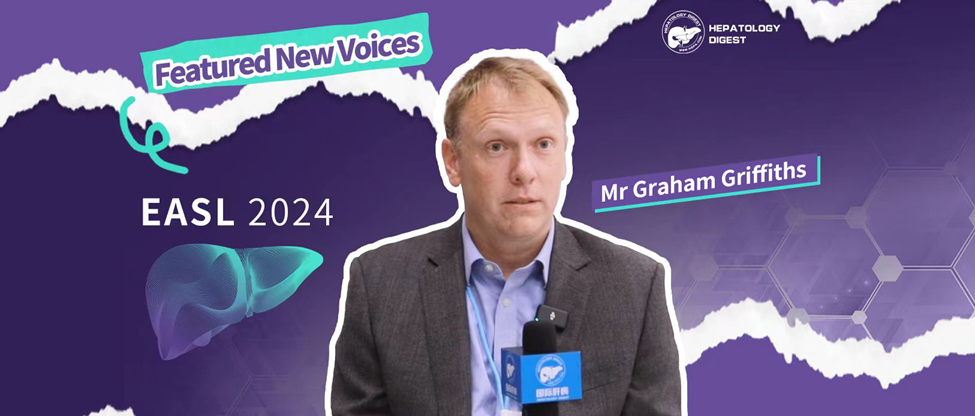
Chronic hepatitis B (CHB) remains a significant global health issue. At this year's European Association for the Study of the Liver (EASL) Annual Meeting, the functional cure of CHB emerged as a focal point of research. "Hepatology Digest" had the privilege of speaking with Mr. Graham Griffiths, Chief Brand Officer at Barinthus Biotherapeutics, to gain insights into the conference highlights and the latest advancements in CHB treatment. Mr. Griffiths not only shared his key takeaways from the event but also detailed the progress made in the pursuit of a functional cure for CHB. He emphasized that combining various therapeutic strategies holds promise for more effective treatments and expressed optimism about the collaborative spirit and innovative potential showcased at the conference.
EASL Voice of China丨Professor Yu Chen: Promising Prospects for HYX1 Liver Stem Cells in Treating Acute Liver Failure by Inhibiting Ferroptosis through Exosomes

EASL Voice of China丨Professor Yu Chen: Promising Prospects for HYX1 Liver Stem Cells in Treating Acute Liver Failure by Inhibiting Ferroptosis through Exosomes

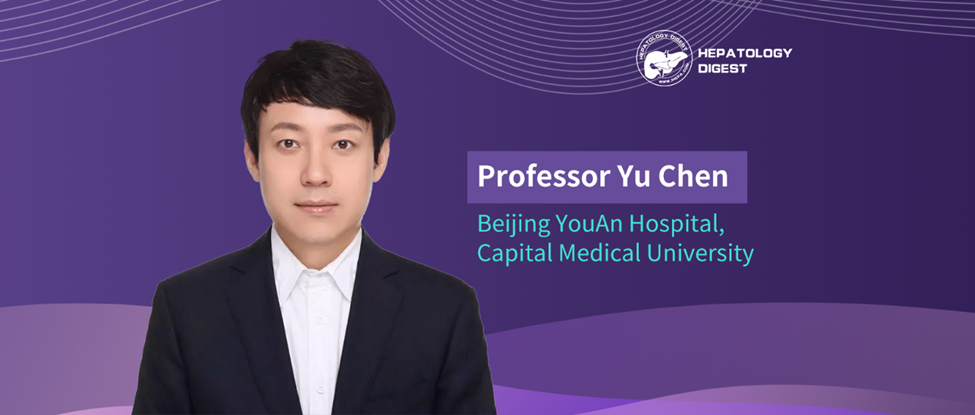
Acute liver failure (ALF) is a severe liver injury caused by factors such as drugs, viruses, and ischemia-reperfusion injury, leading to massive hepatocyte apoptosis, necrosis, and potentially irreversible liver damage. The condition progresses rapidly, with high short-term mortality rates and poor prognosis, while medical treatment options are limited. Although liver transplantation is an effective strategy for treating ALF, its high cost, scarcity of donor livers, and lifelong requirement for immunosuppressants limit its clinical application. Therefore, new treatment methods for ALF are urgently needed. On June 7, 2024, at the European Association for the Study of the Liver (EASL) annual meeting in Milan, a study by Professor Yu Chen's team from Beijing YouAn Hospital, Capital Medical University, was presented as a poster (Abstract No. FRI-347). This study revealed the mechanism by which liver-derived stem cells (HYX1) can be used to treat ALF, providing new insights for the future clinical treatment of ALF.
EASL Voice of China丨Professor Jian Sun: Correlation Between Serum HBV RNA and Hepatocellular Carcinoma Risk in Chronic Hepatitis B Patients

EASL Voice of China丨Professor Jian Sun: Correlation Between Serum HBV RNA and Hepatocellular Carcinoma Risk in Chronic Hepatitis B Patients

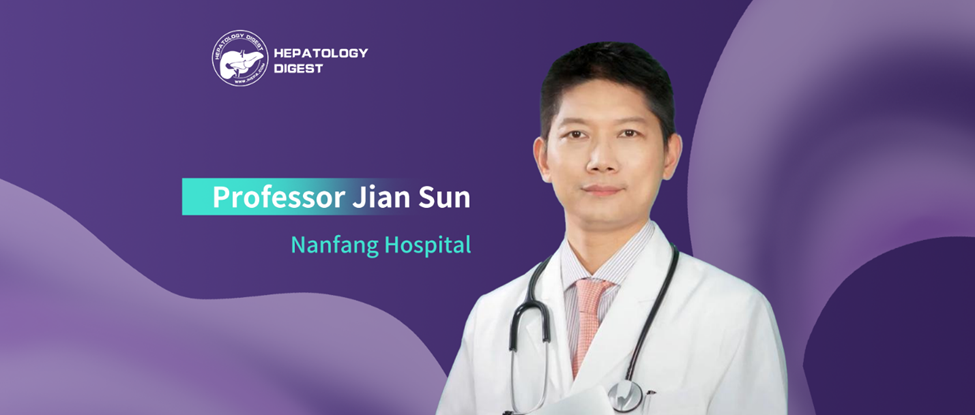
Chronic hepatitis B (CHB) is a global public health issue, with hepatocellular carcinoma (HCC) being one of its most severe complications. Traditional viral markers have limited efficacy in predicting HCC risk, highlighting the need for new viral predictive indicators. On June 5, 2024, at the European Association for the Study of the Liver (EASL) annual meeting in Milan, Italy, Professor Jian Sun's team from Nanfang Hospital, Southern Medical University, presented a compelling poster on the predictive role of serum HBV RNA reduction in HCC risk among CHB patients undergoing nucleos(t)ide analog (NA) therapy (Abstract No. LBP-037).