CSCO 2024 | NEOPRISM-CRC Study PI Discusses “Reducing Toxicity and Enhancing Efficacy” Strategies for Neoadjuvant Immunotherapy in Locally Advanced

CSCO 2024 | NEOPRISM-CRC Study PI Discusses “Reducing Toxicity and Enhancing Efficacy” Strategies for Neoadjuvant Immunotherapy in Locally Advanced

Neoadjuvant therapy for locally advanced colorectal cancer has made significant progress over the past 20 years, but it still faces limitations such as adverse reactions, organ dysfunction, and unsatisfactory control of distant metastasis. In recent years, with the improvement of surgical techniques and further development of tumor molecular typing research, how to further improve local control rates, reduce distant metastasis rates, and even spare surgery and preserve organs based on clinical response has become the current patient needs and research objectives.
Dr. Jun Guo: Reflecting on Progress in Renal Cancer Treatment and Pioneering a New Era of Cellular Therapy for Metastatic Patients

Dr. Jun Guo: Reflecting on Progress in Renal Cancer Treatment and Pioneering a New Era of Cellular Therapy for Metastatic Patients

Renal cancer is one of the three major malignancies in the urinary system, with advanced metastatic renal cancer having a poor prognosis and an overall five-year survival rate of less than 20%. Recent advances in targeted therapies and immunotherapies have led to significant improvements in treatment outcomes; however, for patients progressing beyond first-line therapies, the quest to extend survival remains an ongoing challenge. At the recently held 8th West China Uro-Oncology Tianfu Academic Conference, Dr. Jun Guo from Peking University Cancer Hospital shared insights into "Future Trends in Cellular Therapy for Renal Cancer," offering new hope for these patients. Following the conference, Oncology Frontier invited Professor Guo to provide further insights.
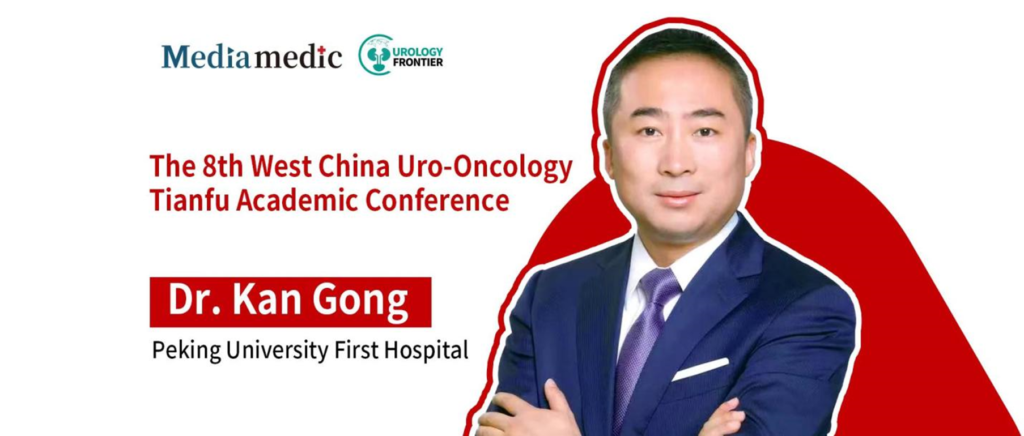
Dr. Kan Gong: Reflecting on Key Challenges and Hotspots in Renal Cancer Diagnosis and Treatment in China, Exploring New Frontiers in Translational Research | The 8th West China Uro-Oncology Tianfu Academic Conference

Dr. Kan Gong: Reflecting on Key Challenges and Hotspots in Renal Cancer Diagnosis and Treatment in China, Exploring New Frontiers in Translational Research | The 8th West China Uro-Oncology Tianfu Academic Conference

Renal cancer is one of the three major malignancies in the urinary system. Early-stage renal cancer often presents with concealed symptoms, making it difficult to differentiate between benign and malignant tumors. Advanced renal cancer primarily relies on targeted or immunotherapy, yet the effectiveness of existing targeted drugs is low, and resistance tends to develop easily. Therefore, conducting targeted translational research based on clinical problems offers hope for improving the current state of renal cancer diagnosis and treatment in China. At the 8th West China Uro-Oncology Tianfu Academic Conference held in Chengdu, Oncology Frontier invited Dr. Kan Gong from the Institute of Urology at Peking University and the Department of Urology at Peking University First Hospital to share insights into the current state of renal cancer diagnosis and treatment in China, as well as the highlights of his team’s work in translational research.
Ten Years of Progress in Standardization: Key Updates to the 2024 Chinese Guidelines for Advanced Breast Cancer Treatment

Ten Years of Progress in Standardization: Key Updates to the 2024 Chinese Guidelines for Advanced Breast Cancer Treatment

At the 2024 Breast Cancer Standardized Diagnosis and Treatment & Quality Control Conference (November 8–10, Beijing), Dr. Ying Fan from the Cancer Hospital Chinese Academy of Medical Sciences, presented the key updates to the 2024 Chinese Advanced Breast Cancer Clinical Guidelines (ABCC). The updated ABCC guidelines include treatment recommendations for different breast cancer subtypes and introduce a new chapter on managing adverse events. Below is a summary of the key updates to the guidelines.
Strengthening Global Bonds in Cancer Control: Highlights from the CACA-SLACOM and CACA-SIS Summits

Strengthening Global Bonds in Cancer Control: Highlights from the CACA-SLACOM and CACA-SIS Summits

The 2024 Chinese Congress of Holistic Integrative Oncology (CCHIO) and the 4th Asian Oncology Summit (AOS), hosted by the Chinese Anti-Cancer Association (CACA) in collaboration with the Chinese Academy of Integrative Medicine and the Shaanxi Anti-Cancer Association, took place from November 14–17 in the ancient city of Xi'an. This prestigious event featured specialized summits co-organized by CACA and global cancer organizations, including the National Comprehensive Cancer Network (NCCN), Union for International Cancer Control (UICC), Society of Latin American and Caribbean Oncology (SLACOM), and International Society of Breast Disease (SIS), to foster international collaboration in cancer prevention and treatment.
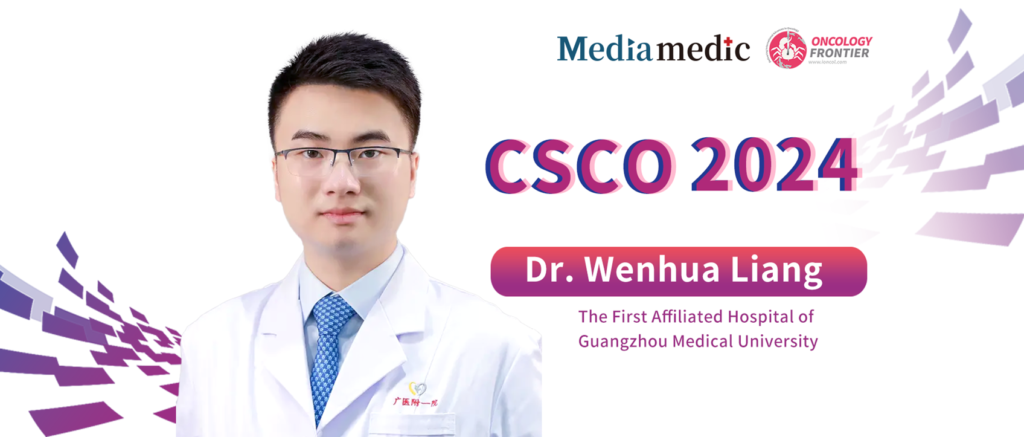
CSCO 2024丨Dr. Wenhua Liang: Collaborative Efforts — Exploring New Precision Medicine Pathways for NSCLC in the Era of Immunotherapy

CSCO 2024丨Dr. Wenhua Liang: Collaborative Efforts — Exploring New Precision Medicine Pathways for NSCLC in the Era of Immunotherapy

The 27th National Conference of Clinical Oncology and 2024 CSCO Academic Annual Meeting, jointly organized by the Chinese Society of Clinical Oncology and the Beijing Xisike Clinical Oncology Research Foundation, was successfully held in Xiamen from September 25 to 29, 2024. The conference included multiple sessions on lung cancer, which brought together the latest advances and frontiers in lung cancer research from both domestic and international perspectives. During the conference, Oncology Frontier invited Dr. Wenhua Liang from The First Affiliated Hospital of Guangzhou Medical University to share new clinical developments in immunotherapy combinations for non-small cell lung cancer (NSCLC) and recent breakthroughs in precision diagnostic pathways.
ESMO 2024丨Unveiling the “Genetic Map” of Pancreatic Cancer: How Driver Mutations Guide Personalized Treatment

ESMO 2024丨Unveiling the “Genetic Map” of Pancreatic Cancer: How Driver Mutations Guide Personalized Treatment

At the 2024 European Society for Medical Oncology (ESMO) Annual Meeting, in the session dedicated to basic science and translational research, researchers presented groundbreaking findings on driver mutations in pancreatic cancer and their role in predicting patient prognosis and treatment response. The research highlighted significant differences in the diversity of driver gene mutations between healthy pancreatic tissue and tumor tissue, suggesting these differences play a crucial role in the formation and progression of pancreatic cancer. These findings also provide an important basis for personalized treatment. Dr. Francisco Martínez-Jiménez from Vall d'Hebron Barcelona Hospital Campus , Spain, interpreted the main research findings and discussed their clinical implications.
ESMO 2024丨Dr. Antonio Passaro: Zipalertinib Shows Promising Efficacy and Safety in EGFR Exon 20 Insertion-Mutant NSCLC Patients

ESMO 2024丨Dr. Antonio Passaro: Zipalertinib Shows Promising Efficacy and Safety in EGFR Exon 20 Insertion-Mutant NSCLC Patients

The 2024 European Society for Medical Oncology (ESMO) Annual Meeting was held from September 13 to 17 in Barcelona, Spain, where several significant advances in lung cancer research were presented. Dr. Antonio Passaro from the European Institute of Oncology Division of Thoracic Oncology in Milan, Italy, shared insights on the safety and antitumor activity of Zipalertinib in previously treated NSCLC patients with EGFR exon 20 insertion mutations. Oncology Frontier had the opportunity to interview Professor Passaro on-site, where he discussed the latest advances in EGFR-targeted therapies.