EASL Express丨Latest Advances in Bulevirtide Treatment for Chronic Hepatitis D

EASL Express丨Latest Advances in Bulevirtide Treatment for Chronic Hepatitis D

Hepatitis D virus (HDV) is a defective virus that requires the hepatitis B surface antigen (HBsAg) to replicate. Co-infection with HBV and HDV is considered the most severe form of chronic viral hepatitis, accelerating liver-related mortality and the development of hepatocellular carcinoma (HCC). At the 2024 European Association for the Study of the Liver (EASL) annual meeting held in Milan, Italy from June 5-8, the latest research on the treatment of chronic hepatitis D (CHD) with Bulevirtide (BLV) drew significant attention. These studies not only provide new strategies and evidence-based medicine for CHD treatment but also lay the foundation for future research. This article compiles and organizes three key studies presented at the conference for our readers.

EASL Exclusive Interview丨Professor Jun Li: Comprehensive Research on Acute-on-Chronic Liver Failure from Pathogenesis to Clinical Treatment

EASL Exclusive Interview丨Professor Jun Li: Comprehensive Research on Acute-on-Chronic Liver Failure from Pathogenesis to Clinical Treatment

Acute-on-chronic liver failure (ACLF) is a complex syndrome characterized by acute liver function deterioration based on chronic liver disease, accompanied by high mortality rates of liver and extra-hepatic organ failure. The short-term mortality rate of comprehensive internal medicine treatment ranges from 50% to 90%. Due to its high mortality and complex pathogenesis, research and treatment strategies for ACLF are particularly crucial. From June 5-8, 2024, the European Association for the Study of the Liver (EASL) Annual Meeting was held in Milan, Italy, where Professor Jun Li 's team from the First Affiliated Hospital of Zhejiang University School of Medicine presented five research findings related to ACLF. Hepatology Digest invited Professor Jun Li to introduce the highlights and significance of these studies, share his conference insights, and discuss the future development of the ACLF field. The following is the interview transcript.
EASL China Voice丨Professor Shuangsuo Dang’s Team Showcases Three Achievements in Milan

EASL China Voice丨Professor Shuangsuo Dang’s Team Showcases Three Achievements in Milan

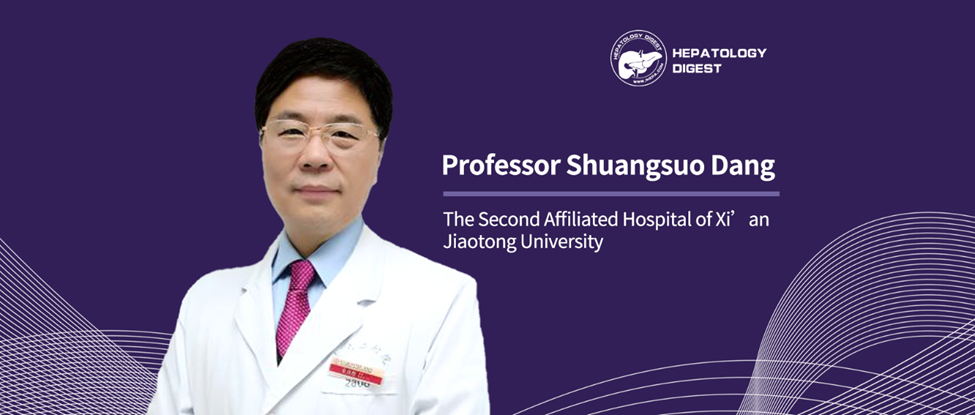
From June 5-8, 2024, the European Association for the Study of the Liver (EASL) Annual Meeting was successfully held in Milan, Italy. During this event, the team led by Professor Shuangsuo Dang from the Department of Infectious Diseases at the Second Affiliated Hospital of Xi’an Jiaotong University presented three significant clinical and basic research findings: real-world antiviral treatment for chronic hepatitis B (CHB), mechanisms and treatment of metabolic-associated fatty liver disease (MAFLD), and risk factors and mechanisms of hepatocellular carcinoma (HCC). This report covers these studies for our readers.
EASL Special Report丨Focus on the Management of Hepatitis B, Cirrhosis, and Portal Hypertension

EASL Special Report丨Focus on the Management of Hepatitis B, Cirrhosis, and Portal Hypertension

Editor's Note: From June 5-8, 2024, the European Association for the Study of the Liver (EASL) Annual Meeting was held in Milan, Italy. Over 7,000 hepatology experts from around the world gathered for this academic event. On the first day, the conference focused on various fields including chronic hepatitis B, cirrhosis, and portal hypertension. Hepatology Digest invited two young experts from the Chinese University of Hong Kong, Professor Terry Yip and Dr. Jimmy Che-To Lai, to share their insights and experiences.
EASL China Voice | Professors Jie Li, Julie Zhu, and Minghua Zheng: New Combined Non-Invasive Score Using PRO-C3 and GP73 Shows Significant Advantage in Assessing Liver Fibrosis in Chronic Hepatitis B

EASL China Voice | Professors Jie Li, Julie Zhu, and Minghua Zheng: New Combined Non-Invasive Score Using PRO-C3 and GP73 Shows Significant Advantage in Assessing Liver Fibrosis in Chronic Hepatitis B

Liver biopsy is the "gold standard" for diagnosing liver fibrosis, but due to its high cost, invasive nature, and other disadvantages, it is not widely used. Currently, various non-invasive tests (NITs) based on serum biochemical indicators and/or imaging have been developed to evaluate liver stiffness and diagnose liver fibrosis, aiming to identify high-risk populations early for timely intervention and management. However, the diagnostic performance of various NITs varies, and some diagnostic devices are not easily accessible. Finding an NIT with high accuracy and accessibility is a clinical challenge.
EASL Highlights | EASL-EASD-EASO Jointly Release Clinical Practice Guidelines for Metabolic Associated Fatty Liver Disease

EASL Highlights | EASL-EASD-EASO Jointly Release Clinical Practice Guidelines for Metabolic Associated Fatty Liver Disease

On June 7, 2024, at 5:30 PM in Milan, Italy, the European Association for the Study of the Liver (EASL), the European Association for the Study of Diabetes (EASD), and the European Association for the Study of Obesity (EASO) jointly released the latest Clinical Practice Guidelines for the management of Metabolic Associated Fatty Liver Disease (MASLD) at the EASL 2024 Annual Meeting. The guidelines cover a wide range of topics from the use of non-invasive diagnostic tools to treatment strategies, emphasizing the importance of treating obesity and diabetes and multidisciplinary collaboration in the management of MASLD. These guidelines have been simultaneously published online in the official journals of EASL, EASD, and EASO, such as the Journal of Hepatology.
EASL China Voice | Dr. Rui Huang’s Team: Muscle Gain and Fat Loss Help Reduce Mortality Risk in Cirrhosis Patients

EASL China Voice | Dr. Rui Huang’s Team: Muscle Gain and Fat Loss Help Reduce Mortality Risk in Cirrhosis Patients

From June 5-8, 2024, the European Association for the Study of the Liver (EASL) Annual Meeting took place in the beautiful city of Milan, Italy. Over 7,000 liver disease experts from around the world attended this top-tier academic event. The conference covered a range of diseases including viral hepatitis, metabolic associated fatty liver disease, cirrhosis, liver cancer, and liver failure, presenting the latest clinical research findings in the field. Among the participants, Professor Rui Huang's team from Peking University People's Hospital had two studies accepted for presentation as poster sessions. Their research found that the ratio of visceral fat area to subcutaneous fat area (VSR), sarcopenia, and muscle fat infiltration are independent predictors of liver-related mortality in cirrhosis patients. Additionally, loss of skeletal muscle mass is crucial in predicting liver-related mortality in cirrhosis patients. These findings suggest that actively managing body composition, particularly skeletal muscle mass and visceral and subcutaneous fat content, can help improve prognosis in cirrhosis patients.
DiabetesLiver Score for Predicting Advanced Liver Fibrosis and Adverse Liver Events in Type 2 Diabetes Patients

DiabetesLiver Score for Predicting Advanced Liver Fibrosis and Adverse Liver Events in Type 2 Diabetes Patients

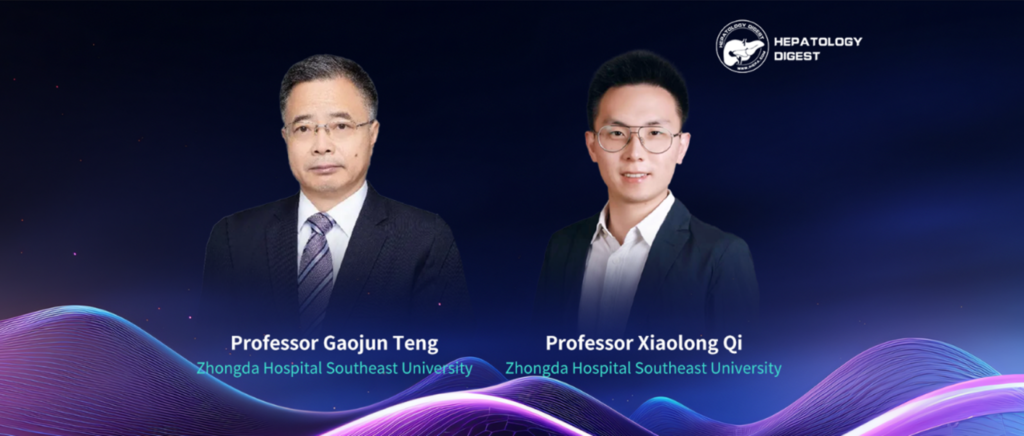
On June 5, 2024, the European Association for the Study of the Liver (EASL) Annual Meeting commenced in Milan, Italy, bringing together experts and scholars from the global hepatology field. The conference aimed to share the latest developments and trends in liver disease research, providing valuable references for future research and clinical practice. On the first day of the conference, Academician Gaojun Teng of the Chinese Academy of Sciences and the initiator of the China Diabetes and Liver Disease Management (CDLM) initiative, along with Xiaolong Qi, founder of CHESS and co-initiator of CDLM, presented a novel study. They introduced the DiabetesLiver Score, a non-invasive tool to assess advanced liver fibrosis in type 2 diabetes (T2DM) patients and predict liver-related adverse events.
EASL China Voice | Professor Guohong Han: Upgraded Prognostic Prediction for HCC Patients Undergoing TACE – “6-and-12 Model 2.0”

EASL China Voice | Professor Guohong Han: Upgraded Prognostic Prediction for HCC Patients Undergoing TACE – “6-and-12 Model 2.0”

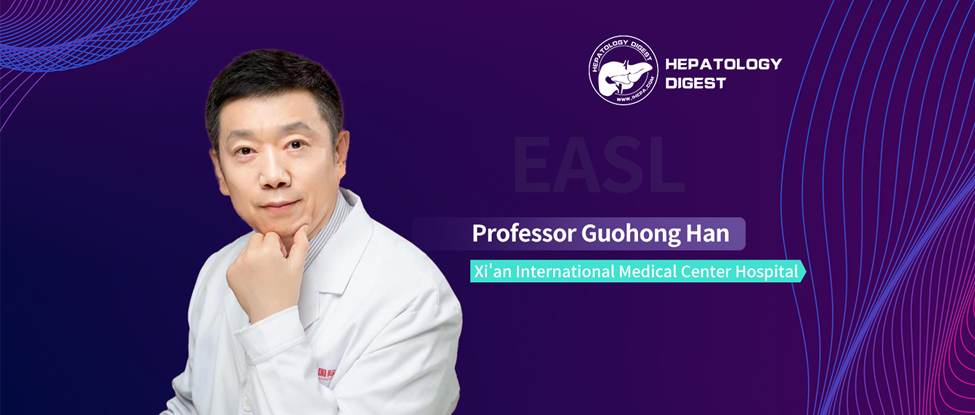
Transarterial chemoembolization (TACE) is the recommended treatment for intermediate-stage hepatocellular carcinoma (HCC) patients and a viable option for early-stage HCC patients who cannot undergo curative treatments. However, the prognosis for TACE varies significantly among individuals, with objective response rates ranging from 40% to 80% and overall survival times from 13 to 48 months. Given the advancements in molecular targeted therapy and immunotherapy for HCC, accurately predicting individual prognosis and identifying patients with poor prognosis is crucial for optimizing treatment choices and extending survival. On June 6, 2024, at the EASL Annual Meeting in Milan, Professor Guohong Han from Xi'an International Medical Center Hospital in China shared the latest clinical research. Their team developed a predictive model for TACE outcomes, helping guide treatment choices for intermediate HCC patients and improving their survival (Abstract No.: THU-475).
EASL 2024 Chairman Interview: Breakthroughs and Challenges in Hepatology

EASL 2024 Chairman Interview: Breakthroughs and Challenges in Hepatology

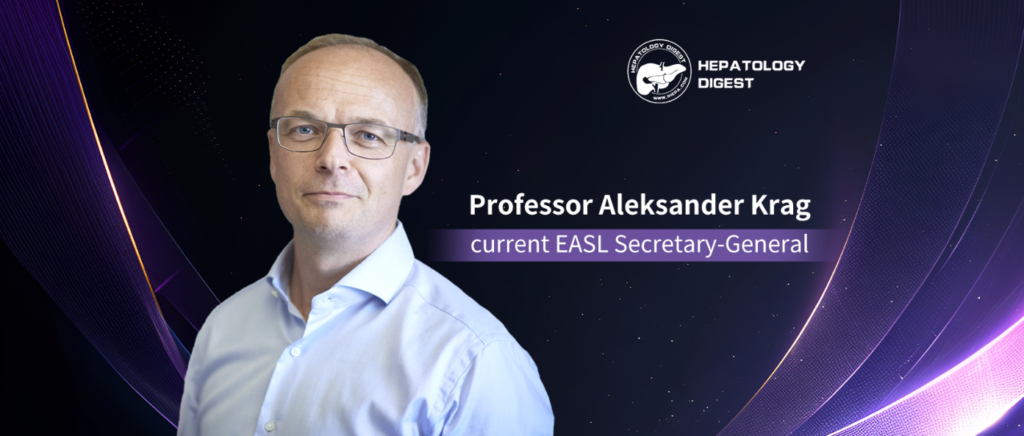
From June 5-8, 2024, the European Association for the Study of the Liver (EASL) Annual Meeting was held in the cultural city of Milan, Italy. This premier academic event attracted over 7,000 hepatology professionals from around the world. During the conference, we had the privilege of interviewing the Chairman of this year’s conference, and current EASL Secretary-General, Professor Aleksander Krag. He shared key topics of the conference and the latest research advancements in hepatology. Professor Krag emphasized that metabolic-associated fatty liver disease (MAFLD) has become the most widespread liver disease globally and highlighted the importance of drug development and policy cooperation in advancing liver disease treatment and management. He also discussed the challenges and future directions in liver disease research, encouraging collaboration and innovation in the field.