Blood Science Update|Alpha-Enolase Drives AML Progression via MAPK/ERK Signaling: Condensed Summary 

Blood Science Update|Alpha-Enolase Drives AML Progression via MAPK/ERK Signaling: Condensed Summary 

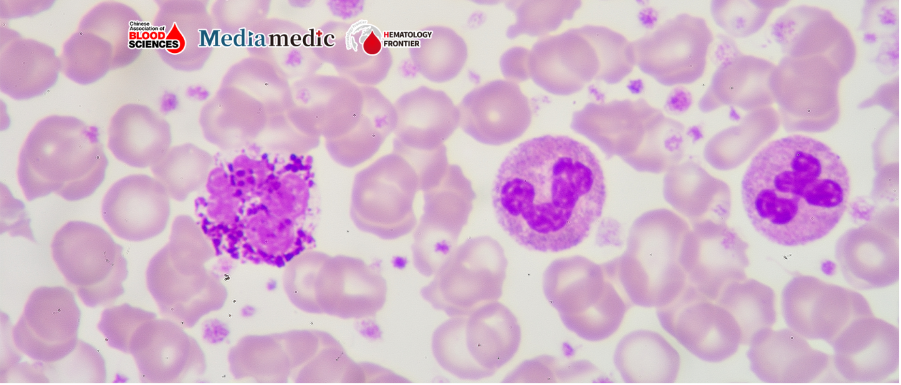
The commentary “Alpha-enolase promotes progression of acute myeloid leukemia via MAPK/ERK signaling pathway” by Zhang et al., published in Blood Science (2025), examines the clinical and biological significance of ENO1 in acute myeloid leukemia (AML). ENO1, a glycolytic enzyme with additional regulatory roles, has been implicated in several solid tumors, but its function in AML had not been fully clarified. Through integrated analyses of patient samples, functional assays, transcriptomics, and in vivo models, the authors demonstrate that ENO1 is overexpressed in AML and promotes disease progression mainly through MAPK/ERK pathway activation. 
 Comparing transplantation outcomes: haploidentical vs. unrelated donors 

 Comparing transplantation outcomes: haploidentical vs. unrelated donors 

At the 50th Annual Meeting of the EBMT in Glasgow, Scotland, Raynier Devillier, MD, PhD, of the Paoli-Calmettes Institute in Marseille, France, offered a detailed comparison of transplantation outcomes for patients receiving grafts from haploidentical versus unrelated donors. Dr. Devillier highlighted new data from The French Society of Marrow Transplantation and Cellular Therapy (SFGM-TC) that indicates survival outcomes are comparable between the two donor types. This finding allows clinicians greater flexibility to select a donor based on the individual needs of the patient. 
A New Era for AML Treatment: Integrating Novel Therapies and Global Collaboration 

A New Era for AML Treatment: Integrating Novel Therapies and Global Collaboration 

Professor Norbert Claude Gorin, the first Chair of the Global Committee of the European Society for Blood and Marrow Transplantation (EBMT), discussed the evolution of transplantation strategies for Acute Myeloid Leukemia (AML) and the importance of international cooperation. In an interview with Hematology Frontier during the second 2025 CTI conference in Hangzhou, he highlighted how decades of progress have reshaped the treatment landscape. 
Bringing Together Global Expertise to Advance Uro-Oncology

Bringing Together Global Expertise to Advance Uro-Oncology

During the 2025 ESMO Congress, the first and only ESMO-authorized “ESMO China Focus” Uro-Oncology Session was successfully held on October 19 in Berlin. The forum highlighted major advances in urothelial carcinoma and prostate cancer, bringing together Chinese and international experts for in-depth academic discussions and intellectual exchange. Experts agreed that data from landmark studies such as EV-302 and EV-103 firmly establish enfortumab vedotin (EV)–based combination therapy as the new first-line standard of care for locally advanced or metastatic urothelial carcinoma (La/mUC). In addition, androgen-receptor pathway inhibitors (ARPI), represented by enzalutamide—which remains the only ARPI with 8-year overall-survival follow-up—continue to redefine long-term survival expectations for patients with prostate cancer, marking a new era for uro-oncology.
When the breeze rises over West Lake and wisdom sends ripples across the world, when the Qiantang tide surges and innovation breaks waves toward a new era— the 2025 International Cell and Immunotherapy Congress officially opens 

When the breeze rises over West Lake and wisdom sends ripples across the world, when the Qiantang tide surges and innovation breaks waves toward a new era— the 2025 International Cell and Immunotherapy Congress officially opens 

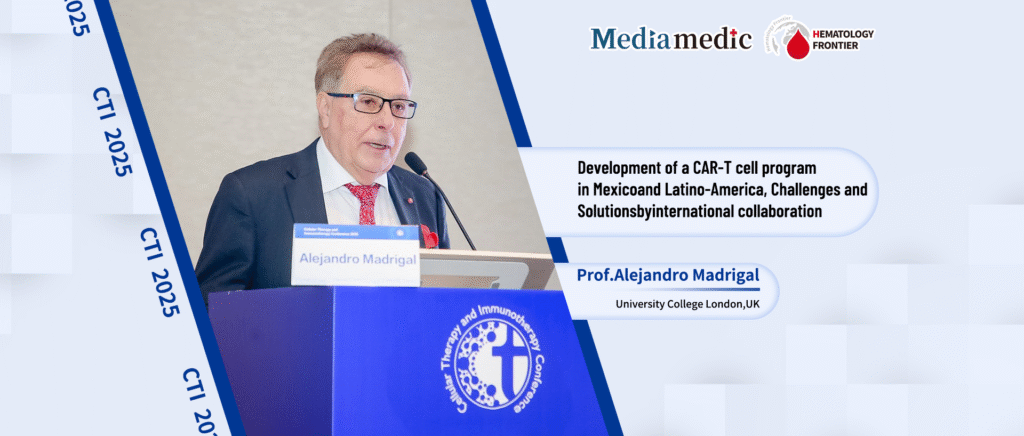
On November 14, 2025, the Second International Cell and Immunotherapy Congress convened in Hangzhou. The meeting is co-chaired by He Huang from the First Affiliated Hospital of Zhejiang University School of Medicine and Mohamad Mohty, President of the International Academy for Clinical Hematology (IACH). Clinical experts, basic researchers, young scientists, and representatives from biopharmaceutical enterprises gathered from around the globe to engage in in-depth discussions on the latest advances in cell and immunotherapy. The congress not only showcased cutting-edge scientific achievements but also fostered meaningful interdisciplinary collaboration, illuminating key directions for future innovation in cell therapy, immunotherapy, and hematologic research. Oncology Frontier – Hematology Frontier Update has compiled highlights from the first day of the conference to share this academic event with colleagues and explore new frontiers in the field together.