Pre-ACLF and Other Different Clinical Courses of Acute Decompensated Cirrhosis

Pre-ACLF and Other Different Clinical Courses of Acute Decompensated Cirrhosis

ACLF Monthly Review" is a special academic review column on ACLF invited by the editorial department of Hepatology Digest, created by the Chinese Acute-on-Chronic Liver Failure Consortium (Ch-CLIF-C). Each month, this column focuses on a specific area related to ACLF, aiming to popularize the concept and significance of ACLF and help readers quickly understand developments in the field. This column is intended to benefit both liver disease experts and researchers who need to understand current hotspots in the field, as well as frontline clinical practitioners who require practical knowledge.
BOC/BOA Innovation Forum | Professor Jun Guo and ProfessorPei Dong: An Overview of Advances in Kidney Cancer Treatment and the Pulse of Combination Therapy

BOC/BOA Innovation Forum | Professor Jun Guo and ProfessorPei Dong: An Overview of Advances in Kidney Cancer Treatment and the Pulse of Combination Therapy

From July 5-7, 2024, the 2024 Chinese Clinical Oncology Annual Progress Seminar (BOC) and Beast of ASCO® 2024 China were grandly held in Guangzhou. On the 6th, a special session on urinary system tumors convened, gathering significant progress from ASCO. In the field of kidney cancer treatment, besides international advancements, China has made significant strides in first-line and second-line treatments involving immunotherapy combinations and HIF-2α inhibitors, showcasing China’s cutting-edge scientific strength on the international stage. At this conference, "Oncology Frontier" invited Professor Jun Guo from Peking University Cancer Hospital to provide an overview of the current status and prospects of advanced kidney cancer treatment. Additionally, Professor Pei Dong from Sun Yat-sen University Cancer Center was interviewed to discuss the unmet clinical needs and cutting-edge developments in kidney cancer treatment domestically and internationally, and to grasp the trends in combination therapy for kidney cancer.
Professor Songqing Ye: Heterogeneity in HER2 Expression in Breast Cancer and Novel ADC Treatment Strategies

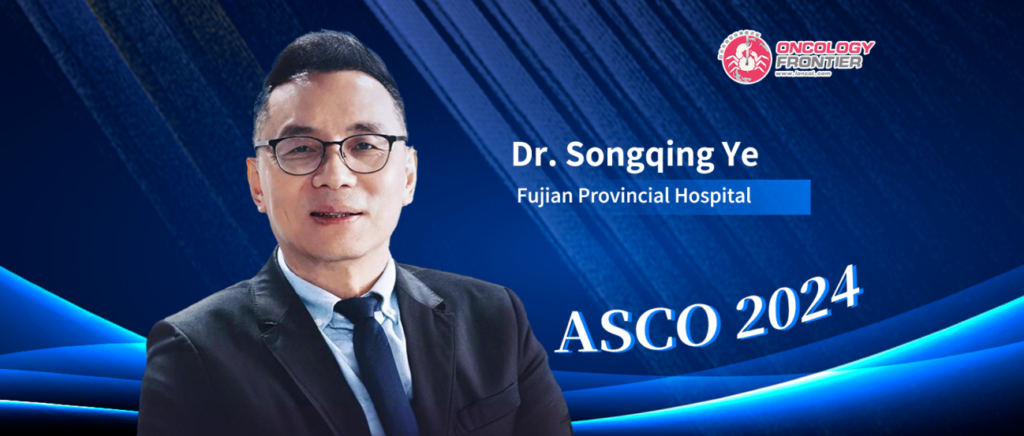
Professor Songqing Ye: Heterogeneity in HER2 Expression in Breast Cancer and Novel ADC Treatment Strategies

In recent years, the accurate detection of HER2 (human epidermal growth factor receptor 2) expression in breast cancer has become crucial for guiding personalized treatment strategies. However, the heterogeneity of HER2 expression, including spatial and temporal heterogeneity, poses challenges for clinical decision-making. In this article, Professor Songqing Ye from Fujian Provincial Hospital delves into the impact of tumor HER2 expression heterogeneity and how to select appropriate samples (primary or metastatic lesions) for testing to utilize novel ADC drugs effectively, aiming to provide more precise guidance for personalized treatment of breast cancer patients.
ASCO 2024 Researcher Insights丨Professor Yeon Hee Park Discusses Updated Survival Results from the Randomized Phase II Young-PEARL Study

ASCO 2024 Researcher Insights丨Professor Yeon Hee Park Discusses Updated Survival Results from the Randomized Phase II Young-PEARL Study

For premenopausal patients with HR+/HER2- metastatic breast cancer (mBC), treatment choices are complex due to physiological characteristics, tumor properties, and treatment tolerance. Many patients receive chemotherapy early due to endocrine resistance and concerns about rapid tumor progression, with capecitabine being a commonly used regimen. At the 2024 ASCO conference, the latest updated survival results from the Young-PEARL randomized phase II study were presented. The study evaluated the safety and clinical anti-tumor efficacy of palbociclib combined with GnRHa and exemestane versus capecitabine in premenopausal HR+/HER2- mBC patients. Oncology Frontier interviewed the primary investigator, Professor Yeon Hee Park from Samsung Medical Center in Seoul, Korea, to discuss the study's background, methods, main results, and clinical significance. This comparative study provides significant insights into endocrine therapy for HR+/HER2- advanced breast cancer, offering a valuable alternative to traditional chemotherapy.
ASCO Hot Review丨Professor Qiang Zhang: Multi-Gene Testing Facilitates Precision Treatment for HR+/HER2- Early-Stage Breast Cancer Patients

ASCO Hot Review丨Professor Qiang Zhang: Multi-Gene Testing Facilitates Precision Treatment for HR+/HER2- Early-Stage Breast Cancer Patients

In the field of breast cancer treatment, gene testing for early-stage breast cancer has become a vital component of precision medicine. By deeply analyzing the genetic expression profiles of patients, we can more accurately predict disease progression and develop more personalized adjuvant treatment strategies. However, how is gene testing currently applied in clinical practice, and what challenges remain? Oncology Frontier invited Professor Qiang Zhang from Liaoning Cancer Hospital & Institute to discuss the FLEX study presented at the 2024 ASCO conference.
2024 CSCO YOUNG丨Professor Wenxing Qin: Small, Targeted Clinical Studies Can Also Improve Clinical Practice

2024 CSCO YOUNG丨Professor Wenxing Qin: Small, Targeted Clinical Studies Can Also Improve Clinical Practice

The mid-year meeting of the Youth Expert Committee of the Chinese Society of Clinical Oncology (CSCO YOUNG) was held from June 28-30, 2024, in Shanghai. Young talents from across the country gathered to share experiences and discuss the future. Several experts shared their clinical and translational research experiences during the conference. Clinical research derived from practice is crucial for enhancing medical innovation, bridging the gap between basic research and clinical practice, and improving the medical research funding landscape. Oncology Frontier invited Professor Wenxing Qin from Fudan University Shanghai Cancer Center to share his experiences in clinical and translational research, balancing research, life, and clinical work, and choosing research directions.
BOC/BOA 2024 Preview | Professor Shukui Qin: Strengthening China’s Global Standing in Liver Cancer Diagnosis and Treatment with “Chinese Wisdom”

BOC/BOA 2024 Preview | Professor Shukui Qin: Strengthening China’s Global Standing in Liver Cancer Diagnosis and Treatment with “Chinese Wisdom”

In recent years, there have been two significant changes in the field of liver cancer. On the one hand, with the development of treatment technologies, the prognosis of liver cancer patients has significantly improved, shedding its title as the "king of cancers." On the other hand, China's rapid advancements in liver cancer diagnosis and research have contributed a series of "Chinese solutions" and "Chinese wisdom" to global liver cancer prevention and treatment. On the eve of the "2024 Annual Progress Seminar on Chinese Clinical Oncology (BOC) and Best of ASCO 2024 China," Oncology Frontier interviewed the renowned clinical oncology expert, Professor Shukui Qin from The First Affiliated Hospital of China Pharmaceutical University (Nanjing Tianyinshan Hospital), to review China's achievements in liver cancer prevention and treatment research and to share the latest advances in systemic therapy for liver cancer.
ASCO Hot Review丨Professor Qiang Liu: The Prognostic Value of ctDNA in High-Risk Early-Stage Breast Cancer in the MonarchE Study

ASCO Hot Review丨Professor Qiang Liu: The Prognostic Value of ctDNA in High-Risk Early-Stage Breast Cancer in the MonarchE Study

Circulating tumor DNA (ctDNA) is a novel liquid biopsy method that detects tumor-specific DNA mutations in the blood of breast cancer patients, helping to identify high-risk patients prone to recurrence and metastasis. Its prognostic value has been confirmed in multiple studies. At the 2024 ASCO conference, a study (Abstract LBA507) further analyzed the MonarchE study population, confirming that ctDNA testing has predictive value for recurrence risk in HR+/HER2-, lymph node-positive high-risk early-stage breast cancer patients. Oncology Frontier invited Professor Qiang Liu from Sun Yat-sen Memorial Hospital, Sun Yat-sen University  to provide an introduction and commentary.