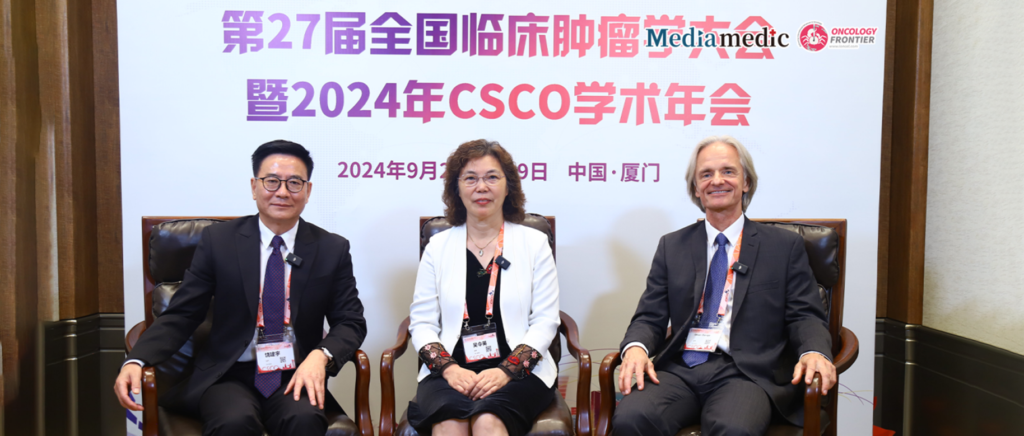
Liver Cancer Breakthrough Unveiled at ESMO 2024!

Liver Cancer Breakthrough Unveiled at ESMO 2024!

Thrilled to share our interview with Professor Guohong Han about the LEAP-012 study, which could revolutionize liver cancer treatment! Combining TACE with lenvatinib and pembrolizumab is showing incredible results for intermediate-stage liver cancer: 46.8% tumor response rate Progression-free survival boosted from 10 to 14.6 months
Exclusive Insights on mHSPC Treatment: Interview with Dr. Fred Saad

Exclusive Insights on mHSPC Treatment: Interview with Dr. Fred Saad

In a recent Media Medic interview, our colleague El Bachir MOURABIT had the privilege to speak with Dr. Fred Saad about breakthrough advancements in metastatic hormone-sensitive prostate cancer (mHSPC) treatment. Dr. Saad emphasized the importance of combining androgen deprivation therapy (ADT) with ARPIs like apalutamide, enzalutamide, or abiraterone for improved survival. He also shared promising results from the Phase 3 ARINOTE study, showcasing darolutamide with ADT as a safe and effective option, especially for patients who may not tolerate chemotherapy.
SOHO 2024 | Dr. Valeria Santini: Imetelstat Demonstrates Durable Efficacy in the Treatment of LR-MDS

SOHO 2024 | Dr. Valeria Santini: Imetelstat Demonstrates Durable Efficacy in the Treatment of LR-MDS

Low-risk myelodysplastic syndromes (LR-MDS) are complex blood disorders characterized by the abnormal proliferation and dysfunction of marrow cells, leading to increased risks of anemia, bleeding, and infection. Although the progression of LR-MDS is relatively slow, the treatment of this disease still faces significant challenges. Existing therapeutic options, such as erythropoiesis-stimulating agents (ESAs) and immunomodulators, may alleviate symptoms to some extent but often struggle to achieve long-term disease control and can be associated with significant side effects. Against this backdrop, Dr. Valeria Santini explored the potential of Imetelstat, a first-in-class oligonucleotide telomerase inhibitor, in treating patients with LR-MDS through the IMerge trial. The 12th Annual Meeting of the Society for Hematologic Oncology (SOHO 2024) took place in Houston, USA, from September 4 to 7, 2024, bringing together top experts in the field of hematologic oncology worldwide to share the latest research findings and discuss new treatment strategies. Hematology Frontier specially invited Dr. Valeria Santini from the University of Florence, MDS Unit, Hematology, DMSC, AOUC, Florence, Italy, to delve into the research outcomes of this Phase III clinical trial, discussing the significant progress achieved by Imetelstat in improving the precision and effectiveness of LR-MDS patient treatment, and how this discovery may provide a new direction for future strategies in the MDS treatment field.
Shaping the Future of Lung Cancer Care: Dr. Caicun Zhou on IASLC’s 50th Anniversary and the Promise of HARMONi2

Shaping the Future of Lung Cancer Care: Dr. Caicun Zhou on IASLC’s 50th Anniversary and the Promise of HARMONi2

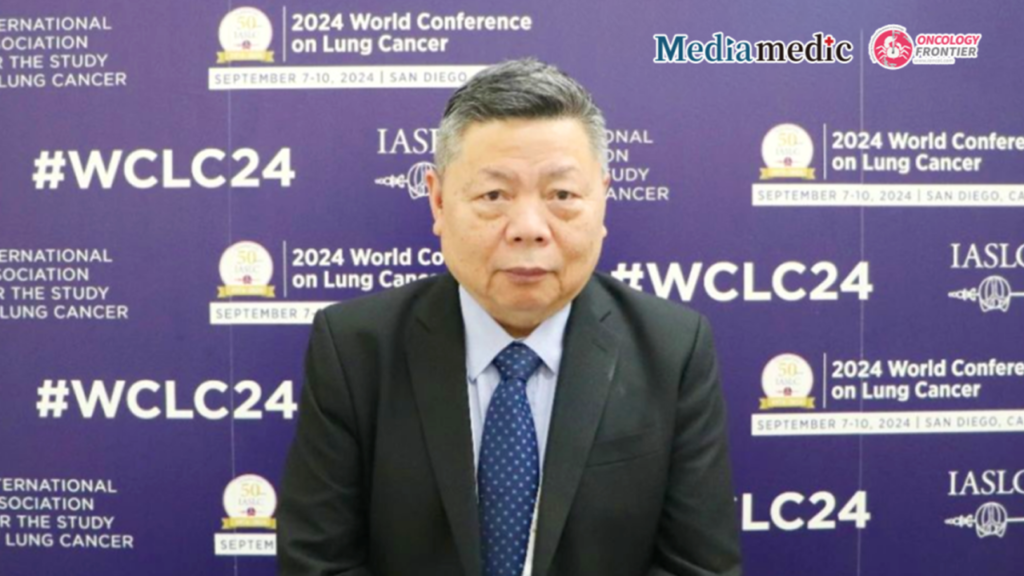
The International Association for the Study of Lung Cancer (IASLC), founded in 1974, has grown into a global organization with over 10,000 members from more than 100 countries and regions. In 2023, Dr. Caicun Zhou from Shanghai Pulmonary Hospital, Tongji University School of Medicine was elected as the IASLC President-Elect for 2023-2025 and will serve as IASLC President for 2025-2027. He is the first IASLC President from mainland China in the organization’s 50-year history. This year marks the 50th anniversary of IASLC, and at the 2024 World Conference on Lung Cancer (WCLC), Oncology Frontier had the opportunity to speak with Dr. Caicun Zhou about IASLC’s remarkable journey over the past five decades in leading the fight against thoracic cancers.
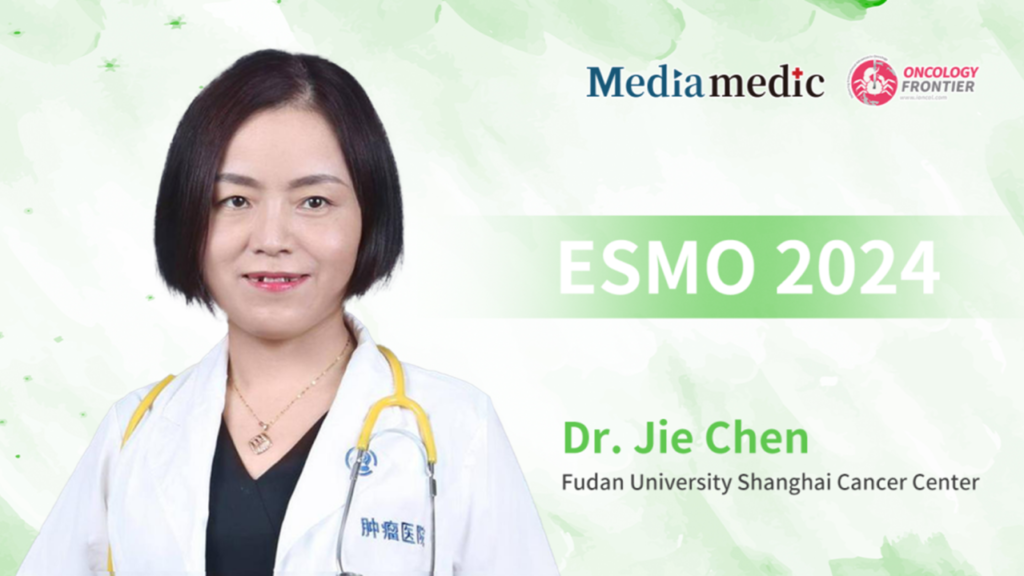
From Curious Learner to Pioneer: Dr. Jie Chen’s Medical Evolution

From Curious Learner to Pioneer: Dr. Jie Chen’s Medical Evolution

As we step further into the 21st century, the field of medicine has undergone tremendous changes. Among the many advancements, a generation of compassionate and skilled doctors has emerged, dedicated to the wellbeing of their patients and their nation. The phrase "a doctor's heart is like a parent's" perfectly captures this essence. In the Oncology Frontier series "In Conversation," we reflect on the past with renowned doctors, exploring the highs and lows of their medical journeys. In this edition, we are honored to have Dr. Jie Chen from Fudan University Shanghai Cancer Center share her story. Over the past 30 years, she has remained dedicated to her mission. With five major career transitions, she has continually embraced challenges, breaking new ground where none existed. In the virtually untouched field of neuroendocrine tumors (NEN) in China, she laid the foundation for the discipline and paved the way for future advancements.
Plerixafor-Based Mobilization and Increased Mononuclear Cell Counts: Risk Factors for Engraftment Syndrome Post-Autologous Hematopoietic

Plerixafor-Based Mobilization and Increased Mononuclear Cell Counts: Risk Factors for Engraftment Syndrome Post-Autologous Hematopoietic

In June 2024, Blood Science published a significant study led by Dr. Xiaohui Zhang and colleagues from the Peking University People's Hospital, focusing on the incidence and risk factors of engraftment syndrome (ES) following autologous hematopoietic stem cell transplantation (ASCT) in the era of plerixafor-based mobilization. ASCT remains a critical therapy for hematologic malignancies, particularly in lymphoma and plasma cell disease, despite advancements in other treatments. However, ES, characterized by non-infectious fever, skin rash, diarrhea, and other clinical manifestations, remains a common and concerning complication post-ASCT.
Subcutaneous Daratumumab in Chinese Patients with Relapsed/Refractory Multiple Myeloma: A Phase 1 Study

Subcutaneous Daratumumab in Chinese Patients with Relapsed/Refractory Multiple Myeloma: A Phase 1 Study

In April 2024, the journal Blood Science published an important study led by Dr. Gang An and colleagues from the Institute of Hematology & Blood Diseases Hospital, Chinese Academy of Medical Sciences & Peking Union Medical College, investigating the use of subcutaneous daratumumab in Chinese patients with relapsed/refractory multiple myeloma (R/R MM). Multiple myeloma is a challenging hematological malignancy characterized by the proliferation of abnormal plasma cells in the bone marrow. Despite significant advances in treatment, many patients experience relapse or develop resistance to existing therapies, necessitating new and more effective approaches.
Pomalidomide Enhances CAR-T Therapy Effectiveness in Hematological Malignancies: A Promising Synergy

Pomalidomide Enhances CAR-T Therapy Effectiveness in Hematological Malignancies: A Promising Synergy

Relapsed and refractory multiple myeloma (R/R MM) and B-cell leukemia/lymphoma with extramedullary disease (EMD) represent some of the most formidable challenges in hematology. These conditions often carry a bleak prognosis due to their resistance to conventional therapies and the complex nature of extramedullary disease, where cancer cells spread outside the bone marrow. Chimeric antigen receptor (CAR)-T cell therapy has revolutionized the treatment landscape for these malignancies, offering hope where few options existed. However, even with CAR-T cell therapy, patients with EMD have experienced limited success, highlighting the need for innovative approaches to improve outcomes.
Subcutaneous Daratumumab in Chinese Patients with Relapsed/Refractory Multiple Myeloma: A Phase 1 Study

Subcutaneous Daratumumab in Chinese Patients with Relapsed/Refractory Multiple Myeloma: A Phase 1 Study

In April 2024, the journal Blood Science published an important study led by Dr. Gang An and colleagues from the Institute of Hematology & Blood Diseases Hospital, Chinese Academy of Medical Sciences & Peking Union Medical College, investigating the use of subcutaneous daratumumab in Chinese patients with relapsed/refractory multiple myeloma (R/R MM). Multiple myeloma is a challenging hematological malignancy characterized by the proliferation of abnormal plasma cells in the bone marrow. Despite significant advances in treatment, many patients experience relapse or develop resistance to existing therapies, necessitating new and more effective approaches.