
Interview with Dr. Bijie Hu, Chairman of the 2024 SIFIC Conference

Interview with Dr. Bijie Hu, Chairman of the 2024 SIFIC Conference

Since its inception in 2005, the Shanghai International Forum for Infection Control (SIFIC) has grown over the past two decades. Known for its professionalism and forward-thinking approach, SIFIC has become a significant academic platform in China for the fields of hospital infection, major infectious diseases, and the prevention and control of multidrug-resistant organisms. Each year's academic conference not only boasts a large scale but also serves as a grand academic gathering for infection control experts and scholars from both domestic and international arenas. In the recently concluded SIFIC 2024 conference, one of the founders and current Chairman of SIFIC, Dr. Bijie Hu from Zhongshan Hospital, Fudan University, shared with Infectious Disease Frontier the development and achievements of SIFIC, as well as his profound insights into the future of infection control in China. Through his perspective, we gain a glimpse into the evolution of the field, the challenges it currently faces, and the direction it is likely to take in the future.

AIDS China Voice | Dr. Jie Peng: Research on HBsAg Clearance in HIV/HBV Co-infected Patients

AIDS China Voice | Dr. Jie Peng: Research on HBsAg Clearance in HIV/HBV Co-infected Patients

The 25th International AIDS Conference (AIDS 2024) was held in Munich, Germany, from July 22 to 26, 2024. This highly anticipated academic event showcased some of the most cutting-edge research in the field. Currently, clinical cures for people co-infected with HIV and HBV are still in the exploratory stage. At the conference, a research study conducted by Dr. Jie Peng’s team from the Nanfang Hospital was selected for poster presentation. The study revealed that after receiving antiretroviral therapy, HIV/HBV co-infected patients had a higher rate of HBsAg clearance. Baseline HBsAg levels and CD4 cell counts were identified as predictive factors for HBsAg clearance in these patients. We have invited Dr. Jie Peng to provide an insightful interpretation of these research findings for our readers.
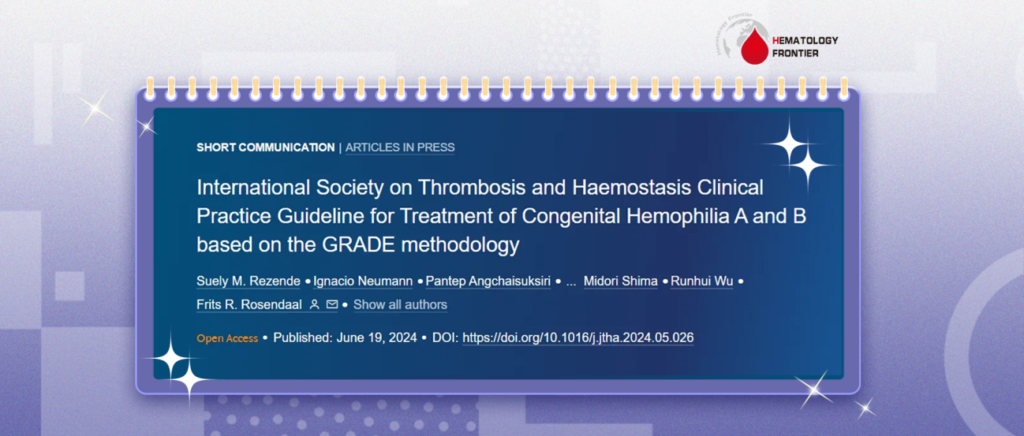
ISTH Guideline丨Latest ISTH Clinical Practice Guidelines for the Treatment of Hemophilia A and B Published

ISTH Guideline丨Latest ISTH Clinical Practice Guidelines for the Treatment of Hemophilia A and B Published

Hemophilia, a rare congenital bleeding disorder, is caused by pathogenic variants in the encoding genes, leading to the complete or partial deficiency of clotting factors VIII (Hemophilia A) or IX (Hemophilia B). Treating hemophilia involves certain complexities, and until now, no evidence-based clinical practice guidelines based on the GRADE methodology have been established to guide treatment. The International Society on Thrombosis and Haemostasis (ISTH) has developed evidence-based clinical practice guidelines aimed at systematically reviewing the relevant evidence to provide a scientific basis for treatment decisions in Hemophilia A and B, thereby supporting healthcare providers in their clinical practice. To this end, ISTH formed a globally representative, multidisciplinary guideline panel that prioritized clinical questions based on their urgency and the importance of outcomes to patients and clinicians.
Exploring the Frontier and Building the Future: Dr. Tiejun Gong Discusses Standards and Innovations in Hematologic Oncology Treatment

Exploring the Frontier and Building the Future: Dr. Tiejun Gong Discusses Standards and Innovations in Hematologic Oncology Treatment

The warm summer in Harbin was matched by a surge of medical wisdom. The 8th Hematology  Academic Conference of the Chinese Society of Clinical Oncology (CSCO), hosted by the Harbin Institute of Hematology and Oncology and Peking University Cancer Hospital, was held from July 26 to 28, 2024, in Harbin. This grand event brought together many top experts and scholars from both domestic and international fields, showcasing the latest research results and clinical experiences in the treatment of hematologic malignancies. Hematology Frontier had the privilege of inviting Dr. Tiejun Gong from the Harbin Institute of Hematology and Oncology to share his unique insights and experiences from this conference, highlight the key expert guidelines, and discuss the standout content of the Northeast Hematologic Oncology Standardized Diagnosis and Treatment session.
Dr. Huilai Zhang: Current Status and Treatment Progress for Chinese Patients with Marginal Zone Lymphoma

Dr. Huilai Zhang: Current Status and Treatment Progress for Chinese Patients with Marginal Zone Lymphoma

Marginal zone lymphoma (MZL), a group of indolent mature B-cell lymphomas, presents a significant challenge in treatment selection due to its high heterogeneity. Despite improvements in survival rates for MZL patients with the advent of new drugs and advancements in clinical diagnostic and therapeutic techniques, developing a balanced management plan that addresses both efficacy and safety across a long disease course and lifetime management remains an urgent issue. At the recent "8th Academic Conference on Hematologic Oncology" organized by the Chinese Society of Clinical Oncology (CSCO), Dr. Huilai Zhang from Tianjin Medical University Cancer Institute & Hospital delivered a compelling presentation titled "Current Status and Treatment Progress for Chinese Patients with Marginal Zone Lymphoma." This report offers valuable insights and forward-looking guidance for comprehensively understanding the current state of MZL diagnosis and treatment in China and mastering the latest developments in the field. This article summarizes the key points of Professor Zhang's presentation for our readers.
Dr. Huilai Zhang: Current Status and Treatment Progress for Chinese Patients with Marginal Zone Lymphoma

Dr. Huilai Zhang: Current Status and Treatment Progress for Chinese Patients with Marginal Zone Lymphoma

Marginal zone lymphoma (MZL), a group of indolent mature B-cell lymphomas, presents a significant challenge in treatment selection due to its high heterogeneity. Despite improvements in survival rates for MZL patients with the advent of new drugs and advancements in clinical diagnostic and therapeutic techniques, developing a balanced management plan that addresses both efficacy and safety across a long disease course and lifetime management remains an urgent issue. At the recent "8th Academic Conference on Hematologic Oncology" organized by the Chinese Society of Clinical Oncology (CSCO), Dr. Huilai Zhang from Tianjin Medical University Cancer Institute & Hospital delivered a compelling presentation titled "Current Status and Treatment Progress for Chinese Patients with Marginal Zone Lymphoma." This report offers valuable insights and forward-looking guidance for comprehensively understanding the current state of MZL diagnosis and treatment in China and mastering the latest developments in the field. This article summarizes the key points of Professor Zhang's presentation for our readers.
Dr. Jian Wu: Enhancing Public Awareness on Hepatitis E Prevention and Advancing Diagnosis and Treatment

Dr. Jian Wu: Enhancing Public Awareness on Hepatitis E Prevention and Advancing Diagnosis and Treatment

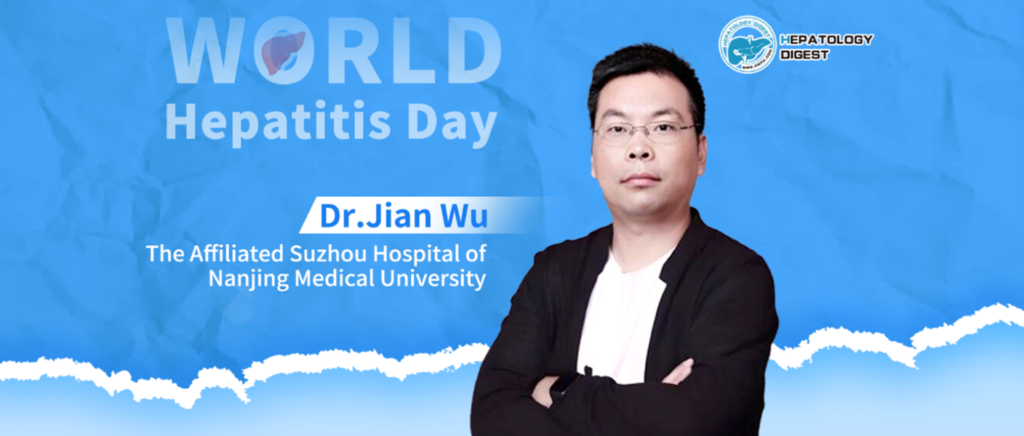
July 28, 2024, marks the 14th World Hepatitis Day. Despite significant progress in combating viral hepatitis, it remains the most prevalent infectious disease in China. Hepatitis E (HEV) is particularly challenging, as China is a high-endemic region for the virus. To address the need for more standardized in-hospital screening procedures, accurate assessments, and a reduction in disease burden, the Chinese Consortium for the Study of Hepatitis E (CCSHE), in collaboration with the Chinese Physician Association for Infectious Disease and the National Clinical Research Center for Infectious Diseases, has developed the "Expert Consensus on the Process of In-Hospital Screening Management of Viral Hepatitis E in China (2023)" (referred to as the Consensus). During a recent academic exchange on hepatitis E prevention and control, Dr. Jian Wu, from the Affiliated Suzhou Hospital of Nanjing Medical University. Hepatology Digest invited Dr. Jian Wu to share his insights and experiences on hepatitis E prevention, diagnosis, and treatment, aiming to further raise public awareness and encourage proactive measures to curb the spread of the virus.
Dr. Yuemin Nan: Strategies for the Prevention and Treatment of Metabolic Associated Fatty Liver Disease (MAFLD) and Lifestyle Adjustments

Dr. Yuemin Nan: Strategies for the Prevention and Treatment of Metabolic Associated Fatty Liver Disease (MAFLD) and Lifestyle Adjustments

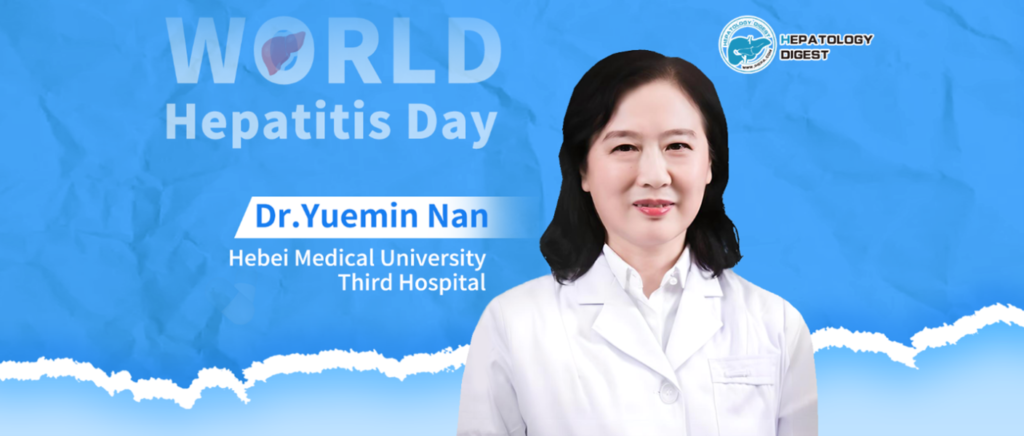
July 28 is "World Hepatitis Day," and this year's theme in China is "Eliminate Hepatitis: Act Now." While the focus remains on viral hepatitis, the prevention and treatment of Metabolic Associated Fatty Liver Disease (MAFLD) should not be overlooked. In honor of World Hepatitis Day, Hepatology Digest invited Dr. Yuemin Nan from the Hebei Medical University Third Hospital to share valuable insights on MAFLD.
Dr. Jidong Jia: In-Depth Analysis of Hepatitis B and C Prevention Strategies, Building a Strong Defense Against Hepatitis

Dr. Jidong Jia: In-Depth Analysis of Hepatitis B and C Prevention Strategies, Building a Strong Defense Against Hepatitis

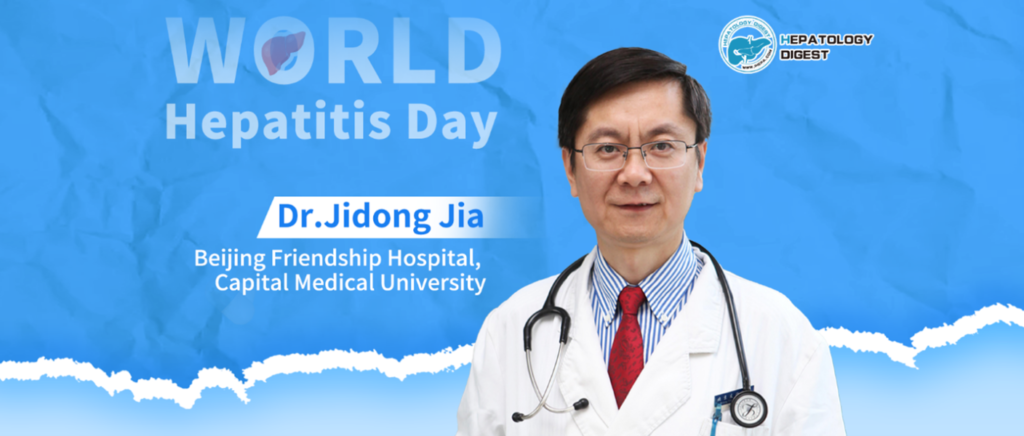
July 28, 2024, marks the 14th World Hepatitis Day. Recently, the National Disease Control and Prevention Administration released a report on the national legal infectious disease situation for May 2024, revealing that viral hepatitis remains the most prevalent category B infectious disease. In light of this, Hepatology Digest interviewed Dr. Jidong Jia from Beijing Friendship Hospital, Capital Medical University, to discuss the transmission routes of hepatitis, prevention measures, and more. Below is the transcript of the interview.
AIDS Exclusive Interview: Latest Advances and Challenges in Long-Acting HIV Prevention Technologies

AIDS Exclusive Interview: Latest Advances and Challenges in Long-Acting HIV Prevention Technologies

At the AIDS 2024 Conference, Dr. Albert Liu from the University of California, San Francisco, delivered a keynote presentation on the latest developments in long-acting HIV prevention technologies. Following his talk, he participated in an exclusive interview with Infectious Diseases Frontier. Dr. Liu highlighted that the field of HIV prevention is currently undergoing exciting transformations. Long-acting drugs, such as bimonthly injections and monthly vaginal rings, have already been approved, significantly improving prevention outcomes and reducing patient burden. Additionally, other technologies in development, such as long-acting tablets, HIV implants, and broadly neutralizing antibodies, show immense potential. However, cost and accessibility remain key challenges to widespread adoption. Future research must focus on the safety, efficacy, and community implementation strategies of these technologies while also simplifying delivery processes to ensure these innovations benefit a broader population and advance HIV prevention efforts.