Exploring the Future of Clinical Research in Hodgkin Lymphoma

Exploring the Future of Clinical Research in Hodgkin Lymphoma

In this insightful session, Dr. Wei Xu from Jiangsu Provincial People's Hospital (The First Affiliated Hospital of Nanjing Medical University) shares her expertise on the foundations and clinical advancements in Hodgkin lymphoma (HL) research. This talk delves into key aspects of HL treatment strategies, research breakthroughs, and what the future holds for clinical applications. Don't miss this opportunity to gain valuable insights from a leading expert in the field!
Dr. Mehdi Karoui’s Contribution to Advancing Colorectal Anastomosis Healing

Dr. Mehdi Karoui’s Contribution to Advancing Colorectal Anastomosis Healing

A recent study published in Communications Biology explores a promising approach to improving colorectal anastomosis healing using extracellular vesicles (EVs) derived from adipose stromal cells, embedded in a thermoresponsive gel (Pluronic® F127). This innovative strategy aims to reduce post-surgical complications, enhance tissue regeneration, and improve healing outcomes, particularly in patients undergoing radiotherapy​.
Real-World Impact of Olaparib in BRCA-Mutant Advanced Pancreatic Cancer

Real-World Impact of Olaparib in BRCA-Mutant Advanced Pancreatic Cancer

A new study published in Cancer Medicine by Michele Milella, Giulia Orsi, Mariacristina di Marco, Lisa Salvatore, and colleagues highlights the real-world survival benefits of olaparib in patients with BRCA1/2-mutant metastatic pancreatic cancer (PDAC). Conducted across 23 Italian oncology centers, the analysis revealed that patients exposed to olaparib at any point during their treatment course had significantly longer overall survival (OS) compared to those who did not receive the drug.
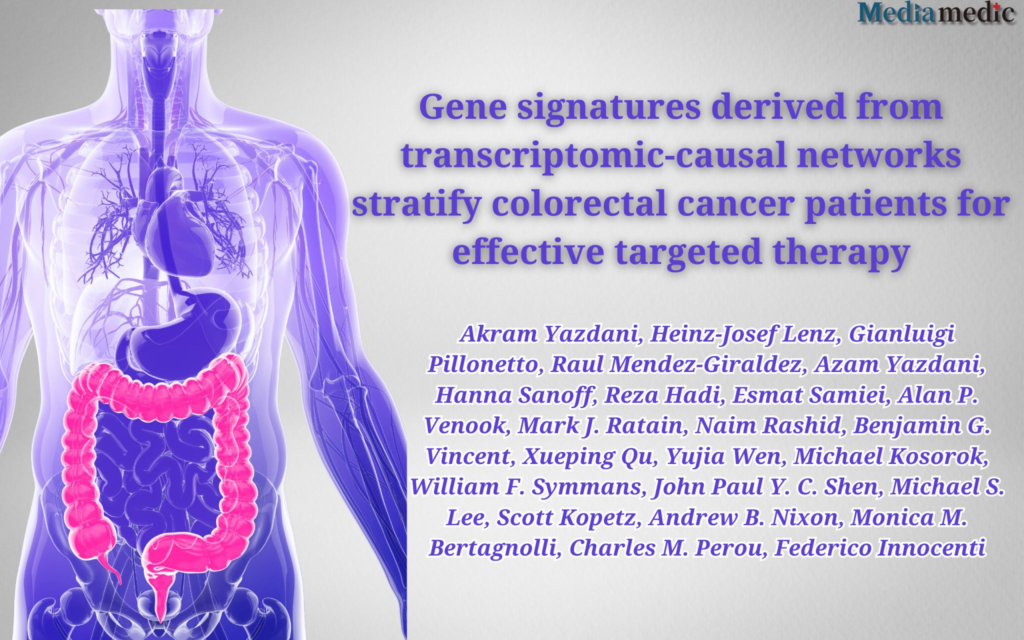
Gene Signatures for Personalized Treatment in Colorectal Cancer

Gene Signatures for Personalized Treatment in Colorectal Cancer

A new study published in Communications Medicine highlights the potential of gene signatures derived from transcriptomic-causal networks to improve patient stratification for targeted therapy in metastatic colorectal cancer (mCRC). By integrating gene interconnectivity into survival analysis, researchers identified distinct gene signatures that predict response to cetuximab or bevacizumab, providing a more personalized approach to treatment.