Application of JAK1 Inhibitors in Peripheral T-cell Lymphoma: Highlights from the 15th Chinese Medical Association Hematology Academic Conference and the First Rare Blood Disease Academic Conference

Application of JAK1 Inhibitors in Peripheral T-cell Lymphoma: Highlights from the 15th Chinese Medical Association Hematology Academic Conference and the First Rare Blood Disease Academic Conference

From March 23rd to 24th, 2024, the 15th Chinese Medical Association Hematology Academic Conference and the First Rare Blood Disease Academic Conference, hosted by the Chinese Medical Association and the Hematology Branch of the Chinese Medical Association, and co-organized by the First Affiliated Hospital of Soochow University, was successfully held in Suzhou, Jiangsu Province, China. Numerous hematological experts and scholars from China and abroad engaged in academic exchanges on experimental diagnosis in the field of hematological diseases and the latest developments in rare blood diseases through academic presentations and thematic discussions.During the conference, Professor Bing Xiang from West China Hospital of Sichuan University delivered an insightful presentation titled "Application of JAK1 Inhibitors in Peripheral T-cell Lymphoma." In this article, we summarize the main points of the presentation for the benefit of our readers.
Outcomes of Allogeneic Hematopoietic Stem Cell Transplantation in Refractory/Relapsed Diffuse Large B-cell Lymphoma Patients with Failure of CAR-T Therapy

Outcomes of Allogeneic Hematopoietic Stem Cell Transplantation in Refractory/Relapsed Diffuse Large B-cell Lymphoma Patients with Failure of CAR-T Therapy

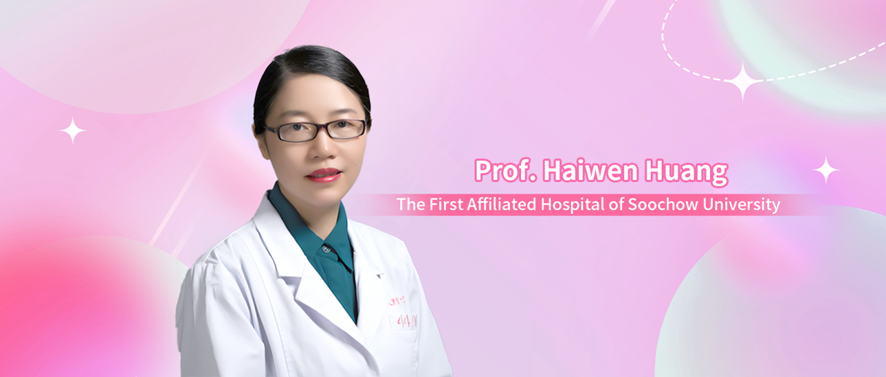
In the challenging field of hematology, the search for effective treatments for relapsed or refractory diffuse large B-cell lymphoma (R/R DLBCL) after CAR-T therapy failure is crucial. Professor Professor Haiwen Huang from The First Affiliated Hospital of Soochow University leads an innovative study exploring allogeneic hematopoietic stem cell transplantation (allo-HSCT) as a promising alternative. This collaborative research not only offers new hope for R/R DLBCL patients but also showcases the pioneering spirit driving advancements in oncology. By providing valuable insights into allo-HSCT's potential, Professor Huang and his team contribute significantly to the evolving landscape of cancer treatment, highlighting the importance of innovation and teamwork in improving patient care.
Chimeric antigen receptor T cells targeting FcRH5 provide robust tumour-specific responses in murine xenograft models of multiple myeloma

Chimeric antigen receptor T cells targeting FcRH5 provide robust tumour-specific responses in murine xenograft models of multiple myeloma

Professor Haiwen Huang from The First Affiliated Hospital of Soochow University provided an enlightening discourse on the significant strides made in CAR T cell therapies, with a special emphasis on their pioneering work in FcRH5 CAR-T cells for multiple myeloma. The study not only showcased the remarkable journey of hematology research over the years but also spotlighted the transformative potential of next-generation CAR T cell therapies in offering new hope to patients with hematologic cancers.
Orelabrutinib for the treatment of relapsed or refractory marginal zone lymphoma: A phase 2, multicenter, open-label study

Orelabrutinib for the treatment of relapsed or refractory marginal zone lymphoma: A phase 2, multicenter, open-label study

In the evolving landscape of hematology and oncology, innovative treatments for challenging conditions like relapsed or refractory marginal zone lymphoma are of paramount importance. It is in this context that the recent phase 2, multicenter, open-label study investigating the efficacy of Orelabrutinib comes to light, marking a significant advancement in the therapeutic domain. This study, meticulously carried out by a dedicated team of researchers led by Professor Haiwen Huang from The First Affiliated Hospital of Soochow University, alongside esteemed colleagues from various prestigious institutions across China, has been a beacon of hope for patients grappling with this relentless malignancy. The findings of this groundbreaking research were meticulously documented in the American Journal of Hematology, underscoring not only the potential of Orelabrutinib as a viable treatment option but also the collaborative effort and expertise that epitomizes the spirit of innovation in the field. This endeavor, emblematic of the strides being made in hematology research, was brilliantly showcased during a session at the renowned Beijing Hematologic Tumor and Immunology Summit Forum, an event that has become a cornerstone for the dissemination of cutting-edge scientific knowledge and clinical practices.
2024 CASH丨Professor RongFu  : Progress in the Study of Hematological Toxicity Related to CAR-T Therapy

2024 CASH丨Professor RongFu  : Progress in the Study of Hematological Toxicity Related to CAR-T Therapy

Immunotherapy has recently emerged as a focal area in the research of hematologic oncology. The advancement of genetic engineering and molecular biology, coupled with deeper insights into the mechanisms of cancer, has led to the widespread clinical adoption of Chimeric Antigen Receptor T Cell (CAR-T) therapy. This approach has demonstrated remarkable efficacy in treating refractory or relapsed acute lymphoblastic leukemia, aggressive lymphomas, and multiple myeloma, significantly improving patient outcomes. However, challenges persist, notably in patients who do not respond to treatment, relapse shortly, or experience severe adverse reactions like cytokine release syndrome. The pursuit to mitigate the side effects of CAR-T therapy and enhance its long-term clinical effectiveness is ongoing, filled with both challenges and opportunities.
Professor Jun Zhu: Focus on the unmet needs of diffuse large B-cell lymphoma (DLBCL) and provide personalized diagnosis and treatment for patients

Professor Jun Zhu: Focus on the unmet needs of diffuse large B-cell lymphoma (DLBCL) and provide personalized diagnosis and treatment for patients

 Diffuse large B-cell lymphoma (DLBCL) is a typical B-cell lymphoma, characterized by high invasiveness and heterogeneity. After standard first-line treatment, some patients still face relapse/refractory issues and relatively poor prognosis. Recently, the "7th Beijing Thrombosis and Hemostasis Conference and the 5th Beijing Hematology Oncology and Immunology Summit Forum" was successfully held in Beijing from March 1st to 3rd, 2024. After the conference, Oncology Frontier - Hematology Frontier specially invited Professor Jun Zhu from Peking University Cancer Hospital to share the unmet needs of DLBCL patients and their treatment strategies.