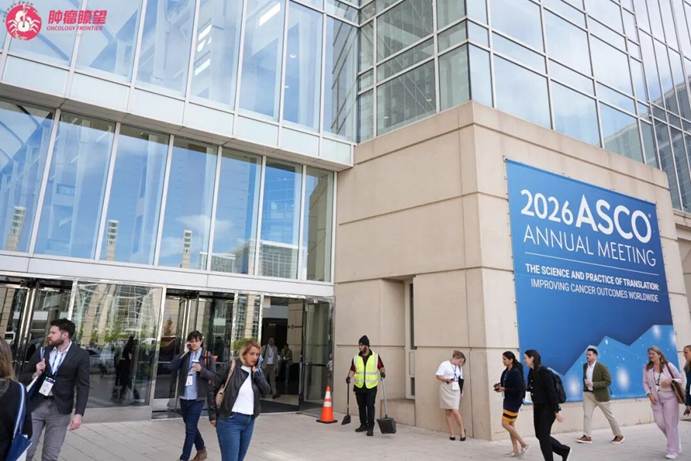
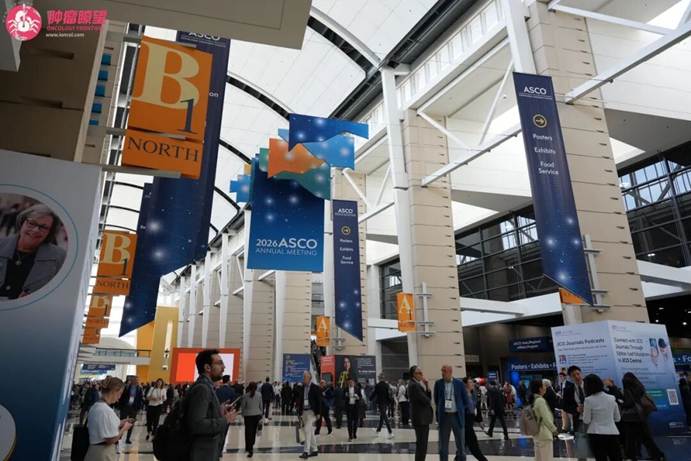
The 2026 ASCO Annual Meeting has officially opened, bringing a wealth of landmark studies in genitourinary oncology and providing new momentum for precision treatment in urothelial carcinoma (UC). To promote standardized and precision-based management of urologic cancers in China, the Hainan Lecheng Hongyuan Medical Technology Innovation and Development Research Institute launched the “Academic Exchange Program on Precision Diagnosis and Treatment of Urologic Tumors,” bringing together leading experts to interpret the latest advances.

This year’s ASCO meeting featured 518 studies related to genitourinary malignancies, with particularly notable progress in the field of antibody-drug conjugates (ADCs). Among them, 36 studies focused on enfortumab vedotin (EV). Most notably, the EV-302 trial, which has redefined first-line treatment for locally advanced or metastatic urothelial carcinoma (la/mUC), reported 3.5-year follow-up data, demonstrating durable survival benefits and significant curative potential with the combination of enfortumab vedotin plus pembrolizumab (EV+P).
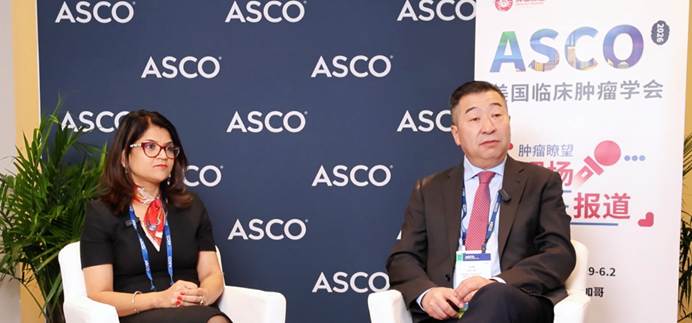
Against this backdrop, Oncology Frontier – UroStream interviewed Prof. Jun Guo from Peking University Cancer Hospital and Prof. Shilpa Gupta from the Cleveland Clinic at the ASCO meeting. The discussion focused on the evolving first-line treatment landscape for la/mUC, long-term survival outcomes, real-world evidence, and future directions in the field.
The following is an excerpt from the interview.
Oncology Frontier – UroStream
Professors, the updated EV-302 data presented at ASCO now include a median follow-up of 3.5 years. The EV+P arm continues to demonstrate substantial long-term survival benefits without any new safety signals. How do you interpret these long-term outcomes for patients receiving EV+P?
Prof. Jun Guo:
At this year’s ASCO Annual Meeting, Prof. Thomas Powles presented the 3.5-year follow-up results from the EV-302 trial. This represents the longest follow-up to date from a global Phase III randomized controlled trial evaluating EV+P as first-line therapy for locally advanced or metastatic urothelial carcinoma.
The data are highly impressive. Patients treated with EV+P achieved a median overall survival (mOS) of 33.6 months, with a 42-month overall survival rate of 44%. In contrast, patients in the chemotherapy arm had an mOS of only 15.9 months and a 42-month OS rate of 24.6%. Compared with chemotherapy, EV+P doubled median overall survival and reduced the risk of death by 47%.
These findings have effectively reset the survival benchmark for first-line treatment of la/mUC and suggest that long-term survival is now achievable even for patients with metastatic disease.
Particularly noteworthy is the depth of response observed with EV+P. Among patients who achieved an objective response, 45.1% ultimately attained a complete response (CR). Of these CR patients, 66.2% initially achieved a partial response (PR) and subsequently converted to CR after a median of five additional treatment cycles. This phenomenon has not been previously reported in earlier studies.
Overall, the final CR rate with EV+P exceeded 40%, and these complete responses translated into meaningful survival benefits. More than 80% of patients who achieved CR remained alive at 3.5 years, demonstrating exceptionally favorable long-term outcomes.
Importantly, no new safety signals were identified during the 3.5-year follow-up period, further supporting the overall safety profile of the regimen.
These findings suggest that delivering EV+P at the appropriate dose intensity and for an adequate duration may be critically important. The remarkably high proportion of patients—66.2%—who converted from PR to CR is particularly encouraging and represents one of the most exciting observations from the study.
Prof. Shilpa Gupta:
I completely agree with Prof. Guo’s perspective. This is the first time we have obtained 3.5-year follow-up data in patients with locally advanced or metastatic urothelial carcinoma. No previous treatment regimen has demonstrated that more than 80% of patients achieving a complete response remain alive after such a prolonged follow-up period, making these findings highly meaningful for patients.
We previously reported at the ASCO Genitourinary Cancers Symposium that approximately two-thirds of patients who ultimately achieved a complete response were delayed converters, and the current analysis further confirms this observation. If patients can tolerate treatment following dose adjustments or dose reductions, therapy should be continued whenever possible, as some patients may still convert from partial response (PR) to complete response (CR) despite receiving modified dosing.
The long-term survival outcomes among patients who achieve CR are truly remarkable, and the data are extremely encouraging.
Oncology Frontier – UroStream
The EV-302 study demonstrated that patients who achieved a CR with EV+P had a survival rate exceeding 90% at 2.5 years and remained above 80% at 3.5 years, substantially outperforming the overall study population. These findings highlight the importance of deep responses for long-term survival in advanced urothelial carcinoma. How do you view the relationship between deep remission and long-term survival?
Prof. Jun Guo:
In fact, extensive evidence has long suggested that patients who achieve a complete response generally experience the most favorable outcomes. The EV-302 study provides particularly compelling confirmation of this principle—deep remission translates into long-term survival.
In this trial, more than 80% of CR patients remained alive at 3.5 years, a result that would have been unimaginable in the past. The survival curve appears to reach a plateau after approximately two years, suggesting that the risk of recurrence in this subgroup has declined to a very low level. Most of these patients may ultimately achieve survival beyond five years and could potentially be considered clinically cured.
During the chemotherapy era, CR rates were generally below 10%, and responses were often short-lived. Achieving a complete response seemed almost like a fortunate but uncommon event. Today, however, the EV+P regimen has increased the first-line CR rate to 30.4%, and these responses are highly durable.
This fundamental shift requires a corresponding change in our treatment philosophy. Complete response should no longer be viewed as a rare or unrealistic outcome; rather, it should become an important treatment goal actively pursued in the first-line setting.
For Chinese patients in particular, these findings are highly encouraging. The data suggest that if we can help patients achieve a deep response, there is a substantial opportunity for them to overcome the threat of disease and return to normal life. This also provides a clear direction for future treatment strategies.
In addition, I would like to make one further observation. In the RC48-C016 study, the CR rate in the disitamab vedotin plus toripalimab (DV+T) arm was 4.5%, whereas the CR rate in the EV+P arm of EV-302 reached 30.4%. This difference may partly reflect differences in patient populations enrolled in the two studies. It will be interesting to see, with longer follow-up of first-line DV+T studies, whether additional patients may convert from PR to CR over time.
Prof. Shilpa Gupta:
I agree. Patients enrolled in the DV+T studies were more likely to have primary upper tract urothelial carcinoma, where shrinkage of the primary lesion is often more limited. In addition, these patients generally had a higher tumor burden, including greater rates of liver and lung metastases, which may partially explain the lower CR rate observed.
However, patients who achieved a partial response in the DV+T studies also experienced favorable outcomes. Likewise, in EV-302, many patients with PR have remained alive for four to five years. Therefore, while achieving a complete response is certainly desirable, durable partial responses can also translate into substantial overall survival benefits.
Oncology Frontier – UroStream
Among patients who responded to treatment, 45.1% ultimately achieved a complete response (CR). Notably, 66.2% of these patients first achieved a partial response (PR) and then converted to CR after a median of five additional cycles of EV treatment. How do you view the importance of adequate dosing and treatment duration in maximizing patient benefit?
Prof. Shilpa Gupta:
Not every patient needs to receive treatment at the full dose and for the maximum duration. Existing data show that efficacy is not compromised even when dose reductions or treatment interruptions are required.
The median duration of treatment in the study was 12 cycles (9.6 months). In routine clinical practice, many patients require temporary treatment interruptions or EV dose reductions because of adverse events. More than 60% of patients experienced treatment interruptions, and over 40% underwent EV dose reductions. Importantly, these dose modifications did not appear to diminish treatment efficacy.
The data show that approximately two-thirds of patients who initially achieved a PR eventually converted to CR. However, this does not mean that patients need to remain on EV indefinitely.
Prof. Jun Guo:
I completely agree with Prof. Gupta.
For ADCs such as EV and DV, both of which use MMAE as the cytotoxic payload, neurotoxicity is indeed a significant concern. Tolerance varies substantially among patients, and in severe cases neuropathy can become disabling and even affect mobility. However, for patients who can tolerate treatment, the average treatment duration is around 12 cycles, and we have patients who have received 15 cycles or even more.
The findings from this study suggest that patients who are able to tolerate therapy should receive an adequate dose whenever possible, because sufficient treatment exposure may help more patients convert from PR to CR.
Whether in urothelial carcinoma or renal cell carcinoma, it is well established that a lower tumor burden is associated with better survival outcomes. Therefore, as long as treatment remains tolerable, patients should be encouraged to complete an adequate course of therapy.
During the chemotherapy era, many patients were unable to continue treatment beyond three or four cycles because of toxicity. In contrast, with newer ADC-immunotherapy combinations such as EV+P and DV+T, many patients are able to remain on treatment for extended periods, sometimes exceeding 20 cycles. We have seen such cases at our own center.
One of the challenges currently encountered in China is that both physicians and patients may be inclined to discontinue treatment too early when neuropathy develops. Some patients stop treatment soon after achieving a PR, not because toxicity is truly intolerable, but because both the physician and patient feel that the side effects are sufficient reason to pause or discontinue therapy.
However, this study demonstrates that those additional cycles of treatment are precisely what allow many PR patients to convert to CR. Therefore, if adverse events remain manageable, persistence with treatment is critically important. The potential long-term survival benefit far outweighs tolerable side effects, and dose reduction or treatment discontinuation should not be undertaken prematurely.
Prof. Shilpa Gupta:
Yes, that is exactly what we observed in the data.
I have also discussed this with Prof. Thomas Powles, and it is important to note that not all patients who converted from PR to CR remained on continuous EV treatment throughout that period. Many underwent dose reductions along the way.
The key message, in my view, is that this is a highly effective regimen. Once patients begin responding, they may continue to deepen their responses—even if treatment must be temporarily interrupted because of side effects.
If patients can tolerate treatment, we should not stop it unnecessarily. I have one patient who was the very first participant enrolled in EV-302 and remained on treatment for two and a half years. On the other hand, I have another patient who had to discontinue treatment after only four cycles.
Therefore, we need to be very clear in our approach. The same principle applies to DV+T. In the chemotherapy era, we often said that treatment should not exceed six cycles. We should not apply that mindset to these newer therapies. Instead, treatment duration should be guided by toxicity management and individual patient tolerance.
Oncology Frontier – UroStream
This year’s ASCO meeting featured more than a dozen real-world and exploratory studies involving EV+P. Across areas including dose-modification strategies, ctDNA monitoring, genomic and immune biomarkers, metastatic patterns, and treatment-interruption management, the overall benefit observed in real-world settings has been highly consistent with findings from large clinical trials. As EV+P has become the standard first-line treatment for la/mUC, what practical management considerations are most important for maximizing patient benefit in routine clinical practice?
Prof. Shilpa Gupta:
I believe that being a proactive physician is extremely important.
Clinicians need to carefully observe their patients and ask targeted questions, because many patients will not voluntarily report symptoms of neuropathy unless specifically asked. It is equally important to speak with family members and caregivers. For example, has the patient developed difficulty walking? Do they have trouble maintaining balance while showering?
In my clinic, I often ask patients to walk across the room so that I can directly assess whether their motor function has been affected. Sometimes patients only notice subtle symptoms such as impaired balance or foot drop, and unless we ask specifically, they may never mention them.
I also routinely assess grip strength and perform a systematic neurological examination. In addition, I always ask patients to remove their shirt so I can check for skin rashes, and I make it a point to review laboratory results before every treatment cycle to ensure that blood glucose levels remain within an acceptable range.
Prof. Shilpa Gupta:
In summary, physicians need to be proactive—ask detailed questions, perform careful physical examinations, speak with family members, and conduct comprehensive assessments. This is the only way to ensure that no patient is overlooked, even those with seemingly mild neuropathy.
It is important to remember that by the time a patient develops Grade 2 neuropathy, their daily activities may already be significantly affected. We cannot simply say, “It’s only Grade 2, let’s continue treatment.” At that stage, delaying intervention may already be too late.
Prof. Jun Guo:
Yes, I completely agree.
In real-world clinical practice in China, we have learned that managing patients receiving EV+P or EV-based therapy is something of an art. What is particularly encouraging is that many of the real-world studies presented this year have shown remarkably consistent results across different countries, regions, and ethnic populations, with outcomes closely mirroring those observed in EV-302.
For Chinese patients, I believe several key considerations deserve attention.
First, before initiating treatment with EV+P or DV+T, a comprehensive patient assessment is essential. This should include evaluation of metastatic burden, primary and metastatic lesions, pathological findings, baseline clinical characteristics, LDH levels, and other relevant factors. Because EV and DV have distinct toxicity profiles, treatment selection should take these differences into account from the outset.
For example, as Prof. Gupta mentioned, severe skin rash appears to be relatively common among Chinese patients and may even be more pronounced than what is typically observed in Western populations. We frequently encounter extensive rashes involving the face and large areas of the body. However, in most cases, rash itself is manageable. Temporary treatment interruption and appropriate supportive care are often sufficient to allow recovery.
The question that inevitably follows is whether treatment should be restarted after the rash improves. Patients often ask this, and physicians may hesitate as well. Is it safe to resume EV?
Based on our experience with many such cases, re-treatment is generally feasible. Although rash may recur, its severity often gradually decreases over time. Interestingly, patients who develop rash do not appear to derive less benefit from treatment. In fact, whether they achieve a PR or a CR, their outcomes are often comparable to those of patients who never develop rash. Therefore, proactive communication and effective management of these adverse events are extremely important.
Finally, I would like to mention biomarkers.
Among all emerging biomarkers, ctDNA is currently one of the most intensively studied. In urothelial carcinoma, growing evidence suggests that ctDNA has important value in predicting treatment response and long-term outcomes.
If ctDNA testing is available, it can certainly be helpful. However, I do not believe it is the most critical issue at present. For example, if a patient achieves a CR and later becomes unable to tolerate treatment, discontinuation may be reasonable, particularly given that approximately 80% of CR patients remain alive and doing well at 3.5 years.
What will become increasingly important is the use of ctDNA monitoring to detect minimal residual disease or early recurrence, allowing clinicians to intervene before overt relapse or metastatic progression occurs. I believe this represents one of the most important future directions in the field.
Prof. Shilpa Gupta:
Yes, I completely agree.
ctDNA can serve as a highly valuable clinical tool. In my own practice, if ctDNA becomes positive or begins to rise and the patient’s last imaging study was performed a month earlier, I will often move the next scan forward to ensure that nothing is missed.
As Prof. Guo mentioned, this is where the field is heading. We need to determine how ctDNA can be used not only to identify patients at risk of recurrence, but also to guide treatment intensification or inform a switch to alternative therapeutic targets.
China now has access to a growing number of ADCs, providing clinicians with an increasingly rich range of treatment options. Beyond signaling potential recurrence risk, ctDNA may help us intervene earlier and more effectively.
In my own practice, I sometimes use an intermittent treatment approach with EV plus pembrolizumab. For example, if a patient achieves a complete response or a deep partial response but subsequently develops treatment-related toxicity, I may allow treatment to be paused. If a mild recurrence occurs a year or even eighteen months later, several additional treatment cycles may once again bring the disease under control.
Many patients with relatively indolent disease appear to follow this type of treatment trajectory, highlighting the potential value of flexible, individualized long-term management strategies.
Oncology Frontier – UroStream
Beyond EV-related studies, this year’s ASCO Annual Meeting also featured encouraging results from multiple ADCs targeting novel biomarkers in urothelial carcinoma, further highlighting ADCs as one of the most active areas of development in the field. From a clinical perspective, how do you see the treatment landscape of urothelial carcinoma evolving in the coming years, and what do you believe will be the next major breakthrough?
Prof. Jun Guo:
I believe this field is advancing at an extraordinary pace worldwide.
Following the success of EV+P and DV+T, numerous next-generation ADCs are currently under development. A wide variety of targets are being explored, including HER3, EGFR, B7-H3, and HER2, as well as ADCs utilizing different payload platforms such as Topo1 and Topo2 inhibitors.
In the future, these novel ADCs may replace conventional chemotherapy as the standard second-line treatment after failure of EV+P or DV+T. At present, chemotherapy remains the standard option in the second-line setting, but I believe its position could be readily displaced by ADCs. Just as ADCs have transformed first-line treatment, the second-line setting is likely to enter the ADC era in the near future.
That said, an important unanswered question remains: Should next-generation ADCs continue to be combined with PD-1 inhibitors in the second-line setting?
In renal cell carcinoma, outcomes with continued targeted therapy plus immunotherapy after prior failure of a similar combination have generally been less favorable than those achieved with targeted therapy alone. In urothelial carcinoma, however, we still do not know whether patients who progress on ADC plus PD-1 therapy will benefit more from a subsequent ADC alone or from another ADC combined with immunotherapy. This will be a key focus of future second-line ADC research.
A second important direction is the development of dual-ADC combinations, in which two ADCs targeting different antigens and carrying different payloads are administered together. Looking even further ahead, such regimens may eventually move into the frontline setting and establish new standards of care.
For example, we may one day see combinations such as dual ADCs plus PD-1 inhibitors, or even dual ADCs combined with bispecific antibodies. I do not believe the field will stop with EV+P or DV+T as the ultimate first-line solutions. Better first-line, second-line, and even third-line treatment strategies will continue to emerge.
Personally, I am highly optimistic about the future. The management of urothelial carcinoma may undergo a fundamental transformation. Goals such as bladder preservation may become far more achievable, and the role of surgery may gradually diminish as systemic therapies continue to improve.
Prof. Shilpa Gupta:
I completely agree.
We are now witnessing an explosion of ADC development, with a growing variety of payloads and targets providing clinicians with an increasingly broad therapeutic arsenal.
For example, it may be possible to switch from one ADC to another while maintaining the same immunotherapy backbone, or alternatively to discontinue immunotherapy altogether. As Prof. Guo noted, in renal cell carcinoma there is no clear evidence supporting sequential immunotherapy following prior immunotherapy-based treatment, which raises important questions regarding the necessity of continuing immune checkpoint blockade in all situations.
The rapid emergence of multiple ADC platforms makes the future treatment landscape particularly exciting. One especially interesting observation is that ADCs targeting Nectin-4 continue to demonstrate clinical activity even when they employ different payloads.
In addition, several other promising ADCs and bispecific antibodies have shown encouraging efficacy, including izalontamab brengitecan (Iza-bren), which was developed in China.
Overall, the opportunities for innovation in this field are tremendous, and I believe the future of urothelial carcinoma treatment is exceptionally promising.
Reference:
[1] Thomas Powles,et al. Enfortumab-vedotin plus pembrolizumab (EV+P) vs chemotherapy for previously untreated locally advanced or metastatic urothelial carcinoma(la/mUC):3.5-year follow-up and response analyses from the phase EV-302 study.ASCO 2026. 4507.

Prof. Jun Guo

Prof.Shilpa Gupta