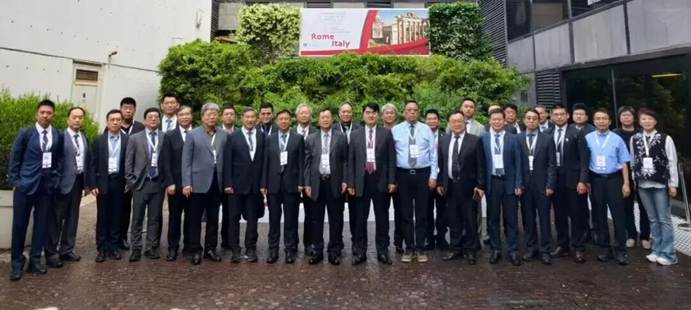
From June 3 to 5, 2026, the Challenges in Laparoscopy, Robotics & AI 2026 (CILR-AI 2026) conference was held in Rome, Italy, bringing together leading experts from Europe, North America, Asia, and beyond.Notably, Academician Xu Zhang of the Chinese PLA General Hospital served as a Co-Chair of the Congress. Surgical demonstrations presented by the Chinese team became one of the highlights of the meeting, further underscoring the growing international academic influence of Chinese urologists in the fields of minimally invasive and robotic surgery.

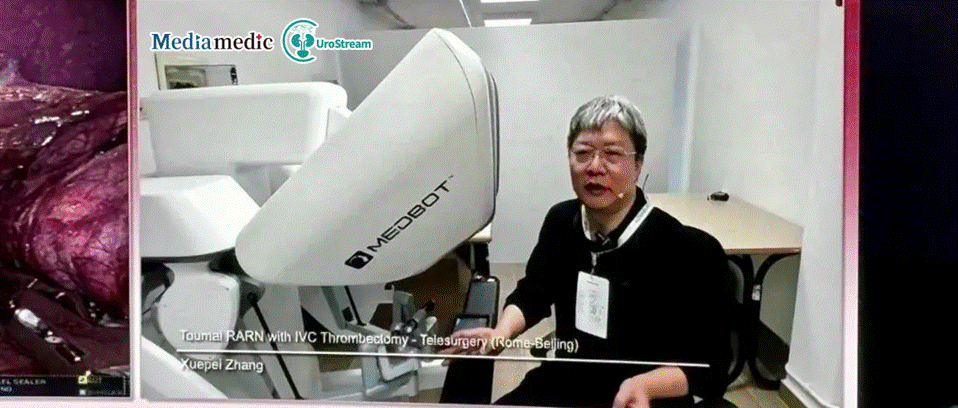
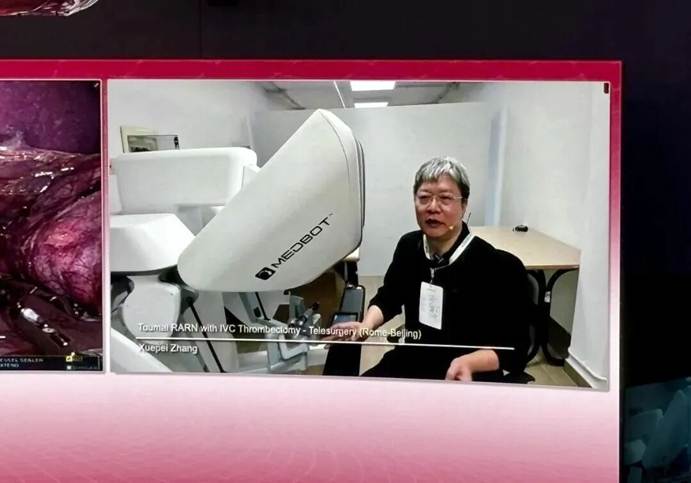
At 11:30 a.m. local time in Rome on June 4, the conference reached a defining moment. Leveraging a domestically developed surgical robotic system, Prof. Xuepei Zhang from the First Affiliated Hospital of Zhengzhou University successfully performed the world’s first ultra-long-distance remote radical nephrectomy combined with inferior vena cava tumor thrombectomy (Level III tumor thrombus) across a distance of more than 8,000 kilometers.
This groundbreaking procedure represented a major milestone in the development of remote robotic surgery, demonstrating the feasibility and precision of performing highly complex urologic oncologic operations across vast geographical distances. The achievement drew significant attention from international experts attending the meeting and highlighted China’s growing leadership in advanced robotic and telesurgical technologies.
Radical nephrectomy combined with inferior vena cava (IVC) tumor thrombectomy is widely regarded as the “crown jewel” of urologic surgery and is recognized as one of the most technically demanding procedures in the field. The patient in this case presented with a right renal tumor accompanied by a Level III IVC tumor thrombus.
The operation required not only complete removal of both the kidney tumor and the tumor thrombus, but also precise identification and secure control of critical vascular structures, including the inferior vena cava, renal artery and vein, and short hepatic veins. Every step carried significant technical challenges and potential risks.
What made this achievement even more extraordinary was that the procedure was performed across a distance of more than 8,000 kilometers, linking Rome, Italy, and Zhengzhou, China. Completing such a highly complex and delicate operation under ultra-remote conditions demanded exceptional surgical skill, seamless team coordination, and outstanding robotic system performance, representing an unprecedented test of the limits of telesurgery.
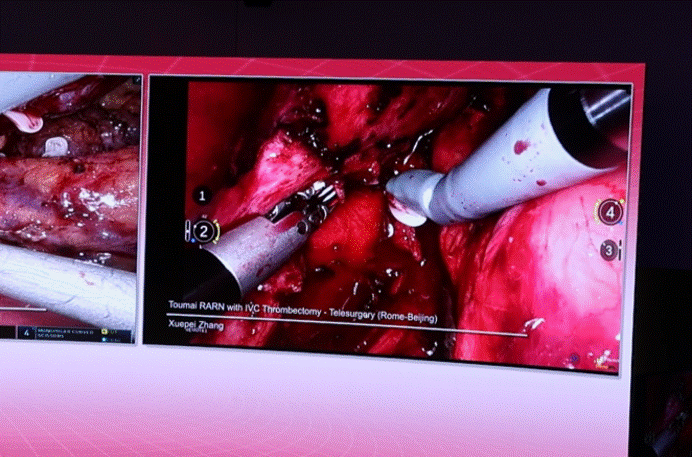
Despite the inherent challenges posed by network latency, Prof. Xuepei Zhang navigated the procedure with remarkable composure and technical mastery. Operating remotely, he successfully completed a series of critical surgical steps with exceptional precision, including complete mobilization of the kidney and tumor, renal pedicle control, and transection and reconstruction-related maneuvers involving the inferior vena cava.
The procedure represented the successful execution of one of the most technically demanding operations in urologic oncology under ultra-remote conditions. Throughout the surgery, anatomical planes were meticulously maintained, vascular structures were managed with precision, and the tumor thrombus was removed intact. The operation vividly demonstrated Prof. Zhang’s extensive expertise and profound experience in the management of complex genitourinary malignancies, while further highlighting the maturity and reliability of advanced robotic telesurgery technology.
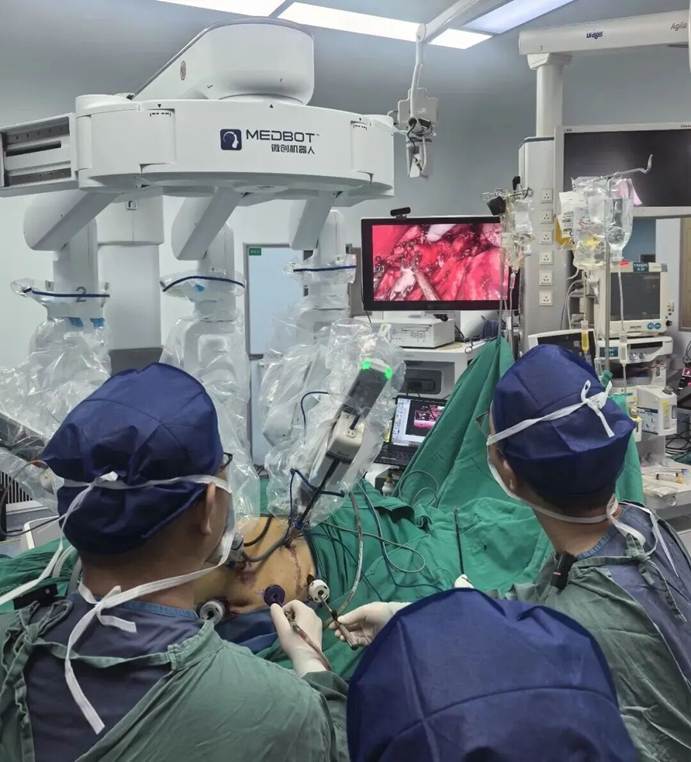
When international experts asked whether the team had considered resecting the inferior vena cava below the hepatic veins, Prof. Xuepei Zhang explained that preoperative CTA imaging had demonstrated the establishment of an adequate collateral venous circulation system in the patient. Through meticulous preoperative evaluation of the compensatory drainage capacity of the left renal vein, the team was able to develop a safe and standardized strategy for managing the complex vascular anatomy encountered during surgery. His evidence-based explanation received high praise and recognition from the international experts in attendance.
The successful completion of this world’s first ultra-long-distance remote surgery generated widespread international attention. The achievement represents not only another major breakthrough for domestically developed surgical robotic systems in performing highly complex procedures remotely, but also a significant milestone in the continued advancement of China’s robotic telesurgery capabilities toward higher levels of sophistication, broader clinical applications, and deeper integration into routine practice.
Through forward-looking innovation and pioneering exploration, Chinese experts are continuously expanding the boundaries of remote surgery. At the same time, these efforts provide a distinctive “China solution” for promoting the cross-regional sharing of high-quality medical resources and improving equitable access to advanced healthcare services worldwide.