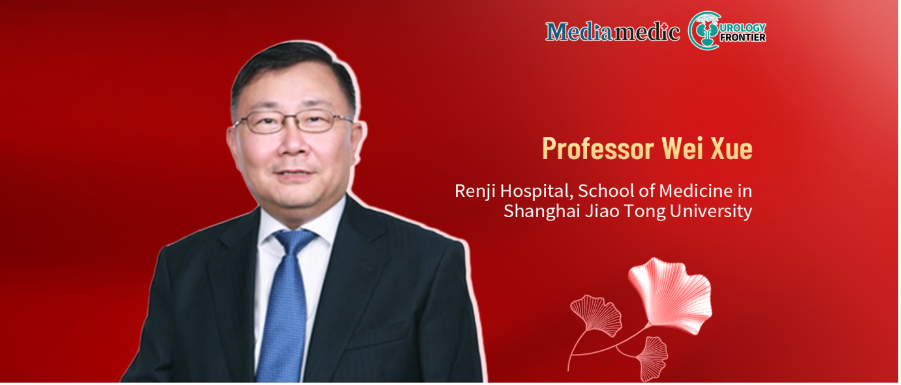
Editor’s Note: Prostate cancer is one of the most common malignant tumors of the male genitourinary system. Exploring innovative diagnostic and treatment strategies and promoting standardized whole-course management may further improve survival outcomes and quality of life. At the “9th West China Uro-Oncology Tianfu Academic Conference & the 11th Annual Meeting of the Sichuan Anti-Cancer Association’s Genitourinary Oncology Committee,” Oncology Frontier – Urology Frontier invited Professor Wei Xue from Renji Hospital, School of Medicine in Shanghai Jiao Tong University, to share insights on early screening, surgical treatment, and innovative therapeutic strategies for advanced disease. 01
Oncology Frontier – Urology Frontier:
Your team was the first internationally to propose Raman spectroscopy–based noninvasive diagnosis using prostatic fluid. How do these innovations reshape the traditional diagnostic pathway for prostate cancer? What value do they bring to early screening?
Professor Wei Xue:
In recent years, the incidence of prostate cancer in China has risen significantly, largely due to the growing implementation of early screening programs. Early detection and timely intervention are crucial for extending survival and improving long-term outcomes.
The most widely used screening tool remains prostate-specific antigen (PSA). Although PSA has faced criticism for over two decades, it is still one of the most practical and accessible methods. However, PSA screening has clear limitations. In particular, for patients with PSA values in the so-called “gray zone” (4–10 ng/mL), the positive diagnostic rate of subsequent biopsy is less than one-third.
To address this low specificity, researchers have been working to develop new diagnostic tools. Our team has established a Raman spectroscopy–based, noninvasive diagnostic technology using expressed prostatic fluid, which increases diagnostic specificity from approximately 60% to 90%, thereby avoiding a substantial number of unnecessary prostate biopsies.
This technology enables more accurate early diagnosis and helps patients secure optimal treatment opportunities at an earlier stage.
02
Oncology Frontier – Urology Frontier:
You and your team also developed an internationally leading “one-master–two-slave” suspension adjustment system. Could you introduce its advantages and the value it brings to personalized surgical treatment for prostate cancer?
Professor Wei Xue:
For patients with locally advanced prostate cancer, surgical treatment has become increasingly precise in recent years. We have moved from traditional open surgery to laparoscopy, and now to robot-assisted procedures. More than half of robotic surgeries today are performed for prostate cancer. This approach is minimally invasive and offers patients superior surgical experience and postoperative outcomes.
Our “one-master–two-slave” suspension adjustment system significantly improves the flexibility of patient positioning during surgery and markedly enhances operative efficiency. By incorporating dynamics-based feedforward synovial control, the system ensures millimeter-level precision and real-time replication of the surgeon’s maneuvers, allowing extremely accurate surgical localization.
03
Oncology Frontier – Urology Frontier:
Metastatic prostate cancer has limited treatment options, particularly for patients who have developed drug resistance. What advances has your team made in studying resistance mechanisms and identifying new therapeutic targets?
Professor Wei Xue:
Advanced prostate cancer—and particularly treatment-resistant disease—is a major area of concern. Our team has devoted extensive efforts to this field, and several key developments have emerged:
First, we have identified multiple new potential therapeutic targets, which have enabled us to explore “drug repurposing” strategies. Several repurposed agents have already demonstrated encouraging results in Phase III clinical trials, offering new hope for patients.
In addition to repurposed drugs, we are actively developing novel therapeutics. Early-phase (Phase I) clinical studies of several innovative agents have shown promising potential. These new drug classes—including antibody–drug conjugates (ADCs)—are drawing significant attention due to their highly selective cancer-cell targeting. Multiple centers are currently conducting prospective studies to explore the utility of ADCs in prostate cancer.
Ultimately, by continuously advancing new technologies and therapeutic strategies, we hope to bring meaningful improvements to the diagnosis and treatment of prostate cancer, and to deliver greater clinical benefit to patients.


Biography

Professor Wei Xue Renji Hospital, Shanghai Jiao Tong University School of Medicine