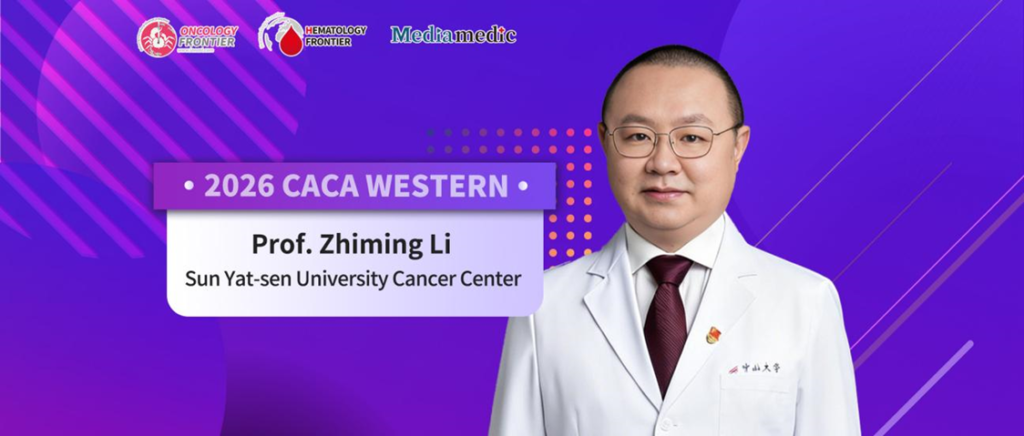
To further promote the expansion, equitable distribution, and accessibility of high-quality cancer care resources, and to enhance the academic and clinical capabilities of oncology care in western China and at the grassroots level, the 2026 CACA Western Integrated Oncology Conference was successfully held in Chengdu on April 18, 2026. The conference provided a high-level platform for academic exchange and translational collaboration in oncology.During the meeting, Professor Zhiming Li from Sun Yat-sen University Cancer Center was invited for an exclusive interview. He shared in-depth insights into recent advances and future directions in the diagnosis and treatment of NK/T-cell lymphoma, offering valuable perspectives to support continued improvements in clinical practice.
Current Landscape and Advances in First-Line Treatment
Oncology Frontier – Hematology Frontier: Significant progress has been made in the diagnosis and treatment of NK/T-cell lymphoma, particularly with immunotherapy and targeted combination strategies. Could you outline the current standard first-line treatment landscape and highlight the most representative recent clinical advances? What key changes have these brought to clinical practice?
Professor Zhiming Li:
NK/T-cell lymphoma represents a clinically important lymphoma subtype in China, particularly in southern regions, whereas its incidence is relatively low in Europe and North America. The disease presents with diverse clinical manifestations, including local symptoms such as fever, nasal obstruction, and epistaxis, as well as systemic features like hemophagocytic syndrome or multi-organ involvement, including skin and bone marrow. This complexity underscores the importance of early pathological diagnosis, prompt management of complications, and timely entry into standardized treatment pathways.
In the diagnosis, treatment, and follow-up of NK/T-cell lymphoma, clinicians in Asia—especially in China—bear a major responsibility, as Western experience alone is insufficient to address the disease. Encouragingly, numerous research teams have emerged in this field, generating impactful findings from basic science to clinical studies. We anticipate that more China-specific research strategies and solutions will continue to emerge, benefiting patients both domestically and globally.
In recent years, treatment strategies have been refined to distinguish patients who may be treated with radiotherapy alone from those requiring combined systemic therapy. For early-stage disease, most patients require radiotherapy-based combined approaches. Treatment regimens have evolved from anthracycline-based chemotherapy to asparaginase-based regimens, which are now central to therapy.
Meanwhile, research centers—including our own—are actively exploring chemotherapy-free or reduced-chemotherapy regimens incorporating immunotherapy and targeted agents. Preliminary results suggest favorable efficacy with lower toxicity. Although chemotherapy cannot yet be completely eliminated in clinical practice, treatment regimens are becoming more streamlined, with asparaginase remaining a key component.
Key research priorities include managing treatment-related toxicity, predicting therapeutic response, and identifying safer alternative agents. Additionally, critical aspects of combined therapy—such as optimal treatment duration, regimen selection, and radiotherapy fields—require validation through high-quality multicenter studies, particularly Phase III clinical trials, to determine whether emerging strategies truly outperform current standards.
For advanced-stage disease, the clinical challenge is even greater. Most patients with advanced NK/T-cell lymphoma remain difficult to cure, with frequent relapse and limited survival. Therefore, the development of novel therapies is urgently needed. A key research focus is how to optimally sequence and combine immunotherapy, targeted therapy, and chemotherapy to achieve better disease control.
Encouragingly, several new agents targeting T-cell lymphomas have been approved or are under investigation. Investigator-initiated clinical trials exploring novel combination strategies may offer new hope for patients with advanced disease.
Overcoming Resistance: Emerging Therapeutic Directions
Oncology Frontier – Hematology Frontier: Despite improvements in first-line treatment, relapsed/refractory NK/T-cell lymphoma remains a major clinical challenge, with some patients developing resistance to immunotherapy. What are the main mechanisms underlying resistance? Among emerging approaches—such as bispecific antibodies, CAR-T therapy, and epigenetic agents—which do you see as most promising for clinical translation?
Professor Zhiming Li:
Relapsed or refractory NK/T-cell lymphoma remains a significant therapeutic challenge, characterized by poor overall survival, frequent association with hemophagocytic syndrome, and a high propensity for treatment resistance.
Advances in this field depend largely on the development and clinical application of novel agents. In immunotherapy and targeted therapy, some encouraging progress has been observed. For example, studies led by Professor Huiqiang Huang on PD-1 inhibitors combined with chidamide have evolved from early exploratory work into internationally recognized multicenter clinical trials. This combination has now been incorporated into routine clinical practice and cited in multiple treatment guidelines.
Ongoing research is further exploring combinations with additional novel agents, such as EZH2 inhibitors and mitoxantrone. However, the optimal clinical application of these therapies still requires validation through rigorous studies.
CAR-T therapy for NK/T-cell lymphoma remains in the exploratory stage, with its most mature applications currently in B-cell lymphomas. Similarly, while bispecific antibodies have demonstrated substantial success in B-cell lymphomas, evidence in NK/T-cell lymphoma remains limited, and further data are needed.
Overall, although significant challenges remain, the field is showing promising progress. The key task ahead is to systematically optimize existing strategies and integrate them into clinical practice in a structured and evidence-based manner.
Standardization and Accessibility: Expanding Benefits to More Patients
Oncology Frontier – Hematology Frontier: In line with the principles of the CACA Western Integrated Oncology Conference—multidisciplinary integration, precision medicine, and full-course management—what are your recommendations for standardizing NK/T-cell lymphoma care? Given its high incidence in China, how can guidelines be better disseminated and access to new therapies improved?
Professor Zhiming Li:
NK/T-cell lymphoma holds significant clinical importance in China, particularly in southern regions. Many medical centers have already achieved meaningful progress in both clinical practice and research. However, the key challenge now lies in systematically integrating these advances and translating them into broader clinical benefit under evolving treatment paradigms. This remains a major focus of the Lymphoma Committee of the Chinese Anti-Cancer Association.
Key priorities include:
- Promoting standardized diagnosis and treatment at the grassroots level, ensuring that patients across all regions can access high-quality care
- Expanding educational initiatives, such as guideline dissemination programs, to improve awareness and clinical competency among healthcare professionals
- Conducting more high-quality clinical studies to provide robust evidence for optimizing diagnosis and treatment
Through these coordinated efforts, we aim to improve access to innovative therapies and enable more patients to benefit from advances in treatment. This is not only a core mission of professional organizations but also a shared goal among clinicians.
We sincerely welcome continued engagement and collaboration from colleagues across the field, working together to build consensus and advance lymphoma care in China to a higher level, ultimately improving outcomes for patients.
Expert Profile
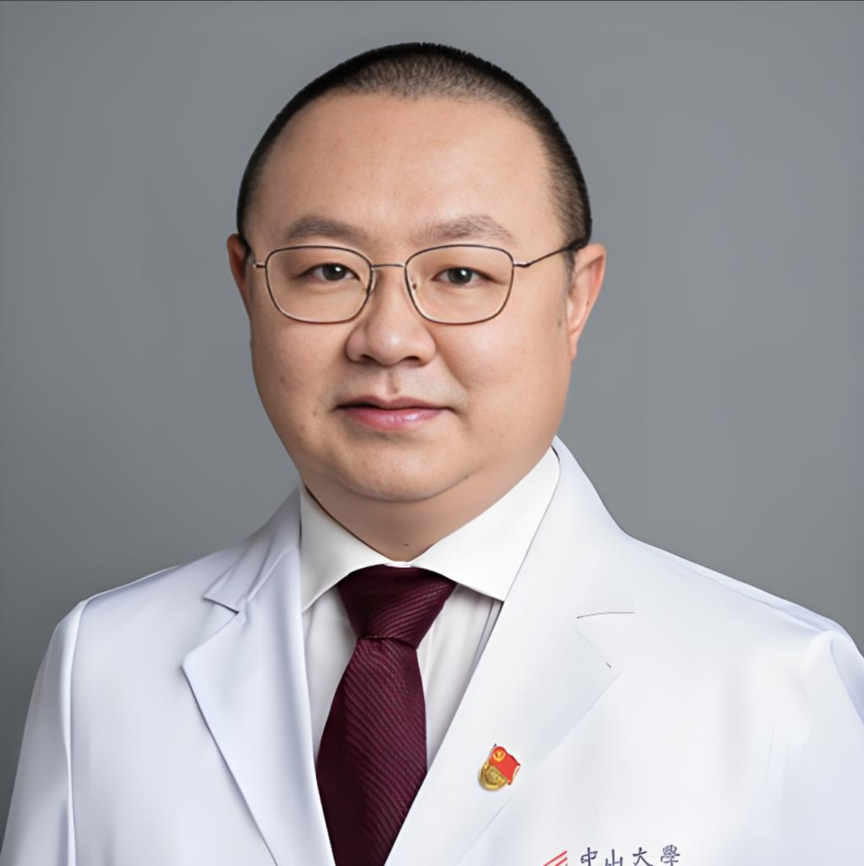
Professor Zhiming Li Sun Yat-sen University Cancer Center
- Chief Physician, Doctoral Supervisor
- Department of Medical Oncology
Academic Appointments:
- Chair, Lymphoma Committee, Guangdong Anti-Cancer Association
- Chair, Head and Neck Oncology Committee, Guangdong Clinical Medical Association
- Chair-Elect, Hematologic Oncology Committee, Guangdong Anti-Cancer Association
- Deputy Secretary-General and Standing Committee Member, CSCO Anti-Lymphoma Alliance
- Standing Committee Member, Lymphoma Committee, Chinese Anti-Cancer Association
- Secretary-General and Standing Committee Member, Lymphoma Committee, China Association of Gerontology and Geriatrics
- Standing Committee Member, Head and Neck Oncology Committee, CSCO
- Executive Council Member, Youth Committee, Chinese Anti-Cancer Association
- Standing Committee Member, Lymphoma Committee, Chinese Medical Education Association
- Deputy Head, CNS Lymphoma Group, Neuro-Oncology Committee, Chinese Anti-Cancer Association
- Vice Chair, Tumor Immunology Committee, Guangdong Society of Integrated Traditional Chinese and Western Medicine
- Vice Chair, Fertility Preservation Committee, Guangdong Health Management Association