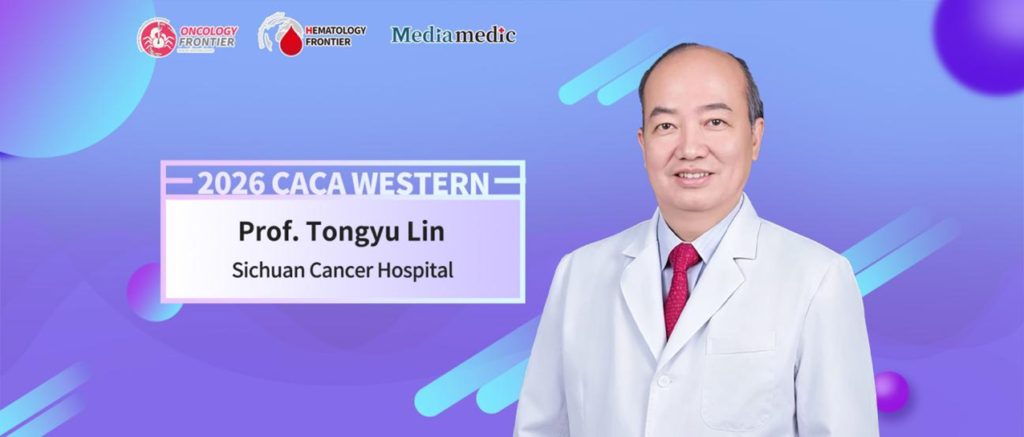
Amid the vibrant renewal of spring, the 2026 CACA Western Integrated Oncology Conference was grandly convened in Chengdu, Sichuan. The meeting brought together leading oncology experts from across China to explore the frontiers of precision oncology and advance the practice of integrated, whole-course cancer care.During the conference, Oncology Frontier – Hematology Frontier conducted an exclusive interview with Professor Tongyu Lin, Executive Chair of the meeting and President of Sichuan Cancer Hospital. In this in-depth discussion, Professor Lin articulated the strategic foundations of integrated oncology, examined pathways for regional collaboration, and explored the paradigm shift in cancer care—from a sole focus on cure to the pursuit of long-term survival with high quality of life. He also outlined the evolution from multidisciplinary collaboration toward comprehensive, patient-centered, and humanistic care across the entire disease continuum.
Foundations of Integrated Oncology: Rooted in Multidisciplinary Collaboration, Expanding Through Regional Synergy
Professor Tongyu Lin:
In cancer treatment, multidisciplinary team (MDT) care is increasingly emphasized—and at its core, MDT is about integration. However, this model extends far beyond the traditional collaboration among medical oncology, surgery, radiation oncology, pathology, and imaging. It must be dynamically adapted to each patient’s clinical condition.
Given that cancer predominantly affects older adults, patients often present with comorbidities such as cardiovascular disease, diabetes, or significant psychological distress. Therefore, MDT teams must fully integrate specialists from cardiology, pulmonology, endocrinology, and psychiatry to address these complex needs.
To ensure that integration is effectively implemented, reliance on individual initiative is insufficient; it must be supported by institutionalized frameworks. For example, in patients with serious underlying conditions, clinical dilemmas—such as whether to prioritize coronary stenting or cancer treatment—cannot be resolved by a single discipline alone. A structured MDT consultation mechanism allows cardiologists and oncologists to jointly determine optimal strategies, enabling comprehensive decision-making and reducing unnecessary patient burden.
At the regional level, it is essential to leverage the complementary strengths of general hospitals and specialized cancer centers. General hospitals offer comprehensive disciplines but may lack access to cutting-edge oncologic technologies. In contrast, cancer centers are equipped with advanced modalities—such as CyberKnife, MRI-guided radiotherapy, and proton therapy—but may have limited capacity for managing complex comorbidities.
Strengthening collaboration between these institutions is therefore critical: cancer centers can engage specialists from general hospitals to manage comorbid conditions, while general hospitals can refer patients requiring advanced oncologic therapies. Such resource-integrated collaboration represents a truly patient-centered and rational healthcare model.
A Paradigm Shift: From “Cure at All Costs” to “Living Better”
Professor Tongyu Lin:
The advent of targeted therapy and immunotherapy has fundamentally transformed cancer treatment. For example, in mismatch repair-deficient (dMMR) or microsatellite instability-high (MSI-H) tumors, neoadjuvant therapy can achieve complete pathological remission in some patients.
This breakthrough has prompted a fundamental re-evaluation of traditional treatment paradigms. For patients whose tumors have completely regressed following systemic therapy, is radical surgery still necessary? This question reflects not only a transition from incurable to curable disease, but also a profound reconfiguration of therapeutic strategies.
As cure rates improve, attention naturally shifts toward quality of life—the concept of “living better.” This shift has driven further refinement of treatment approaches. In breast cancer, for instance, when targeted and immunotherapies achieve complete tumor remission, clinical focus turns to preserving body integrity and aesthetics through breast-conserving surgery whenever possible.
This emphasis on quality of life and social dignity is also evident in surgical innovation. In thyroid cancer, traditional cervical incisions leave visible scars that may impose psychological burdens—particularly in young women—affecting self-esteem and social confidence. To address this, scarless or minimally visible approaches, such as transoral or transaxillary endoscopic surgery, have been developed.
Importantly, these techniques do not aim to improve survival outcomes—which remain comparable to conventional surgery—but rather to eliminate stigma associated with visible scars, allowing patients to reintegrate into society with confidence.
Thus, in an era where 5-year survival rates have significantly improved, clinical decision-making should extend beyond achieving cure to ensuring that patients live well, with dignity and quality. This represents both a humanistic evolution in oncology and a natural progression of modern medicine.
From MDT to Full-Cycle Management: Building a Compassionate Oncology Care System
Professor Tongyu Lin:
Cancer care should not be confined to MDT collaboration during active treatment; it must evolve into comprehensive management across the entire disease trajectory. During prolonged treatment courses, patients seek not only technical medical care but also emotional support.
A simple follow-up message or a thoughtful inquiry about post-treatment discomfort can convey care and reassurance. Even in terminal stages, ensuring that patients can face the end of life with dignity is an essential responsibility of oncology.
Serious illness also tests the resilience of families. While it is often assumed that family members will provide unwavering support, reality may differ. When a child falls ill, families typically mobilize extensive support; however, elderly patients may face limited care due to competing demands on their children. Many elderly patients experience loneliness, lack of companionship, or even absence of a legal representative for medical decisions—highlighting a broader societal issue beyond healthcare.
In this context, artificial intelligence (AI) may offer supportive solutions in care delivery, but it can never replace human warmth. A compassionate phone call or meaningful companionship can strengthen a patient’s resilience.
Given the close relationship between cancer and the immune system, psychological well-being can directly influence treatment outcomes. A positive mindset may enhance therapeutic efficacy, whereas distress may hinder recovery.
Ultimately, only by integrating advanced medical technology with humanistic care—and by mobilizing the collective strengths of families, society, and technology—can we build a truly compassionate, full-cycle oncology care system.
Expert Profile

Professor Tongyu Lin Sichuan Cancer Hospital / Affiliated Cancer Hospital of the University of Electronic Science and Technology of China
- President, Chief Expert, Professor, Chief Physician, Doctoral Supervisor
- Chief Expert, Sun Yat-sen University Cancer Center
Professional Honors and Appointments:
- National Distinguished Physician; Recipient of State Council Special Allowance
- Chair, Oncology Branch, Chinese Medical Association
- Head, Lymphoma Group, Oncology Branch, Chinese Medical Association
- Director, National Lymphoma Quality Control Expert Committee
- Chair, Rare Tumor Committee, Chinese Society of Clinical Oncology (CSCO); Chair-Elect, Melanoma Committee; Vice Chair, China Lymphoma Alliance
- Vice Chair, National Expert Committee on Anticancer Drug Safety Management
- Supervisor, Chinese Southwest Oncology Group (CSWOG)
- Expert Reviewer, National Natural Science Foundation of China
- Member, National Committees on Rational Drug Use and Medical Malpractice Evaluation
- Expert for National Clinical Medical Centers and national talent evaluation programs
- Senior Healthcare Expert for central and regional government officials
- Vice President, Sichuan Medical Association
- Honorary Chair, Oncology Branch, Guangdong Medical Association