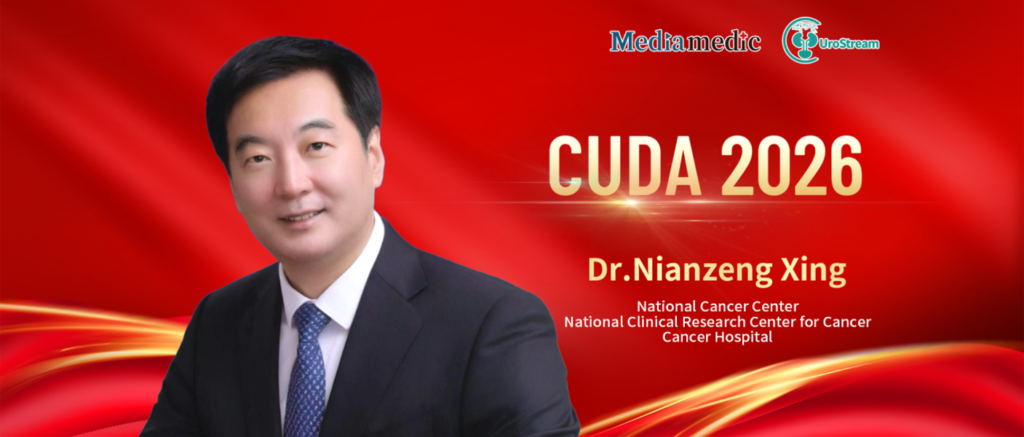
The 2026 Annual Meeting of the Chinese Urological Association (CUDA) was held in Zhengzhou from June 11–14, 2026. As one of China's most influential national academic meetings in urology, this year's conference adopted the theme "Collaboration and Innovation", bringing together leading domestic and international experts to discuss advances in minimally invasive surgery, robotic technology, precision medicine, and multidisciplinary cancer care, while promoting high-quality specialty development and the translation of scientific advances into clinical practice.During the conference, UroStream interviewed Prof. Nianzeng Xing, Chair of the Chinese Urological Association, to discuss the strategic direction of the meeting, the cultivation of young urologists, quality control in urologic oncology, and the future of technological innovation in the specialty.
UroStream:
This year’s CUDA meeting was held in Zhengzhou under the theme “Collaboration and Innovation.” From a strategic perspective, what message did you most hope to convey regarding the future development of urology?
Prof. Nianzeng Xing:
The Annual Meeting of the Chinese Urological Association is one of the most important academic events in Chinese urology each year.
This year’s meeting featured numerous highlights, all centered on our theme of “Collaboration and Innovation.” We hoped to use this platform to showcase the major advances achieved in urology over recent years, particularly those made during the past year.
For example, we highlighted the latest developments in minimally invasive surgery, especially the rapid progress of remote robotic surgery. We also showcased advances in precision medicine, innovative approaches to urologic oncology, and the latest developments in minimally invasive treatment for urinary stone disease.
These achievements were extensively discussed and shared throughout the conference.
UroStream:
In your keynote lecture, you spoke about the opportunities and challenges facing modern urologists. What do you see as the greatest opportunities and the most significant challenges for today’s practitioners?
Prof. Nianzeng Xing:
We are living in an era of rapid development, where opportunities and challenges coexist.
On the one hand, new medical devices, surgical technologies, and treatment strategies continue to emerge. In particular, the development of precision medicine has greatly expanded and refined our therapeutic options.
At the same time, however, these advances place much higher demands on physicians.
Doctors must continuously acquire new knowledge and improve their technical skills in order to understand and appropriately apply emerging therapies, medical technologies, and pharmaceutical innovations.
Beyond clinical practice, physicians also face the challenge of balancing clinical care, research, and medical education, as well as maintaining a healthy balance between professional responsibilities and personal life.
To succeed, physicians must continually adapt, find equilibrium among these multiple roles, improve efficiency, and strive to make their work both meaningful and fulfilling.
As I often say, we should “do meaningful work while also making our work more meaningful and enjoyable.”
UroStream:
You have previously encouraged surgeons to grow from being technically skilled craftsmen into strategic leaders. How do you view the development pathway for young urologists?
Prof. Nianzeng Xing:
For every urologist, the ability to perform surgery competently is the fundamental professional requirement.
However, I hope young physicians aspire to become not only excellent technicians, but also future leaders.
Our specialty needs a new generation of talented physicians who possess both ambition and capability, who are willing to assume responsibility for advancing the field and leading their colleagues forward.
This requires broad vision, strategic thinking, perseverance, and a commitment to hard work.
Equally important is aligning personal development with team success and ensuring that individual career aspirations contribute to the broader needs of the country.
I hope to see more young physicians who are ambitious, responsible, and capable of making meaningful contributions at every level, becoming the driving force behind the future development of urology.
UroStream:
You have long advocated for quality control systems in urologic oncology. How do you envision the future development of standardized, high-quality cancer care across China?
Prof. Nianzeng Xing:
Quality control is fundamental to the treatment of urologic cancers.
Failure to adhere to standardized treatment protocols can result in unnecessary harm to patients. Therefore, promoting uniform standards of care nationwide is essential.
Although this objective may sound straightforward, achieving it is challenging in a country as geographically vast and medically diverse as China.
For this reason, we continue to organize quality control meetings and other educational initiatives to disseminate internationally recognized diagnostic and treatment standards, enabling more physicians to learn, understand, and implement evidence-based clinical practice.
Our ultimate goal is to promote standardized and consistent care for patients with urologic cancers throughout China.
UroStream:
Looking ahead over the next five years, which technological advances do you believe will most significantly reshape urology? How will the Chinese Urological Association support talent development and technological innovation?
Prof. Nianzeng Xing:
The future development of urology will closely parallel advances in science and technology.
Among these innovations, artificial intelligence (AI) is poised to transform virtually every aspect of urologic practice.
AI will not only enhance minimally invasive surgery and precision diagnosis, but will also substantially improve routine clinical activities such as medical imaging interpretation and pathological analysis.
We should actively embrace the AI era.
At the same time, China’s domestically developed robotic surgical systems are advancing rapidly. Over the next several years, remote robotic surgery is expected to become increasingly widespread and may play an especially important role in expanding access to high-quality surgical care in primary and community healthcare settings.
Rapid progress is also expected in precision oncology, prevention of recurrent urinary stone disease, minimally invasive interventions, and functional urology.
Accordingly, the Chinese Urological Association will continue investing in talent development, technological innovation, and clinical translation, with the goal of advancing Chinese urology to a leading position in Asia and among the world’s premier specialties.
UroStream:
Within the framework of China’s 15th Five-Year Plan, how do you view the international development of evidence-based traditional Chinese medicine (TCM) research in urologic diseases?
Prof. Nianzeng Xing:
Traditional Chinese medicine represents one of China’s great cultural treasures and has played an important role in disease prevention and treatment.
China continues to emphasize the complementary development of traditional Chinese medicine and Western medicine, and TCM remains an important component of our healthcare system, earning broad acceptance among patients.
At the same time, the future development of TCM requires closer integration with modern scientific methodologies, particularly through evidence-based clinical research, in order to support its international recognition.
Encouragingly, studies evaluating certain TCM therapies have already been published in internationally recognized medical journals.
These achievements are helping incorporate TCM into the global evidence-based medical framework and provide important support for integrating Chinese approaches into international standards of urologic care.
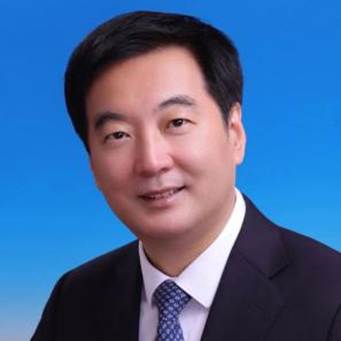
Prof. Nianzeng Xing