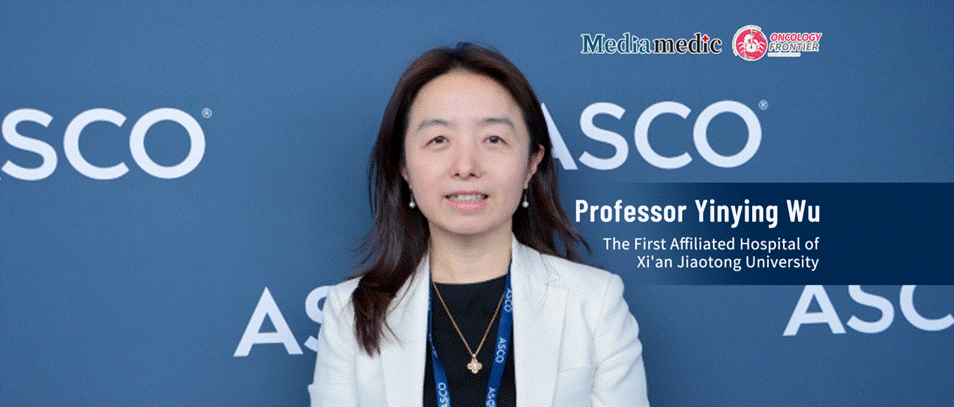
The 2026 American Society of Clinical Oncology (ASCO) Annual Meeting was held in grand fashion in Chicago, showcasing numerous highlights and breakthroughs in gastrointestinal oncology. On this occasion, Oncology Frontier invited Prof. Yinying Wu from the First Affiliated Hospital of Xi’an Jiaotong University to share her perspectives and discuss the impressive contributions of Chinese investigator-initiated research presented at this year’s meeting.Prof. Wu focused primarily on the RASolute 302 study, one of the most notable breakthroughs reported at ASCO 2026. The study demonstrated the remarkable efficacy of the pan-RAS inhibitor daraxonrasib in previously treated patients with RAS-mutant tumors. Median overall survival (mOS) reached 13.2 months, with a 60% reduction in the risk of death, marking the beginning of a new era of precision-targeted therapy for pancreatic cancer.
At the same time, emerging therapies such as Claudin 18.2/CD3 bispecific antibodies and DLL3/DLL3/CD3 trispecific antibodies also showed encouraging clinical potential, making treatment sequencing and combination strategies for pancreatic cancer—often referred to as the “king of cancers”—a major focus of discussion within the oncology community.
In addition, Prof. Wu highlighted her team’s original research in gastric cancer and neuroendocrine tumors, showcasing the growing scientific impact and clinical insights contributed by Chinese investigators at this year’s ASCO Annual Meeting.
Oncology Frontier:
Could you briefly share the gastrointestinal cancer studies presented at this year’s ASCO Annual Meeting that you found particularly noteworthy and clinically impactful?
Prof. Yinying Wu:
This year’s ASCO Annual Meeting featured several breakthrough developments in gastrointestinal oncology, particularly in pancreatic cancer, which were highly impressive.
The first was the RASolute 302 study (Abstract LBA5), which has the potential to change clinical practice. As we know, RAS has long been regarded as an “undruggable” target, while pancreatic cancer is often referred to as the “king of cancers” because of its extremely poor prognosis. The RASolute 302 study demonstrated the groundbreaking potential of the oral pan-RAS inhibitor daraxonrasib (RMC-6236) in patients with RAS-mutant tumors.
Among patients who had previously failed standard therapy and received second-line treatment, those with RAS G12 mutations achieved a median overall survival (mOS) of 13.2 months in the daraxonrasib arm, compared with 6.6 months in the conventional chemotherapy arm, representing a 60% reduction in the risk of death (HR=0.40, P=5.9×10⁻¹⁰). These findings generated tremendous excitement at the meeting and marked the arrival of a truly milestone therapy for pancreatic cancer.
Looking ahead, the field of RAS-mutant cancer treatment is entering an era of increasingly diverse therapeutic approaches. Combination strategies continue to evolve, and moving treatment from the second-line setting into earlier lines of therapy has become a major focus of future research. Daraxonrasib has attracted widespread attention because of its unique mechanism as a pan-RAS inhibitor. In addition to targeting KRAS, it also inhibits NRAS and HRAS, providing broader pathway coverage that may translate into meaningful survival benefits for selected patient populations.
The study enrolled patients with KRAS G12D, G12V, G12R, and G13 mutations, as well as a small number of patients with wild-type disease. Although encouraging efficacy signals have already been observed in the second-line setting, the relatively limited size of the second-line pancreatic cancer population means that future development efforts will primarily focus on frontline treatment. The development team is actively evaluating first-line combination strategies involving daraxonrasib in order to further expand its clinical utility.
Chinese innovation has also delivered encouraging results. During presentations on June 1, a domestically developed KRAS G12D inhibitor demonstrated promising activity in early clinical studies. Looking forward, new questions regarding treatment sequencing will need to be addressed. Should highly selective KRAS G12D inhibitors be used first, followed by pan-RAS inhibitors after resistance develops? Or should alternative combination approaches be pursued? At present, many important avenues remain open for future exploration.
Another notable highlight was the continued progress of the Claudin 18.2 target. Prof. Xiaotian Zhang from the team led by Prof. Lin Shen at Peking University Cancer Hospital presented updated data on the Claudin 18.2/CD3 bispecific antibody QLS31905. The study included both pancreatic cancer and gastric cancer cohorts, with the pancreatic cancer cohort achieving an objective response rate (ORR) approaching 60% (Abstract 4003).
These findings raise an important clinical question: for patients who harbor both KRAS mutations and high Claudin 18.2 expression, what is the optimal treatment sequence? Given KRAS’s central role as a driver gene in pancreatic cancer, future combination strategies should be built upon RAS pathway inhibition as a therapeutic backbone, complemented by additional targeted agents to maximize synergistic efficacy.
At present, combinations with chemotherapy and antiangiogenic therapies—such as AG or FOLFIRINOX-based regimens—represent the main directions of investigation. Determining how to optimally sequence and combine these therapies remains one of the most pressing challenges facing researchers today.
In addition, the safety management of KRAS inhibitors deserves close attention. In clinical practice, the most commonly observed adverse events include diarrhea, hot flashes, and skin rash. Developing standardized strategies for the comprehensive management of these toxicities will be critical for improving patient adherence and quality of life.
Reflecting on this year’s ASCO Annual Meeting, what impressed me most was the emergence of numerous therapeutic strategies targeting novel pathways and targets in both pancreatic and gastric cancers. We are particularly encouraged to see an increasing number of original studies from Chinese investigators presented on the ASCO stage.
These studies have largely focused on gastrointestinal malignancies and include innovations targeting Claudin 18.2, DLL3, and T-cell engagers, among other cutting-edge therapeutic approaches. The strength of these data reinforces our belief that more “Chinese voices” will continue to resonate on the global stage and contribute valuable insights to the advancement of cancer treatment worldwide.
Oncology Frontier:
Could you share the key research projects currently underway within your team and discuss your future research plans?
Prof. Yinying Wu:
Our team has long been dedicated to the field of gastrointestinal oncology, and our current research efforts are primarily focused on several key areas.
First, we are actively engaged in the clinical and translational development of KRAS and pan-RAS inhibitors. Given the challenges associated with targeting this difficult molecular pathway, our team has participated as a study center in multiple multicenter clinical trials across China.
Second, we place significant emphasis on innovation in the diagnosis and treatment of neuroendocrine carcinomas (NECs). As demonstrated by the encouraging data presented by Prof. Jianming Xu’s team on the DLL3/DLL3/CD3 trispecific T-cell engager in NEC (Abstract 4004), this therapeutic target is expanding beyond small-cell lung cancer into the NEC setting. Our team has also established research programs in this area.
Earlier this year, at the European Neuroendocrine Tumor Society (ENETS) Annual Conference in March, we presented a prospective study evaluating liposomal irinotecan combined with platinum-based chemotherapy as first-line treatment for advanced NEC. The study generated encouraging efficacy results and provided further support for continued exploration of novel treatment strategies in this patient population.
Finally, in the field of gastric cancer, we are particularly focused on developing second-line treatment strategies for patients who have developed resistance to immunotherapy. This year, one of our exploratory studies investigating a triplet regimen combining chemotherapy, targeted therapy, and immunotherapy was selected for poster presentation at the ASCO Annual Meeting.
We are currently integrating the available data and planning to collaborate with multiple centers across China to conduct a larger confirmatory study. Our goal is to address the real-world challenge of treatment resistance and generate stronger clinical evidence to guide future therapeutic strategies.
Oncology Frontier:
Your team also presented a poster at this year’s ASCO Annual Meeting. Could you tell us more about the study, including its key findings and major highlights?
Prof. Yinying Wu:
At this year’s ASCO Annual Meeting, our team presented a single-center clinical study evaluating the clinical value of a triplet regimen consisting of sintilimab, lenvatinib, and liposomal irinotecan as second-line treatment for gastric cancer. Notably, sintilimab has already been approved in China as a first-line treatment for gastric cancer.
To date, nearly 30 patients have been enrolled in the study. Preliminary results showed that the regimen achieved a median progression-free survival (PFS) of 5.6 months in the second-line setting, demonstrating encouraging efficacy. Overall safety was manageable, with gastrointestinal toxicities representing the most common adverse events. No unexpected safety signals were observed (Abstract e16035).
The study design was based on three key clinical considerations.
First, for patients with gastric cancer who develop acquired resistance following first-line immunotherapy, we sought to explore an effective strategy for immunotherapy rechallenge in the second-line setting.
Second, we incorporated lenvatinib, a multitarget antiangiogenic agent, with the goal of remodeling and reversing the immunosuppressive tumor microenvironment, thereby enhancing the efficacy of immunotherapy through synergistic mechanisms.
Third, we selected liposomal irinotecan as the chemotherapy backbone. This novel topoisomerase inhibitor has undergone structural optimization and has already demonstrated improved efficacy and safety in first-line pancreatic cancer treatment. With a well-established clinical profile and approved indications, it offers a promising alternative to conventional chemotherapy regimens.
Taken together, this study represents an innovative treatment strategy integrating immunotherapy maintenance, antiangiogenic therapy, and a next-generation chemotherapy agent. Our team is currently conducting in-depth biomarker analyses to identify patient populations most likely to benefit from this approach.
More comprehensive data will be reported in the future, providing additional evidence to support patient selection, optimize clinical benefit, and facilitate the broader clinical application of this treatment strategy.

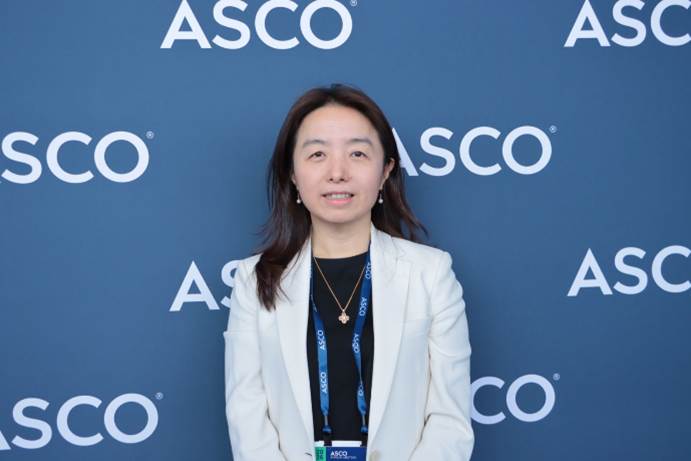
Prof. Yinying Wu