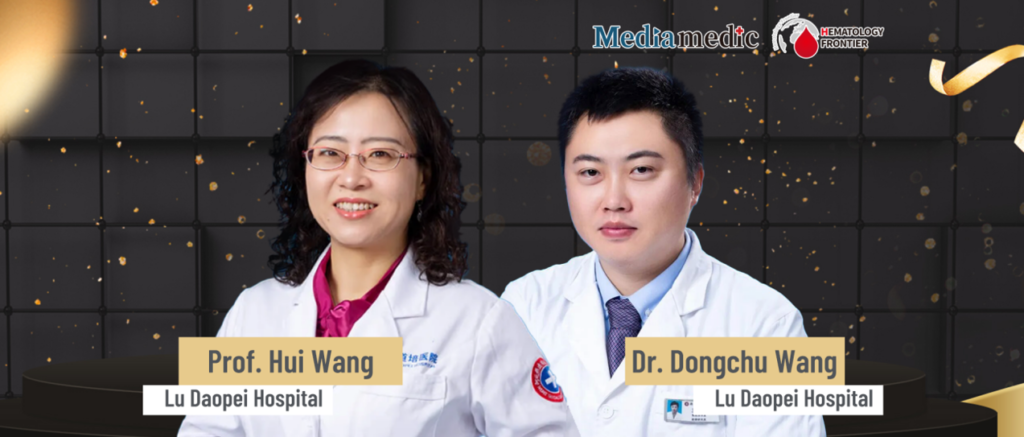
The 2026 Congress of the European Hematology Association (EHA 2026) was held from June 11–14 in Stockholm, Sweden. As one of the world's premier hematology meetings, EHA brings together leading experts across basic research, translational medicine, and clinical practice to showcase the latest advances in blood disorders.At this year’s congress, a study presented by Hui Wang and Dongchu Wang from Lu Daopei Hospital investigated the relationship between cytokine dynamics following CD7 CAR-T therapy and the subsequent development of graft-versus-host disease (GVHD) after bridging allogeneic hematopoietic stem cell transplantation (allo-HSCT). The findings revealed that elevated levels of IL-10, sCD25, and TNFRI on Day 4 after CAR-T infusion, as well as IL-6 on Day 15, were significantly associated with the development of acute GVHD (aGVHD). Notably, Day 15 IL-6 demonstrated exceptional predictive performance, providing a potential tool for early risk stratification and preemptive intervention before transplantation.
Study Overview
Title: Relevant Study between Cytokine Level of Patients Treated with CD7 CAR-T Therapy and GVHD after Allogeneic Hematopoietic Stem Cell Transplantation
First Author: Dongchu Wang Corresponding Author: Hui Wang
Background
CD7-directed CAR-T cell therapy has demonstrated remarkable efficacy in patients with T-cell acute lymphoblastic leukemia (T-ALL) and T-cell lymphoblastic lymphoma (T-LBL), achieving high complete remission rates in heavily pretreated populations.
To consolidate remission and improve long-term outcomes, patients who achieve complete remission following CAR-T therapy are frequently bridged to allogeneic hematopoietic stem cell transplantation. However, graft-versus-host disease remains one of the most serious and potentially fatal complications following allo-HSCT.
Identifying patients at high risk of GVHD before transplantation could enable earlier intervention and improve clinical outcomes. The present study sought to determine whether cytokine levels measured during CAR-T therapy could serve as predictive biomarkers for subsequent GVHD following allo-HSCT.
Methods
The study included 54 patients who received CD7 CAR-T therapy followed by bridging allo-HSCT at Hebei Yanda Lu Daopei Hospital between December 2020 and November 2022.
Twenty-four cytokines were dynamically monitored using bead-based assays analyzed on a CANTO PLUS flow cytometry platform. Statistical analyses were performed using GraphPad Prism 8, and two-way ANOVA was used to evaluate associations between cytokine levels at seven key time points and post-transplant outcomes.
Results
The investigators first compared cytokine profiles among three patient groups:
- Patients who did not develop GVHD
- Patients who developed acute GVHD (aGVHD)
- Patients who developed chronic GVHD (cGVHD) without prior acute GVHD
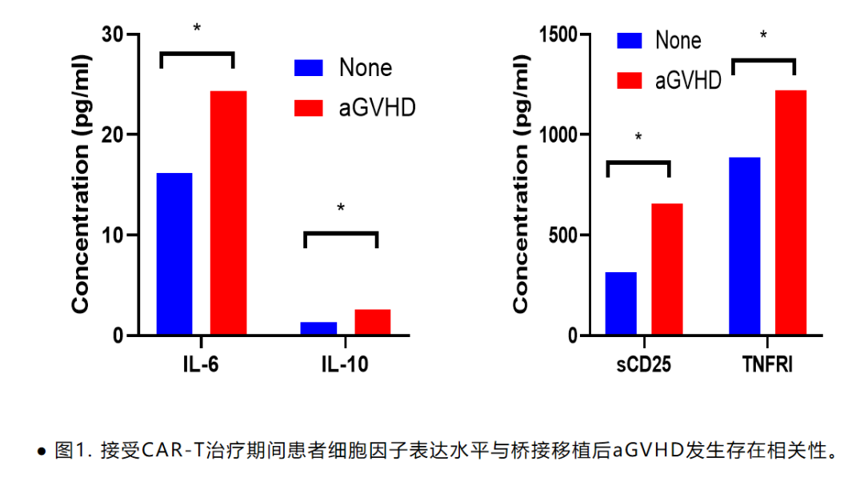
Compared with the non-GVHD group, patients who subsequently developed acute GVHD exhibited significantly elevated levels of IL-10, sCD25, and TNFRI on Day 4 after CAR-T infusion. Elevated IL-6 levels on Day 15 were also significantly associated with later development of acute GVHD.
Given the major clinical significance of acute GVHD, the investigators performed receiver operating characteristic (ROC) analyses to evaluate the predictive value of these biomarkers.
Among all cytokines assessed, Day 15 IL-6 demonstrated outstanding predictive performance. The optimal cutoff value was 530.2 pg/mL, yielding an area under the curve (AUC) of 0.9959 (95% CI, 0.9860–1.0000), with 100% sensitivity and 95.65% specificity.
Additional biomarkers also showed meaningful predictive value:
- Day 4 IL-10 Cutoff: 2.735 pg/mL AUC: 0.7032 Sensitivity: 48% Specificity: 89.47%
- Day 4 sCD25 Cutoff: 359.9 IU/mL AUC: 0.7432 Sensitivity: 84% Specificity: 68.42%
- Day 4 TNFRI Cutoff: 1079 pg/mL AUC: 0.7347 Sensitivity: 60% Specificity: 78.95%
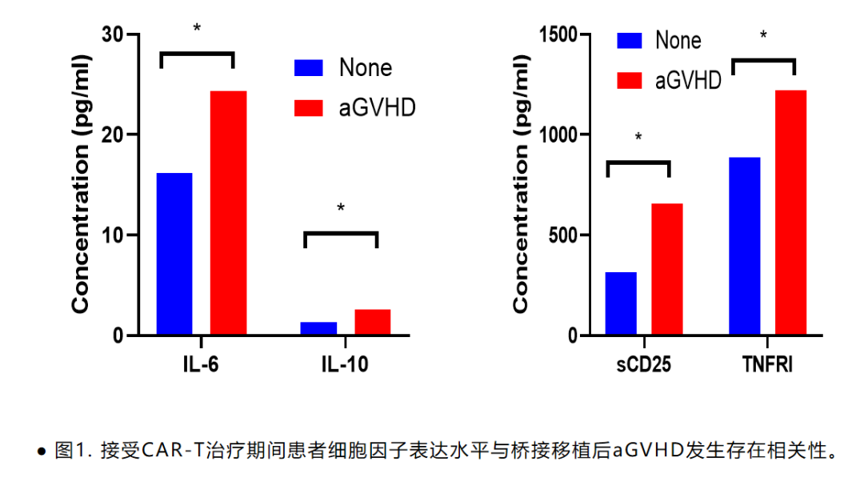
These findings suggest that cytokine alterations occurring during CAR-T therapy may precede and predict the later development of clinically significant GVHD following transplantation.
Distinct Cytokine Signatures Associated with Acute and Chronic GVHD
The study also compared cytokine profiles between patients who developed acute GVHD and those who developed only chronic GVHD.
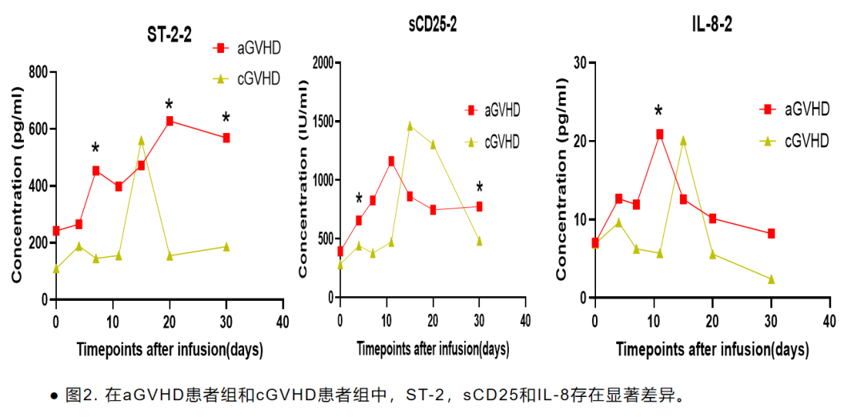
Several biomarkers, including ST2, sCD25, and IL-8, demonstrated significant differences at multiple time points. In general, cytokine levels were consistently higher among patients who subsequently developed acute GVHD, suggesting a more pronounced inflammatory response.
Further analyses examined cytokine patterns according to the severity of acute GVHD. Significant differences were observed for several biomarkers, including:
- Elafin
- IL-10
- sCD25
- IL-8
- TNFRI
These markers may provide additional insights into the biological mechanisms underlying GVHD severity and could potentially contribute to future risk-adapted monitoring strategies.
The investigators also analyzed cytokine patterns in gastrointestinal GVHD of varying grades and reported a median onset of acute GVHD approximately 30 days after transplantation.
Clinical Implications
GVHD remains one of the most important determinants of morbidity and mortality following allogeneic transplantation. Despite advances in transplant techniques and supportive care, accurately identifying patients at risk before the onset of clinical symptoms remains a major challenge.
This study suggests that cytokine monitoring during CD7 CAR-T therapy may provide a valuable window into future transplant-related immune complications. In particular, IL-6, sCD25, and TNFRI demonstrated strong predictive potential, with Day 15 IL-6 emerging as an especially powerful biomarker.
Routine monitoring of these cytokines could help transplant physicians identify high-risk patients earlier, allowing timely implementation of preventive interventions and closer surveillance strategies before allo-HSCT.
Conclusion
The findings presented at EHA 2026 provide important evidence that cytokine dynamics during CD7 CAR-T therapy are closely associated with the subsequent development of GVHD following bridging allogeneic transplantation.
Among the biomarkers evaluated, IL-6 measured on Day 15 after CAR-T infusion demonstrated exceptional predictive accuracy for acute GVHD. Together with IL-10, sCD25, and TNFRI, these markers may form the basis of future risk prediction models designed to optimize transplant outcomes and improve personalized management of patients undergoing CAR-T-to-transplant treatment strategies.
Expert Profiles

Lu Daopei Hospital
Vice President, Beijing Lu Daopei Institute of Hematology Deputy Director (Vice President Level), Department of Clinical Laboratory, Lu Daopei Hospital
Professor Wang has worked in the field of flow cytometry for more than 24 years and has independently reviewed and issued over one million clinical laboratory reports.
She serves on the editorial boards of the Chinese Journal of Laboratory Medicine and the Chinese Journal of Hematology and holds leadership positions in more than 20 national academic organizations, including serving as Chair of the Expert Committee on Flow Cytometric Analysis and Diagnosis of the Chinese Association of Integrative Medicine.
Her research accomplishments include 10 Chinese invention patents and three U.S. patents. As first author or corresponding author, she has led the development of six expert consensus statements and has contributed to 11 additional professional guidelines and standards. She has published more than 60 papers in SCI-indexed and major Chinese journals and has contributed to nearly 100 scientific publications overall.

Lu Daopei Hospital
MSc | Assistant Research Fellow
Dongchu Wang serves as a committee member of the Flow Cytometric Analysis and Diagnosis Expert Committee of the Chinese Association of Integrative Medicine and as a young committee member of the Beijing Association of Integrative Medicine Laboratory Medicine Committee.
As first author, under the supervision of corresponding author Hui Wang, he has contributed research presented at numerous international meetings, including ICCS, EHA, ASH, ISLH, and EBMT.
He received degrees in Biomedical Science and Biotechnology from the University of Greenwich in the United Kingdom and previously participated in research related to the Human Genome Project. His work has focused on recombinant protein production, analysis, and intracellular tracking of therapeutic agents.
Since joining Hebei Yanda Lu Daopei Hospital in 2017, he has specialized in laboratory diagnostics and clinical immune-monitoring studies for cellular therapies. His experience includes monitoring cellular expansion and cytokine dynamics in CAR-T, TCR-T, CAR-NK, NK, and CIK therapy trials. More recently, his research has focused on high-throughput flow cytometric measurement of 24 cytokines using cytokine bead array (CBA) technology in immunotherapy, hematologic malignancies, and hematopoietic stem cell transplantation.