ASCO 2026 has officially opened, featuring 518 major studies in genitourinary oncology, with antibody-drug conjugates (ADCs) emerging as one of the most exciting areas of progress. Among them, enfortumab vedotin (EV), a Nectin-4-targeting ADC, was the subject of 36 presentations, continuing to drive transformative changes in the treatment landscape of urothelial carcinoma (UC).The international multicenter phase III EV-302 study previously established enfortumab vedotin plus pembrolizumab (EV+P) as the new standard first-line treatment for locally advanced or metastatic urothelial carcinoma (la/mUC) after demonstrating significant improvements in both progression-free survival (PFS) and overall survival (OS). At this year’s ASCO Annual Meeting, investigators presented updated results with a median follow-up of 3.5 years, showing durable survival benefits with EV+P. The 3.5-year OS rate reached 44%, while patients who achieved a complete response (CR) had a 3.5-year OS rate exceeding 83.6%, offering a realistic prospect of cure for some patients with la/mUC.
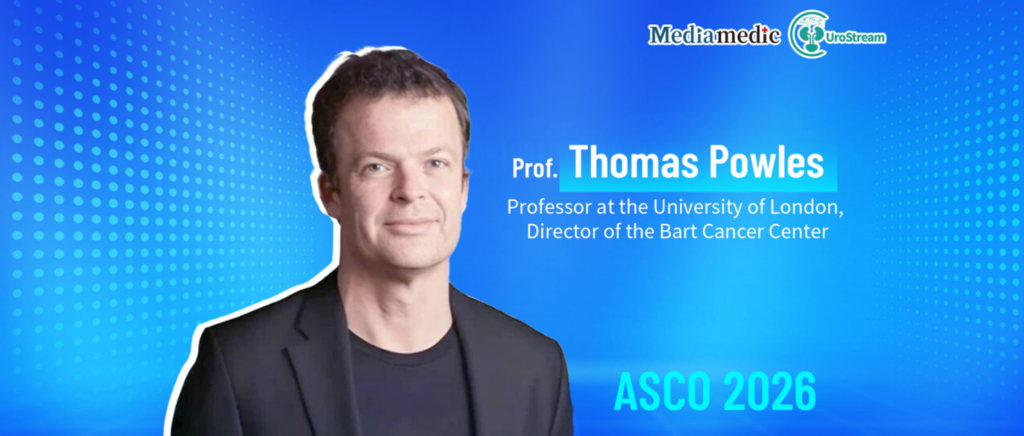
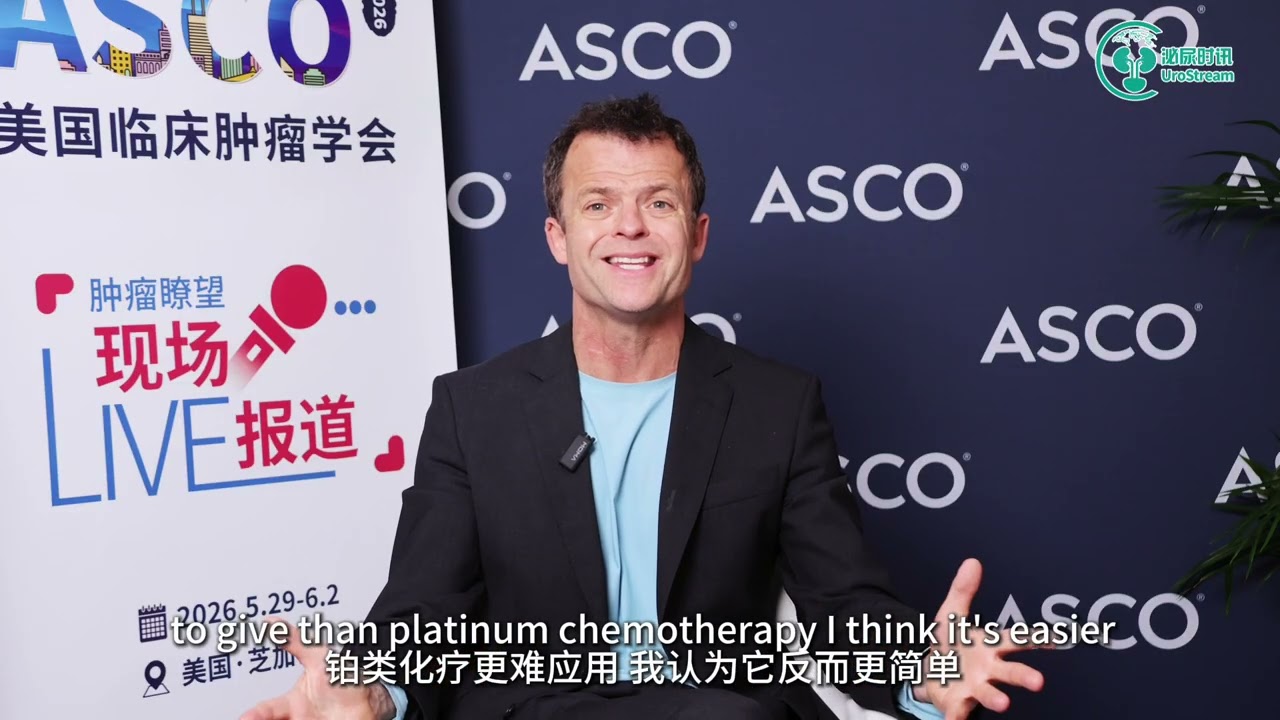
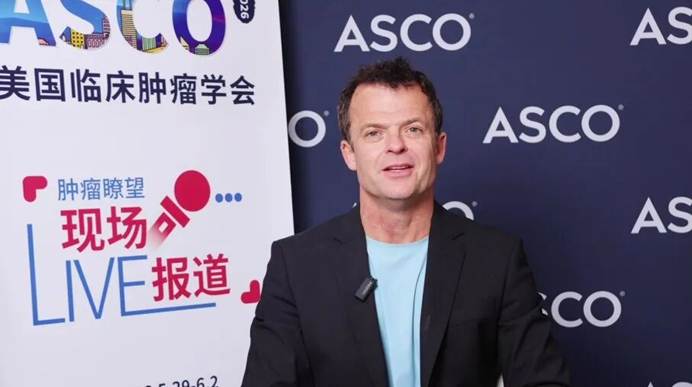
To advance precision medicine in genitourinary oncology and accelerate the translation of innovative concepts and technologies into clinical practice, the Hainan Lecheng Hongyuan Institute for Medical Technology Innovation and Development launched the Academic Exchange Program on Precision Diagnosis and Treatment of Genitourinary Tumors. The initiative brings together leading international experts to interpret landmark studies and discuss emerging treatment strategies. During ASCO 2026, we had the privilege of interviewing Professor Thomas Powles, Global Leading Principal Investigator of the EV-302 study and Professor at the Barts Cancer Institute, Queen Mary University of London, for an in-depth discussion of the latest findings.
01. Durable Survival Benefits Confirmed: EV+P Brings the Dream of Cure Closer for Patients with Advanced Disease
Oncology Frontier – UroStream
The EV-302 study fundamentally changed the first-line treatment landscape for locally advanced or metastatic urothelial carcinoma when it was first reported. This year’s ASCO presentation provided updated data with a median follow-up of 3.5 years. What do you consider the most exciting finding from this update?
Professor Thomas Powles
EV-302 is a large randomized phase III study evaluating first-line treatment for locally advanced or metastatic urothelial carcinoma. The trial compared enfortumab vedotin plus pembrolizumab with standard platinum-based chemotherapy.
Enfortumab vedotin is a novel Nectin-4-targeting ADC carrying an MMAE payload, while pembrolizumab is a PD-1 immune checkpoint inhibitor.
The first interim analysis of EV-302, conducted at a median follow-up of 17.2 months, demonstrated nearly a doubling of median PFS (12.5 vs 6.3 months; HR 0.45, 95% CI 0.38–0.54; P<0.001) and median OS (31.5 vs 16.1 months; HR 0.47, 95% CI 0.38–0.58; P<0.001), along with a substantial improvement in objective response rate (67.7% vs 44.4%).
For such a difficult-to-treat disease, these results were truly practice-changing.
At this year’s ASCO meeting, we reported outcomes with approximately 3.5 years of follow-up (median 44.2 months). The data demonstrated that the survival benefit of EV+P remains highly durable. The 3.5-year OS rates were 44.0% with EV+P and 24.6% with chemotherapy. Median OS with EV+P exceeded that of chemotherapy by more than twofold (33.6 vs 15.9 months; HR 0.53, 95% CI 0.45–0.63).
Importantly, the Kaplan-Meier OS curve appears to plateau above 40% beyond 3.5 years, suggesting that more than 40% of patients may continue to survive for four years, five years, or even longer.
The CR rate in the EV+P arm reached 30.4%, including 10.3% who achieved an immediate CR and 20.1% who converted from partial response (PR) to CR. This was more than double the CR rate observed in the control arm (14.5%).
Among patients treated with EV+P who achieved CR, the 3.5-year OS rate exceeded 83%, whether they achieved CR directly (83.6%) or converted from PR to CR (82.4%). These findings suggest that patients who attain a complete response with first-line EV+P may potentially achieve long-term disease eradication.
We still need to understand how long these patients should remain on treatment and what happens after therapy is discontinued. This will be an important area of future research. However, the first and most important step is recognizing that this combination has fundamentally changed the previously incurable outlook for patients with urothelial carcinoma.
02. Don’t Rush to a Final Verdict: Many Patients Continue to Convert from PR to CR with Ongoing Therapy
Oncology Frontier – UroStream
As you mentioned, the updated analysis showed a median OS of 33.6 months with EV+P and a 42-month OS rate of 44%, nearly double that seen with chemotherapy. How do you interpret these durable survival benefits?
Professor Thomas Powles
One of the major limitations of platinum-based chemotherapy is that most patients experience disease progression relatively early during treatment.
With EV+P, however, we are seeing something very different. Many patients achieve deep responses, and their cancers do not appear to recur in the same way. This likely reflects a positive interaction between ADC therapy and immunotherapy.
In earlier trials of EV monotherapy, we did not observe this degree of durable remission. The combination of EV with pembrolizumab appears to be a key factor underlying these long-lasting outcomes.
When we analyzed durability, particularly among patients achieving CR, we found that some patients who initially achieved PR eventually relapsed. However, the majority of those who converted from PR to CR remained disease-free.
This is why we are increasingly comfortable using the term “cure” for a subset of patients with urothelial carcinoma.
In addition, the EV-303 and EV-304 perioperative studies have shown pathological complete response rates exceeding 50%, along with meaningful overall survival benefits following nine cycles of EV+P treatment.
These findings suggest two important points. First, the combination can genuinely cure some patients. Second, treatment duration may be a critical factor influencing long-term outcomes and deserves further investigation.
03. Adverse Events Are Manageable, Allowing More Patients to Stay on Therapy and Maximize Benefit
Oncology Frontier – UroStream
The longer follow-up from EV-302 confirmed sustained efficacy without new safety signals. How do you evaluate the balance between long-term efficacy and safety, and what measures are needed in routine practice to ensure patients achieve the same benefits seen in the trial?
Professor Thomas Powles
One of the key questions in daily practice is determining whether an observed tumor response will continue to deepen over time.
Typically, a partial response can be seen after the first few cycles, whereas achieving CR may take considerably longer. There is unlikely to be a one-size-fits-all rule. Some patients may reach CR after four cycles, while others require substantially more treatment.
Patients with more aggressive disease, visceral metastases, or a high tumor burden may require longer treatment durations. In contrast, patients with only lymph node metastases or muscle-invasive bladder cancer may achieve optimal outcomes with approximately nine cycles.
Another important question is whether prolonged treatment leads to increased toxicity.
I believe EV-302 provides two key lessons. First, dose reductions and treatment interruptions were frequently required, and these measures actually facilitate effective clinical management. Early toxicities such as rash, elevated liver enzymes, and fatigue can often be managed successfully through dose modifications or treatment delays, allowing patients to continue therapy.
Second, clinicians should never force treatment continuation in the presence of significant peripheral neuropathy. Likewise, if immune-related toxicity is suspected, the relevant therapy should be held and the patient carefully monitored.
We have decades of experience managing chemotherapy, but the longer duration of EV+P treatment requires a new clinical mindset. Education, training, and practical experience are therefore critically important—which is one of the reasons I am here today discussing these data.
Oncology Frontier – UroStream
Another important observation from the updated analysis was that approximately two-thirds of CRs in the EV+P arm were achieved through conversion from PR after a median of five additional treatment cycles. These patients achieved 3-year OS rates above 88%, similar to those who achieved CR directly. What are the clinical implications of this finding?
Professor Thomas Powles
I think this reflects the gradual deepening of response that can occur in urothelial carcinoma, particularly among patients with a high tumor burden, such as those with liver metastases.
Bone metastases are often more difficult to evaluate radiographically, making clear response assessments more challenging. As a result, some patients genuinely require longer treatment durations.
Our data show that a substantial number of patients converted from PR to CR over time. This suggests that extending treatment may provide additional benefit for selected individuals.
However, we must also acknowledge that the optimal treatment duration remains unknown. For patients who struggle with treatment tolerability, discontinuation at an appropriate time may also be a reasonable strategy.
Many clinicians have encountered patients who stopped therapy earlier than planned yet continued to do remarkably well.
Therefore, I encourage the global oncology community—including myself—to continue investigating this question with regimens such as RC48 plus toripalimab and EV plus pembrolizumab. Through both clinical trials and real-world evidence, we should identify patients who may be suitable for earlier treatment discontinuation and evaluate their long-term outcomes.
This is an important area for future research and one that I am personally very interested in.
04. Advancing Precision Therapy: EV Continues to Drive Evolution in the Treatment of la/mUC
Oncology Frontier – UroStream
ASCO 2026 featured a wealth of exciting data on ADCs and combination strategies. Looking ahead, how do you see the treatment landscape of la/mUC evolving?
Professor Thomas Powles
The treatment landscape for locally advanced and metastatic urothelial carcinoma is evolving rapidly.
EV+P represents the first major chapter in this transformation.
We have also seen encouraging data from Professor Jun Guo’s group on HER2-targeted ADCs combined with immunotherapy. At this meeting, investigators from Europe, the United States, and China presented data on Nectin-4-targeting agents carrying Topo-I inhibitor payloads rather than MMAE.
Although these agents target the same molecule as EV, they employ different payloads. Importantly, we demonstrated that there is no cross-resistance between EV and these newer payload-switched therapies.
In other words, maintaining the same target while changing the payload appears to restore sensitivity to treatment. This is highly significant because resistance is often associated with continued use of the same payload.
Traditionally, treatment sequencing involved changing both the target and the payload—for example, moving from EV (Nectin-4/MMAE) to trastuzumab deruxtecan (HER2/Topo-I). However, we are now seeing a new paradigm emerge: continuing to target Nectin-4 while switching from an MMAE payload to a Topo-I inhibitor may also produce meaningful clinical responses.
This opens an entirely new avenue for ADC sequencing strategies.
We also presented pharmacology data suggesting that certain enzymes involved in drug metabolism may influence toxicity and can potentially be measured clinically. A better understanding of these metabolic pathways may allow us to optimize treatment outcomes through improved toxicity management.
A third important development is the exploration of biomarkers beyond HER2. Studies such as the I-SPY program are now evaluating targets including HER3 and HER1.
Overall, this field is expanding rapidly. We are seeing new drugs, new targets, and multiple treatment options without complete cross-resistance. As a result, this is an exceptionally exciting time for the treatment of urothelial carcinoma.
About the Expert

Professor Thomas Powles