Editor’s Note: Donor selection is a critical factor influencing the outcomes of allogeneic hematopoietic stem cell transplantation (allo-HSCT). With the continued development of haploidentical and umbilical cord blood transplantation, donor selection is evolving from simply expanding the available donor pool toward more precise donor optimization. The application of cellular therapies such as CAR-T has also raised new considerations for transplant donor selection.
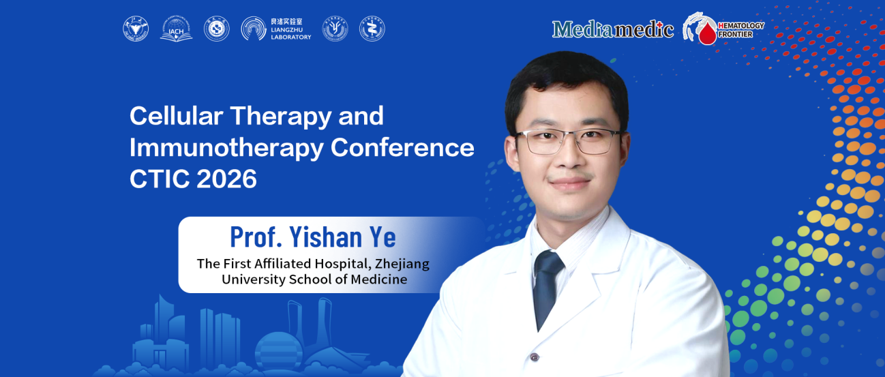
During the 2026 Cellular Therapy and Immunotherapy Conference (CTIC 2026) Oncology Frontier – Hematology Frontier invited Professor Yishan Ye from the First Affiliated Hospital, Zhejiang University School of Medicine, for an in-depth discussion on the key considerations in donor selection, the impact of donor age and other factors on transplant outcomes, and emerging changes in donor selection strategies in the context of CAR-T therapy. He also shared relevant research progress and future directions.
Oncology Frontier – Hematology Frontier:
With the maturation of haploidentical and umbilical cord blood transplantation, the range of available donors has expanded considerably. For patients with high-risk or refractory hematologic diseases, what are the most important criteria you consider when choosing between unrelated and haploidentical donors?
Professor Yishan Ye: Donor selection has always been a central scientific question in hematopoietic stem cell transplantation. At present, approximately 5%–10% of patients are still unable to identify a suitable donor in a timely manner. Therefore, further expanding donor registries remains an important task. In addition, when multiple potential donors are available, determining how to identify the optimal donor is another major scientific challenge.
Haploidentical transplantation has developed rapidly in China, placing the country at the forefront internationally. As transplantation techniques continue to improve, the incidence of complications associated with haploidentical transplantation has steadily declined, while overall treatment outcomes have continued to improve. Therefore, donor selection strategies should be individualized according to the disease status and characteristics of each patient population.
Oncology Frontier – Hematology Frontier:
Donor selection has evolved from identifying a donor who is merely “acceptable” to selecting the “optimal” donor. Based on your team’s research, what new indicators—such as donor age, NK cell activity, and specific antibodies—can help optimize donor selection, reduce graft-versus-host disease (GVHD), and improve engraftment rates?
Professor Yishan Ye: Transplant outcomes are influenced by multiple factors, among which donor-related factors play an important role. Of the many variables affecting transplant outcomes associated with donor characteristics, donor age is particularly important. Across different transplantation platforms, donor age has a significant impact on post-transplant prognosis. The younger the donor, the better the transplant outcomes. This view has become a consensus in the academic community.
Other factors, including cytomegalovirus (CMV) serostatus and the degree of human leukocyte antigen (HLA) matching, may also influence transplant outcomes. Previously, the degree of HLA matching was considered the most influential factor. However, with continued advances in transplantation techniques, the impact of HLA matching on transplant outcomes has gradually diminished, while the prognostic influence of other factors, such as donor age, has become increasingly prominent.
In the future, as transplantation techniques continue to evolve, the effects of donor selection at different levels and across different indicators on transplant outcomes will continue to change. This dynamic process warrants further in-depth investigation.
Oncology Frontier – Hematology Frontier:
With the increasing use of cellular therapies such as CAR-T, how have donor selection strategies for hematopoietic stem cell transplantation changed? Looking ahead, how might cell engineering technologies further overcome limitations in donor availability and reshape the landscape of transplantation and clinical treatment?
Professor Yishan Ye: CAR-T cell therapy and hematopoietic stem cell transplantation are two major treatment modalities for hematologic diseases. Bridging to allogeneic hematopoietic stem cell transplantation following CAR-T therapy is also increasingly becoming the definitive treatment strategy for many patients with hematologic diseases.
Against this background, donor selection needs to take multiple factors into consideration, such as the ability of CAR-T therapy to eliminate measurable residual disease (MRD) before transplantation. Furthermore, because the donor used during CAR-T treatment may also need to serve as the donor for subsequent hematopoietic stem cell transplantation, donor selection strategies in this specific clinical setting still require further clarification and investigation.
Expert Profile

Professor Yishan Ye
First Affiliated Hospital, Zhejiang University School of Medicine
- Associate Chief Physician, Distinguished Researcher, and Master’s Supervisor at the First Affiliated Hospital, Zhejiang University School of Medicine.
- Selected as an Emerging Leader in Medicine under Zhejiang Province’s High-Level Health Talent Program.
- Principal investigator of the Ministry of Science and Technology’s Key Research and Development Program under the Intergovernmental International Science and Technology Innovation Cooperation Initiative — China-France Young Scientists Program. Has led or participated in multiple National Natural Science Foundation of China projects.
- Member of the Hematological Physiology Committee of the Chinese Association of Physiological Sciences.
- Young Committee Member of the Hematology Branch of the Zhejiang Medical Association.
- Deputy Director of the Youth Working Committee of the Zhejiang Society for Immunology.
- Editorial Board Member of Bone Marrow Transplantation; recognized as a Top Reviewer in 2025.
- Has published more than 10 papers in Chinese Academy of Sciences Q1 journals as first or corresponding author (including co-first and co-corresponding authors), in journals including Nature Reviews Disease Primers, Blood (2 papers), Signal Transduction and Targeted Therapy (STTT; 2 papers), Journal of Hematology & Oncology (JHO), Experimental Hematology & Oncology (EHO), Blood Cancer Journal (BCJ), American Journal of Hematology (AJH), and Cell Discovery.
- Invited speaker and oral presenter at more than 10 international academic conference sessions, including ASH and EBMT.
- Research Coordinator at the EBMT China Office and Youth Ambassador of the International Academy for Clinical Hematology (IACH).