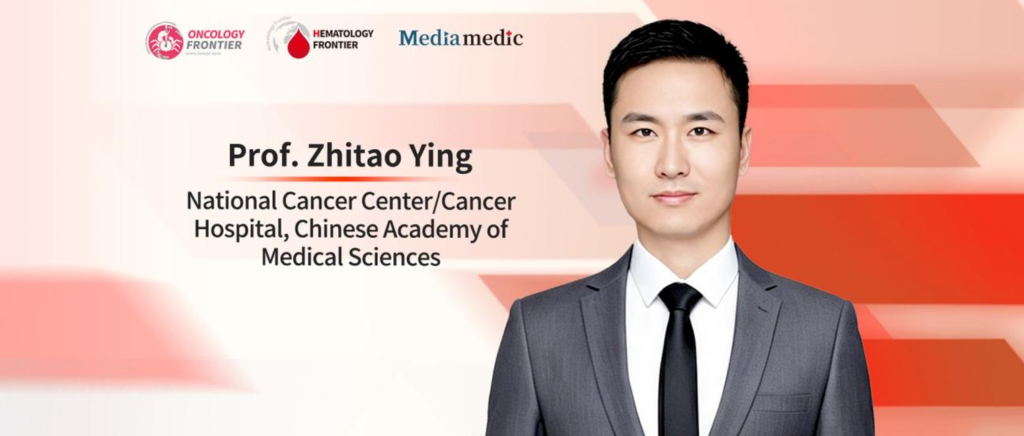
From July 3–4, 2026, the 2026 Best of Clinical Oncology (BOC) Academic Conference & Best of CSCO 2026 China was held in Hohhot, Inner Mongolia. This year's meeting marked the transformation of the former "BOA/BOC" conference into BOC, reflecting a significant shift in academic focus—from primarily introducing and interpreting international advances to highlighting China's own original oncology research.A major highlight of the meeting was the release of Annual Progress in Clinical Oncology in China 2025, which comprehensively reviewed the most important breakthroughs and milestones in Chinese oncology over the past year. During the conference, Oncology Frontier – Hematology Frontier invited Professor Zhitao Ying of the National Cancer Center / Cancer Hospital, Chinese Academy of Medical Sciences (CAMS) to provide an in-depth interpretation of the year’s most significant developments in lymphoma research and share his perspectives on future directions.
Oncology Frontier – Hematology Frontier: In 2025, several domestically developed CD19 CAR-T products received regulatory approval, while multiple Chinese studies reported long-term follow-up data, making CAR-T one of the year’s most important advances in lymphoma. Based on your extensive experience in CAR-T therapy and toxicity management, how would you evaluate the overall progress of China’s cell therapy landscape? What efficacy and safety challenges remain for current CAR-T products in relapsed or refractory B-cell lymphoma?
Professor Zhitao Ying:
Over the past several years, CAR-T cell therapy has achieved remarkable progress in the treatment of lymphoma. Multiple products have now been approved and are widely used for patients with relapsed or refractory B-cell lymphomas, including diffuse large B-cell lymphoma (DLBCL), follicular lymphoma, and mantle cell lymphoma.
The advances achieved by currently approved CAR-T products can be summarized in four major areas.
First, domestically developed CAR-T therapies have substantially reduced treatment costs through local innovation, greatly improving patient access.
Second, Chinese CAR-T products have accumulated longer-term follow-up data demonstrating efficacy and safety comparable to those reported for international products, providing strong confidence for broader clinical adoption.
Third, an increasing number of Chinese studies are expanding the therapeutic scope of CAR-T therapy. Beyond conventional B-cell lymphomas, investigators are actively exploring CAR-T treatment for difficult-to-treat diseases such as Burkitt lymphoma, lymphoblastic lymphoma, and T-cell lymphomas, potentially reshaping the future landscape of cellular immunotherapy.
Fourth, dual-target CAR-T therapy represents one of the most promising future directions, with the potential to further improve efficacy while reducing relapse rates and treatment-related toxicities.
Beyond these advances, emerging technologies—including in vivo CAR-T, CAR-NK cell therapy, and universal (allogeneic) CAR-T therapy—are also progressing steadily and together represent important future directions for the field.
Despite these achievements, several key challenges remain as CAR-T therapy is increasingly incorporated into routine clinical practice.
The first is long-term efficacy and treatment resistance.
Long-term follow-up data indicate that more than half of patients treated with single-target CAR-T therapy ultimately experience disease relapse or progression, with antigen loss representing one important mechanism of resistance. Dual-target CAR-T approaches may offer an effective strategy for overcoming this challenge.
The second challenge is manufacturing time.
Conventional CAR-T production remains time-consuming, and some patients experience disease progression before their product becomes available. The development of in vivo CAR-T technologies and universal CAR-T products may help address this important clinical limitation.
The third challenge is toxicity management.
Adverse events such as cytokine release syndrome (CRS) and neurotoxicity continue to limit the broader application of CAR-T therapy and may occasionally result in severe complications. Fortunately, with growing clinical experience, many specialized centers have developed comprehensive management strategies that enable these toxicities to be treated safely and effectively.
The fourth challenge is the lack of predictive biomarkers.
Reliable biomarkers capable of accurately predicting response to CAR-T therapy remain unavailable. Identifying patients most likely to benefit from treatment and advancing precision medicine therefore remain important research priorities.
Oncology Frontier – Hematology Frontier: In 2025, several Chinese studies on lymphoma molecular classification, next-generation BTK inhibitors, and antibody-drug conjugates (ADCs) gained international recognition and helped reshape precision treatment strategies. Compared with Western research, what unique advantages does China possess in developing precision medicine for lymphoma?
Professor Zhitao Ying:
China possesses several unique strengths in lymphoma research.
The first lies in the distinct distribution of lymphoma subtypes.
Unlike Western countries, where B-cell lymphomas, particularly diffuse large B-cell lymphoma and follicular lymphoma, predominate, T-cell lymphomas and NK/T-cell lymphomas are considerably more common in China and throughout Asia, accounting for more than 30% of lymphoma cases.
Because of this unique epidemiologic profile, China has natural advantages in developing novel therapies and clinical strategies specifically targeting these diseases.
The second advantage is our enormous patient population.
China treats a very large number of lymphoma patients each year. Systematically collecting and analyzing these clinical data will allow us to establish treatment strategies tailored to Chinese patients.
These datasets include treatment patterns, therapeutic efficacy, safety outcomes, and molecular characteristics, providing invaluable resources for advancing lymphoma research and optimizing clinical care.
Oncology Frontier – Hematology Frontier: Reviewing lymphoma research in 2025, there is still room to strengthen China’s portfolio of original mechanistic discoveries and prospective head-to-head clinical trials. From the perspective of a clinical investigator, what do you consider the greatest weakness in China’s current lymphoma research? How can we strengthen the translational research pathway and generate more original, high-quality evidence capable of influencing both Chinese and international clinical guidelines?
Professor Zhitao Ying:
Although China has made tremendous progress in lymphoma diagnosis and treatment over recent years, several important challenges remain.
The first is insufficient original innovation.
Truly groundbreaking “0-to-1” discoveries remain relatively uncommon. Much of our current drug development still follows research directions established overseas, reflecting the need to further strengthen fundamental research in lymphoma biology.
The second challenge is the limited availability of high-level clinical evidence, particularly for therapies targeting T-cell and NK/T-cell lymphomas.
Many approved agents have received regulatory approval based on relatively small phase I or phase II studies, while large multicenter phase III randomized controlled trials are still lacking.
Addressing these challenges requires progress on two fronts.
First, greater investment in basic research is essential, together with stronger collaboration among hospitals, industry, and basic science laboratories. Such partnerships will accelerate the translation of novel biological discoveries into innovative therapies.
Second, we need to actively conduct large-scale, multicenter phase III randomized clinical trials to further validate the efficacy and safety of emerging treatments.
Only by generating high-quality, high-level evidence can we provide the scientific foundation needed to update authoritative guidelines such as those issued by the Chinese Society of Clinical Oncology (CSCO) and the National Comprehensive Cancer Network (NCCN), ultimately promoting more standardized, evidence-based lymphoma care.
Expert Profile
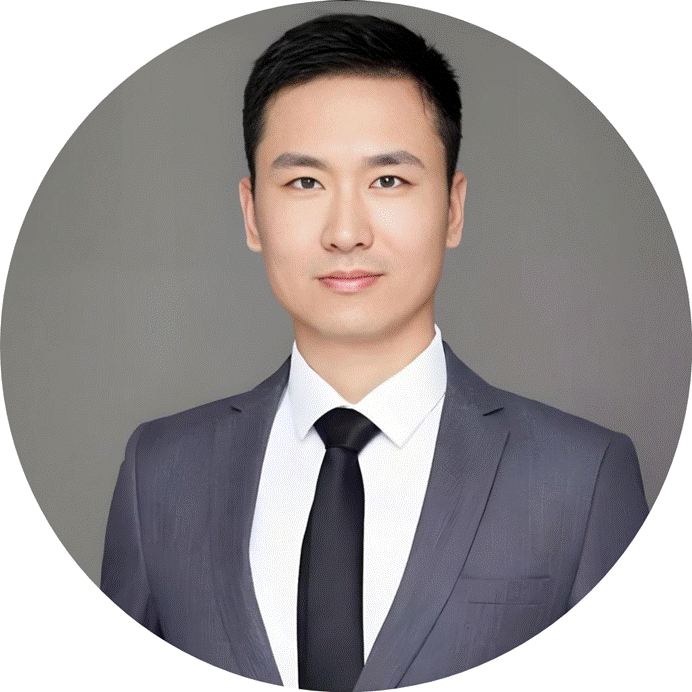
Professor Zhitao Ying
National Cancer Center / Cancer Hospital, Chinese Academy of Medical Sciences (CAMS)
Professor Zhitao Ying is a Chief Physician and MD, and serves as Director of the Lymphoma and Head & Neck Oncology Ward in the Department of Medical Oncology at the National Cancer Center / Cancer Hospital, Chinese Academy of Medical Sciences (CAMS).
He currently serves as:
- Vice Chair and Secretary-General, Cell Immunotherapy Committee, China Association for Health Promotion of Science and Technology
- Standing Committee Member, Lymphoma Expert Committee, Chinese Society of Clinical Oncology (CSCO)
- Standing Committee Member, Young Experts Committee, Chinese Society of Clinical Oncology (CSCO)
- Standing Committee Member, Tumor Heterogeneity and Precision Oncology Committee, Chinese Anti-Cancer Association
- Young Committee Member (11th Committee), Chinese Society of Oncology, Chinese Medical Association
- Associate Youth Editor, Chinese Edition of JCO Blood, Cell and Immunotherapy
- Editorial Board Member, Blood and Genomics
Clinical Expertise: Diagnosis and treatment of malignant lymphoma and cellular immunotherapy.