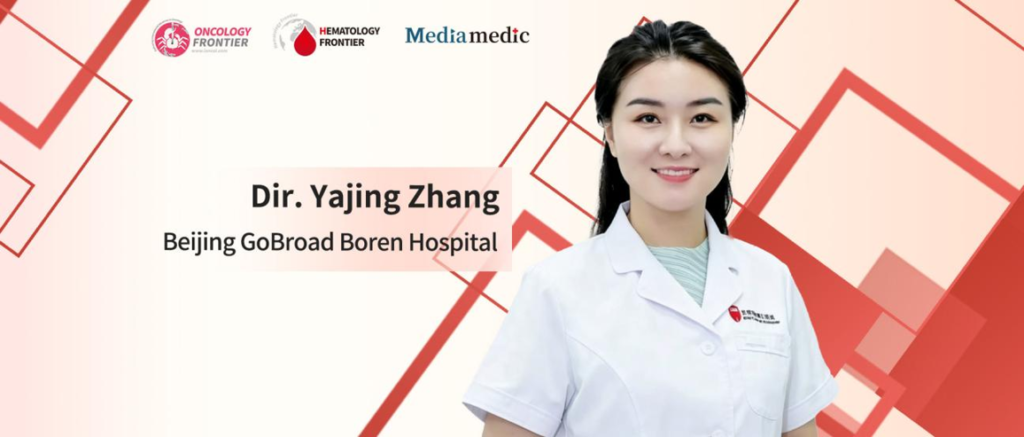
From July 10–12, 2026, the 10th Hematologic Malignancies Congress of the Chinese Society of Clinical Oncology (CSCO) was held in Harbin, China. Over the past decade, the meeting has grown into one of China's premier academic forums for hematologic oncology. This year's congress not only celebrated ten years of scientific achievement but also marked an important milestone for future innovation.During the meeting, Oncology Frontier – Hematology Frontier invited Director Yajing Zhang of Beijing GoBroad Boren Hospital to discuss emerging trends in immunotherapy for hematologic malignancies, the evaluation of clinical innovation, treatment strategies for complex patients, and the importance of lifelong disease management. She shared her perspectives on how systematic, precision-driven clinical decision-making can optimize treatment pathways and ultimately help patients achieve longer survival and better quality of life.
Oncology Frontier – Hematology Frontier: With the rapid development of CAR-T therapy, bispecific antibodies, and novel targeted therapies, new targets and products continue to emerge. Looking ahead, do you believe the primary competition in immunotherapy will still revolve around discovering new targets and developing new products? What will ultimately determine long-term patient benefit?
Director Yajing Zhang:
In my view, while the next phase of immunotherapy may appear to be a competition among new targets, novel molecular designs, and innovative products, the true competition will be one of clinical systems thinking.
Historically, we have evaluated therapies primarily by measuring response rates and the speed of response. However, in patients with relapsed or refractory hematologic malignancies, long-term outcomes are rarely determined by the success of a single treatment. Instead, they are the cumulative result of a series of clinical decisions made throughout the disease course.
Therefore, future treatment strategies cannot simply consist of combining CAR-T therapy, bispecific antibodies, targeted therapies, radiotherapy, and transplantation. Rather, we must establish a dynamic clinical decision-making system that continuously adapts treatment according to changes in disease biology.
Three key questions should guide this process.
First, can we accurately identify the patient’s most important biological challenge at the current stage of disease?
Second, can we anticipate how today’s treatment will influence future disease evolution?
Third, while maximizing current efficacy, can we preserve as many future treatment options as possible?
Ultimately, the true dividing line in immunotherapy will not be defined by a single technology or product. It will be determined by which treatment strategy can fundamentally alter the long-term trajectory of disease by transforming innovative technologies into a continuous, adaptive, and predictive clinical decision-making system that guides patients toward durable survival.
Oncology Frontier – Hematology Frontier: Many breakthrough therapies originate from complex individual cases or exploratory studies, yet a successful case alone does not establish a mature treatment strategy. In your opinion, what defines truly meaningful clinical innovation? How can individualized experience be transformed into evidence that is verifiable, reproducible, and broadly applicable?
Director Yajing Zhang:
Medical innovation often begins with a clinical problem for which no standard answer yet exists.
Achieving durable remission in a particularly challenging patient is certainly encouraging. However, the value of a single case is not that it proves a therapy is universally effective. Rather, it generates an important scientific question worthy of systematic investigation.
Meaningful innovation should answer at least four fundamental questions:
Why did this patient respond?
Which other patients are likely to benefit?
Which patients are unlikely to benefit?
What biological mechanisms determine treatment efficacy?
I believe that high-quality clinical innovation requires progress across three important dimensions.
The first is moving from descriptive observations to mechanistic understanding. We should not only document clinical responses but also understand the biological processes underlying them, including changes in tumor clonal evolution, target antigen expression, CAR-T expansion, the immune microenvironment, and immune reconstitution.
The second is moving from average efficacy to precision patient stratification. A treatment that is effective overall does not necessarily benefit every patient equally. We must identify the biomarkers and clinical characteristics that distinguish responders from non-responders.
The third is moving from isolated success stories to evidence that is testable, reproducible, and falsifiable. We should investigate not only successful cases but also treatment failures. Likewise, we must identify both the populations most likely to benefit and those at greatest risk or least likely to respond, because unsuccessful cases often define the true boundaries of a treatment’s effectiveness.
Our research on the B-cell–plasma cell axis in autoimmune diseases follows exactly this philosophy.
Immune reset should not simply be defined by complete B-cell depletion. Instead, we should evaluate whether pathogenic immune memory has truly been eliminated, whether plasma cells and autoantibody production have changed, whether immune tolerance has been restored, and whether organ damage can genuinely be reversed.
Ultimately, whether in scientific research or clinical practice, we should always return to the same central question: when standard therapies no longer meet a patient’s needs, can we redesign an individualized treatment pathway based on disease biology, patient status, and thoughtful clinical decision-making?
Oncology Frontier – Hematology Frontier: Many patients with relapsed or refractory hematologic malignancies are elderly, have active infections or organ dysfunction, and have undergone multiple prior therapies, making standard treatment algorithms difficult to apply. How do you determine the most pressing clinical challenge in these complex patients, and how do you design a dynamic treatment strategy that balances short-term safety with long-term benefit across modalities such as CAR-T therapy, bispecific antibodies, targeted therapy, radiotherapy, and transplantation?
Director Yajing Zhang:
For complex patients, the challenge is rarely a lack of treatment options—it is the absence of a rational strategy for determining treatment priorities.
Patients with relapsed or refractory disease often face multiple simultaneous problems, including high tumor burden, increased infection risk, limited bone marrow reserve, organ dysfunction, and impaired immune function resulting from multiple prior therapies. Simply applying a guideline-recommended regimen may not adequately address their most urgent clinical needs.
Therefore, treatment decisions should not be based solely on the disease diagnosis itself, but rather on the patient’s current disease status.
One concept that I particularly value is what I call the value of preserving future treatment choices.
Different patients face different priorities at different stages of treatment. For some, the most urgent issue is rapidly progressive disease. For others, infection represents the greatest threat. Some patients are approaching critical organ failure, while others primarily need a safe bridge to the next definitive therapy.
Because the dominant clinical problem differs from one patient to another, treatment priorities should differ accordingly.
Managing complex patients is not about making every individual treatment as intensive as possible. Rather, it is about ensuring that each therapeutic step creates the opportunity for the next.
This is what I mean by designing the next step of the treatment pathway—not only solving today’s problem, but also ensuring that patients continue to have meaningful treatment options tomorrow.
Oncology Frontier – Hematology Frontier: For patients with relapsed or refractory hematologic malignancies, achieving remission does not signify the end of treatment. From initial risk stratification and post-relapse treatment selection to CAR-T bridging therapy, relapse surveillance, immune reconstitution, and recovery of quality of life, how should we establish a truly patient-centered lifelong management system that shifts treatment goals from simply achieving remission to extending survival, preventing relapse, and restoring quality of life?
Director Yajing Zhang:
To me, lifelong management is not simply about extending the duration of patient follow-up. It is about continuously managing and actively reshaping the trajectory of disease.
The development of hematologic malignancies is not a simple linear process, but rather a dynamic and evolving biological system.
Every treatment influences tumor clonal architecture, immune status, organ reserve, and the feasibility of future therapeutic options.
Consequently, clinical decision-making should not focus solely on solving immediate problems. Instead, clinicians should anticipate future disease evolution throughout every stage of treatment while proactively planning subsequent therapeutic strategies.
At the same time, our attention should extend beyond whether the tumor has disappeared.
We should comprehensively evaluate treatment-related toxicities, recovery of organ function, nutritional status, psychological well-being, and the patient’s ability to return to family, work, and society, striving to achieve disease control while preserving overall function.
Ultimately, the essence of lifelong management is to establish a closed-loop care model encompassing early risk identification, precision treatment selection, comprehensive safety management, relapse surveillance, immune reconstitution, and long-term rehabilitation.
Through this approach, our goals expand beyond disease control alone to include managing disease evolution, preserving patient function, improving quality of life, and ultimately achieving durable long-term survival.
Expert Profile
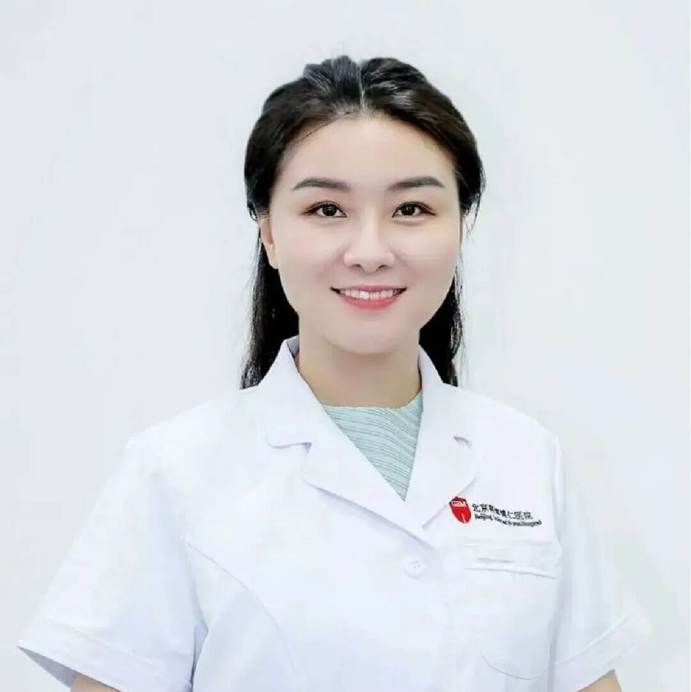
Director Yajing Zhang
Beijing GoBroad Boren Hospital
GoBroad Medical Institute (Hematology), Beijing Research Center
Director Yajing Zhang is Director of the Oncology & Immunology Innovation Medicine Center, Chief Physician, MD, Postdoctoral Researcher, Master’s Supervisor at China Pharmaceutical University, and a Beijing Nova Program Distinguished Young Scientist.
She has long focused on the clinical application and translational research of cellular and immunotherapies for hematologic malignancies and autoimmune diseases, combining extensive clinical experience with a strong foundation in translational science.
As principal investigator, she has led six national and provincial-level research projects, including grants from the National Natural Science Foundation of China (NSFC). As first author, she has published numerous SCI-indexed papers in leading international journals, including Blood, Leukemia, Journal of Experimental Medicine (JEM), and Signal Transduction and Targeted Therapy, with a cumulative impact factor exceeding 140. Her research has also been presented at numerous international hematology and immunology conferences.
Director Zhang received the 2023 Outstanding Paper Award from the Journal of Experimental Medicine (JEM), the First Prize for Outstanding Scientific Innovation Paper in Guangdong Province, and the Second Prize for Scientific and Technological Progress from the Chinese PLA General Hospital. She also serves as a standing committee member or committee member in several national academic organizations, including the Cell and Biological Therapy Committee of the Chinese Research Hospital Association, the Multiple Myeloma Expert Committee of the Chinese Society of Clinical Oncology (CSCO), and the Core Expert Panel for Hematologic Malignancy Rehabilitation of the China Cancer Foundation.