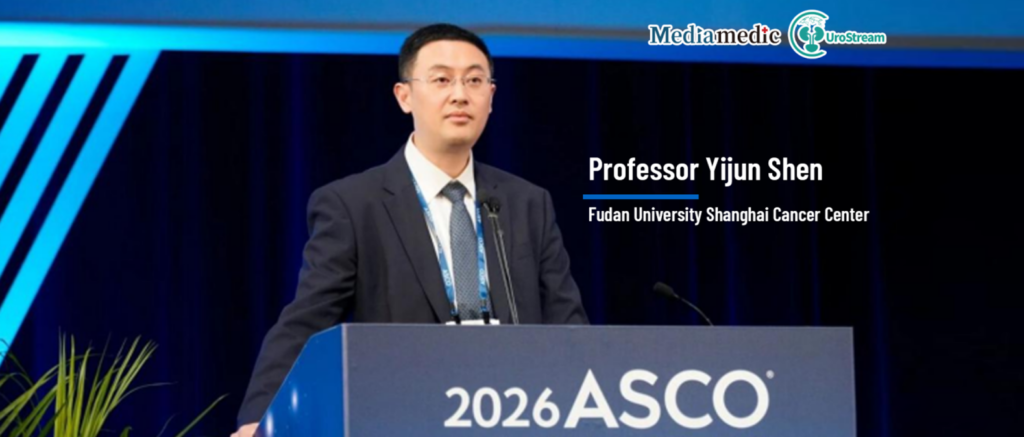
Editor's Note: Chinese-developed immune checkpoint inhibitors, represented by toripalimab, are accelerating the transition of innovative therapies in urologic oncology from followers to global contributors. At the 2026 American Society of Clinical Oncology (ASCO) Annual Meeting, Chinese innovation was not only featured in oral presentations but also prominently showcased in the poster halls. Toripalimab combined with 9MW2821 demonstrated promising bladder-preservation potential after moving from advanced disease into the perioperative setting. Immunotherapy plus chemotherapy expanded a uniquely Chinese approach to bladder preservation. Meanwhile, a phase III neoadjuvant trial of toripalimab combined with axitinib in renal cell carcinoma marked the first randomized evaluation of a targeted-immunotherapy combination moving from the frontline setting into neoadjuvant treatment. In this issue, Oncology Frontier invited Professor Yijun Shen from Fudan University Shanghai Cancer Center to discuss key poster presentations and share his perspectives on the evolving landscape of immunotherapy in urologic oncology at this year's ASCO meeting.Moving from Advanced Disease to the Perioperative Setting:
Toripalimab Plus 9MW2821 Continues to Demonstrate Promise
Professor Yijun Shen:
Abstract 4609 reported a phase II study led by Professor Liu Zhuowei and colleagues from Sun Yat-sen University Cancer Center, exploring the same high-profile combination highlighted during the oral presentation sessions: toripalimab plus 9MW2821 in the perioperative treatment of muscle-invasive bladder cancer (MIBC) .
Cohort A enrolled patients with cT2–4aN0–1M0 MIBC. Patients received four cycles of neoadjuvant combination therapy, followed by radical cystectomy with pelvic lymph node dissection (RC+PLND). In the adjuvant setting, patients received six additional cycles of combination therapy followed by eleven cycles of toripalimab maintenance monotherapy.
To date, 32 patients have been enrolled in Cohort A. Seven completed neoadjuvant treatment, and six proceeded to surgery. The pathological complete response (pCR) rate reached 66.7%, while the pathological downstaging rate was 83.3%, representing highly encouraging preliminary findings.
Particularly noteworthy was one patient who achieved a clinical complete response (cCR) during neoadjuvant treatment and subsequently declined surgery. This observation suggests that immunotherapy combined with an antibody-drug conjugate (ADC) may enable a subset of patients to achieve complete clinical remission, potentially opening an entirely new avenue for bladder-preservation strategies. Although the dataset remains immature, additional enrollment and longer follow-up are eagerly anticipated.
This study complements Abstract 4518, presented by the teams of Professors Jun Guo and Xinan Sheng from Peking University Cancer Hospital. Together, these studies demonstrate encouraging efficacy signals for the same Chinese-developed immunotherapy combination across different stages of urothelial carcinoma, further supporting the feasibility of moving toripalimab plus 9MW2821 from advanced disease into earlier treatment settings.
A New Bladder-Preservation Strategy:
Immunotherapy Plus Chemotherapy with Chinese Characteristics
Professor Yijun Shen:
While Abstract 4609 explored immunotherapy combined with ADCs in the perioperative setting, electronic poster e16606 introduced a distinctly Chinese approach to bladder preservation through immunotherapy plus chemotherapy.
This single-center retrospective study from Professor Li Jun’s team at Yunnan Cancer Hospital evaluated a bladder-preservation strategy using a neoadjuvant “4P regimen” consisting of a PD-1 inhibitor combined with paclitaxel, pingyangmycin, and platinum-based chemotherapy for patients with high-risk non-muscle-invasive bladder cancer (NMIBC) and MIBC.
Among 33 treated patients, who received a mean of 1.91 treatment cycles, the overall objective response rate (ORR) reached 87.8%, while the bladder-preservation rate was 93.9%.
In subgroup analyses, patients receiving toripalimab achieved an ORR of 92.0% and a complete response (CR) rate of 44.0%. Among the 26 patients who underwent transurethral resection of bladder tumor (TURBT), the pCR rate was 34.6%, demonstrating encouraging preliminary results toward bladder preservation.
Although limited by its retrospective design and relatively small sample size, this study provides valuable insights for the development of future prospective trials.
Targeted Immunotherapy in Neoadjuvant Renal Cell Carcinoma Enters the Randomized Trial Era
Professor Yijun Shen:
The exploration of Chinese-developed therapeutic strategies extends beyond urothelial carcinoma.
Abstract TPS4630, a phase III randomized controlled trial design from Sun Yat-sen University Cancer Center, focuses on neoadjuvant treatment for renal cell carcinoma (RCC), evaluating toripalimab combined with axitinib.
The earlier NEOTAX study provided preliminary evidence supporting the efficacy and safety of this combination in clear cell RCC. TPS4630 now advances the field from single-arm exploration to randomized validation.
The study plans to enroll 298 patients randomized 1:1 to either surgery alone or neoadjuvant therapy. Patients in the neoadjuvant arm will receive three months of axitinib plus four cycles of toripalimab before surgery. The primary endpoint is two-year disease-free survival (DFS).
Following surgery, patients in both groups who meet the high-risk recurrence criteria defined by KEYNOTE-564 will be recommended to receive one year of adjuvant toripalimab according to NCCN and EAU guideline recommendations.
Neoadjuvant therapy in kidney cancer has long lacked high-level evidence. Although targeted-immunotherapy combinations have established their role in the frontline setting, whether they can be successfully moved into the neoadjuvant space and ultimately reduce postoperative recurrence remains a question that only randomized controlled trials can answer. TPS4630 may represent the beginning of that answer.
Looking Ahead:
Two Major Shifts in Urologic Oncology Treatment Strategies
Professor Yijun Shen:
Taken together, the overarching direction of immunotherapy development in urologic oncology is becoming increasingly clear: treatment strategies are moving earlier and becoming more sophisticated, with the ultimate goal of improving cure rates and quality of life for patients.
In this process, Chinese investigators and innovative pharmaceutical companies are no longer merely observing or validating global advances. They have become active contributors, developing distinctive therapeutic approaches and addressing challenging clinical scenarios, including the management of patients with impaired renal function.
The most striking impression I took away from this year’s ASCO meeting can be summarized by two major shifts toward earlier intervention.
The first shift is the movement of immunotherapy plus ADC combinations from the frontline metastatic setting into perioperative and neoadjuvant treatment. Toripalimab plus 9MW2821 achieved an ORR of 83.0% and a median progression-free survival (PFS) of 12.9 months in locally advanced or metastatic urothelial carcinoma. When moved into perioperative MIBC, the same combination demonstrated a pCR rate of 66.7%, with some patients achieving clinical complete response after neoadjuvant therapy, potentially opening an entirely new pathway for bladder preservation.
Similarly, adebrelimab combined with SHR-A2102 achieved a pCR rate of 48.1% in perioperative MIBC , while also creating opportunities for clinical complete response following neoadjuvant treatment.
The second shift is the movement of targeted-immunotherapy combinations from frontline kidney cancer treatment into the neoadjuvant setting. The phase III randomized design of TPS4630 represents the transition from exploratory studies to definitive validation. If neoadjuvant targeted-immunotherapy can be shown to improve disease-free survival, it could fundamentally reshape the treatment paradigm for renal cell carcinoma.
Another important theme emerged throughout multiple presentations. Abstract 4506 demonstrated that pathological complete response rates were not adversely affected in patients with creatinine clearance below 60 mL/min, while Abstract 4518 specifically highlighted benefits among elderly patients and those with impaired renal function. The apparent advantage of immunotherapy plus ADC strategies in these populations carries significant implications for everyday urologic practice.
As a urologic surgeon, I find these developments tremendously encouraging. Surgery remains the cornerstone of curative treatment, but advances in perioperative immunotherapy-based combination strategies are providing new opportunities to improve both long-term survival and quality of life.
The momentum is undeniable. Together with Chinese investigators, Chinese-developed therapies represented by toripalimab are becoming an increasingly influential force in shaping the future of urologic oncology.
Expert Profile
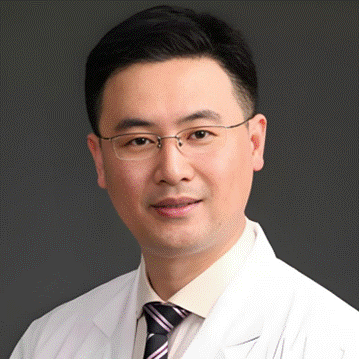
Professor Yijun Shen
Fudan University Shanghai Cancer Center
Professor Shen specializes in urologic oncology and has extensive clinical and research experience in the multidisciplinary management of bladder cancer, kidney cancer, and other genitourinary malignancies. His work focuses on optimizing perioperative treatment strategies, integrating immunotherapy into earlier disease settings, and advancing precision medicine approaches in urologic cancers.