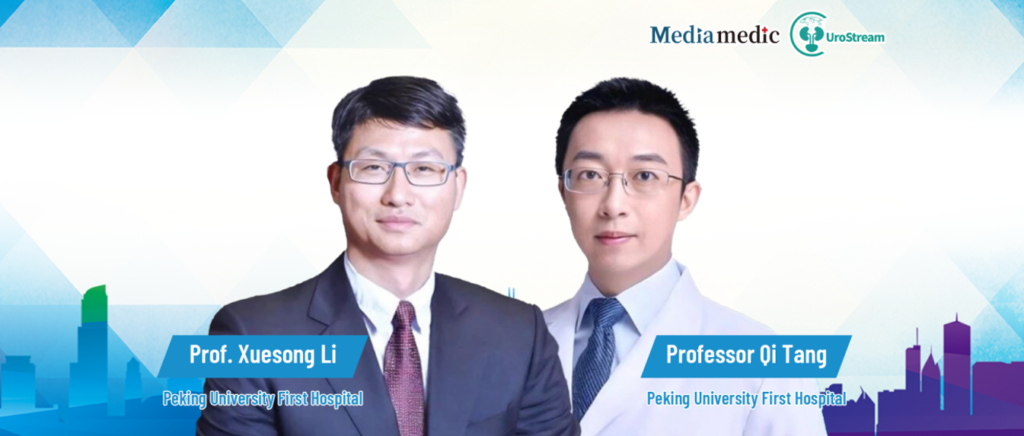
Upper tract urothelial carcinoma (UTUC) accounts for a substantially higher proportion of urothelial carcinoma cases in China than in Western populations. Although radical nephroureterectomy remains the standard treatment for UTUC, many patients become ineligible for cisplatin-based chemotherapy after surgery because of impaired renal function and other comorbidities. Furthermore, subgroup analyses from three major adjuvant immunotherapy trials have failed to demonstrate a significant disease-free survival (DFS) benefit in patients with UTUC, underscoring the urgent need for novel therapeutic strategies.The emergence of antibody-drug conjugates (ADCs), including disitamab vedotin, has opened new therapeutic possibilities for patients with urothelial carcinoma. A study led by Professor Xuesong Li and Professor Qi Tang from Peking University First Hospital investigated a combination strategy of disitamab vedotin and radiotherapy in UTUC. The study was selected for presentation at ASCO 2026 and attracted considerable attention from both domestic and international experts.
Oncology Frontier – UroStream invited the two investigators to discuss the unique characteristics of UTUC in China, the clinical efficacy and mechanistic rationale of combining disitamab vedotin with radiotherapy, and the future potential of disitamab vedotin–based treatment strategies for UTUC.
01. Addressing an Unmet Clinical Need in UTUC Patients with Renal Impairment
Oncology Frontier – UroStream
You have devoted many years to UTUC research, and your study evaluating disitamab vedotin combined with radiotherapy as adjuvant treatment for UTUC has once again been selected for presentation at ASCO, showcasing a Chinese-developed strategy to the global oncology community. What was the original motivation behind this study, and which clinical challenges were you aiming to address?
Professor Xuesong Li
We are honored that this collaborative study between our urology and radiation oncology teams was selected for presentation at this year’s ASCO Annual Meeting.
The study focuses on patients with upper tract urothelial carcinoma—including renal pelvic and ureteral cancers—following radical surgery, particularly those with impaired renal function. For patients whose postoperative pathology demonstrated HER2 IHC 2+/3+ expression and who were considered at high risk of recurrence, we designed a phase II, non-randomized controlled study evaluating disitamab vedotin combined with concurrent radiotherapy.
The study generated encouraging results and was selected for presentation at ASCO because of its potential clinical significance.
UTUC is particularly common among Chinese patients with urothelial carcinoma, and renal impairment is highly prevalent in this population. Many patients also suffer from chronic kidney disease (CKD). In a retrospective analysis of more than 700 patients with UTUC, we found that the prevalence of CKD exceeded 50%, rising to more than 70% among patients over 70 years of age.
Furthermore, approximately 25% of patients experience further deterioration in renal function after radical surgery, rendering them unable to tolerate standard cisplatin-based chemotherapy. This creates an urgent need for alternative treatment approaches.
Previous studies have shown that recurrence rates following radical surgery remain high in UTUC. Approximately 44.0% of recurrences are local, 38.5% are distant metastases, and 17.4% involve both local and distant disease.
Based on these patterns, we developed a combined “local plus systemic” treatment strategy. Radiotherapy is used to control regional lymph node disease, while disitamab vedotin addresses potential distant micrometastatic disease.
Disitamab vedotin targets HER2 expressed on tumor cells and combines the specificity of antibody-based targeting with the cytotoxic activity of a small-molecule payload. This allows effective systemic treatment with reduced toxicity, providing a valuable option for patients who cannot tolerate conventional chemotherapy.
Through this integrated strategy, we have established a dual local and systemic disease-control approach for UTUC patients with renal impairment after surgery. Early results suggest that this innovative model may offer a new therapeutic pathway for this challenging patient population.
02. Promising Efficacy Signals and a Favorable Safety Profile
Oncology Frontier – UroStream
Preliminary findings suggest a positive signal for disease-free survival, the primary endpoint of the study. Could you elaborate on the efficacy and safety results, and explain the significance of this combination strategy for UTUC?
Professor Qi Tang
This is a phase II clinical trial designed primarily to evaluate the efficacy and safety of a disitamab vedotin–based adjuvant treatment strategy.
The study plans to enroll 60 patients, with 30 assigned to the adjuvant treatment group and 30 to an observation group.
As of January 2026, enrollment of all 30 patients in the treatment arm had been completed. Enrollment in the observation arm is also progressing steadily, with only a few patients remaining to be recruited.
At a median follow-up of 12.4 months, the interim analysis demonstrated encouraging clinical activity.
Only one patient in the treatment arm experienced recurrence, resulting in a remarkable 1-year disease-free survival rate of 95%. By contrast, nine patients in the observation group had already experienced recurrence, yielding a 1-year DFS rate of only 69.6%.
These findings suggest a substantial disease-control advantage for the combination of disitamab vedotin and radiotherapy.
Safety was another key focus of our analysis. The vast majority of adverse events were mild to moderate in severity.
Peripheral neuropathy remains one of the most common adverse effects associated with disitamab vedotin. Other frequently observed toxicities included elevated aspartate aminotransferase (AST), fatigue, and alopecia.
Overall, the incidence and spectrum of adverse events were consistent with previous studies. Importantly, the incidence of grade 3 or higher treatment-related adverse events was only 8%.
Taken together, the safety profile appears manageable and supports the clinical feasibility of this combination approach.
From a broader perspective, the integration of systemic and local therapy represents an important advance for patients with UTUC.
The emergence of ADCs such as disitamab vedotin has provided an effective and accessible systemic treatment option for UTUC. During the chemotherapy era, many UTUC patients struggled with renal dysfunction and poor tolerance of platinum-based treatment, limiting the effectiveness of systemic therapy.
The subsequent immunotherapy era also presented challenges, as several studies suggested that patients with UTUC derived less benefit from immune checkpoint inhibitor monotherapy than patients with bladder cancer.
The arrival of ADCs marked a turning point. Clinical experience has shown that disitamab vedotin demonstrates comparable antitumor activity in both bladder cancer and upper tract urothelial carcinoma, helping overcome a longstanding efficacy gap in systemic treatment for UTUC and creating new opportunities for integration with local therapies.
03. Why HER2 ADCs Matter for Chinese UTUC Patients and How They Synergize with Radiotherapy
Oncology Frontier – UroStream
Disitamab vedotin is a HER2-targeting ADC carrying an MMAE payload with a bystander effect, enabling it to eliminate both HER2-positive tumor cells and neighboring cancer cells. From both a pathological and mechanistic perspective, why are HER2-directed ADCs particularly important for Chinese patients with UTUC? In addition, how does the addition of a HER2 ADC enhance the effects of radiotherapy to improve long-term disease control?
Professor Qi Tang
The epidemiology of UTUC in China differs substantially from that observed in Western countries.
The incidence of UTUC is significantly higher among Chinese patients, creating unique treatment challenges. Several clinical studies have reported that approximately 50% of Chinese patients enrolled in advanced urothelial carcinoma trials have UTUC, compared with only 20%–30% in major international phase III studies.
Against this backdrop, ADCs such as disitamab vedotin provide an important new therapeutic option. Compared with traditional chemotherapy and immunotherapy, ADCs offer compelling efficacy while maintaining a manageable safety profile, making them an increasingly important treatment modality for advanced UTUC.
Mechanistically, disitamab vedotin exerts antitumor activity through two complementary pathways.
First, following the classic ADC mechanism, the antibody component selectively binds HER2 receptors on tumor cells. After internalization, the cytotoxic payload is released within lysosomes, resulting in targeted destruction of HER2-positive cancer cells.
Second, the drug exerts a bystander effect. Even when HER2 expression is relatively low, the released cytotoxic agent can diffuse into surrounding tumor cells and exert antitumor activity beyond the directly targeted population.
Together, these mechanisms provide effective treatment for both HER2-positive tumors and neighboring cells with lower HER2 expression, thereby enhancing overall therapeutic efficacy.
Radiotherapy, in contrast, directly damages tumor-cell DNA through ionizing radiation.
The combination of targeted systemic therapy and radiotherapy creates a complementary therapeutic partnership and a potentially powerful synergistic effect, opening new possibilities for UTUC treatment.
In our study, we innovatively combined the HER2-targeting ADC disitamab vedotin with radiotherapy, creating a new model that integrates systemic and local treatment in a manner highly consistent with the principles of multidisciplinary care.
ADC therapy provides comprehensive systemic disease control, while radiotherapy delivers precise local eradication of residual disease. Together, these approaches have the potential to further improve long-term outcomes.
04. Future Directions: Expanding Combination Strategies Beyond Radiotherapy
Oncology Frontier – UroStream
In addition to radiotherapy combinations, recent international studies have explored the potential of combining disitamab vedotin with immunotherapy. Looking ahead, what other promising combination strategies involving disitamab vedotin do you believe deserve further investigation in the perioperative management of UTUC?
Professor Xuesong Li
In recent years, innovative treatment approaches in genitourinary oncology have emerged at an extraordinary pace.
Among them, treatment strategies centered on the Chinese-developed ADC disitamab vedotin have attracted considerable attention both domestically and internationally because of their impressive clinical performance.
For example, perioperative applications of disitamab vedotin combined with immunotherapy—whether in the neoadjuvant or adjuvant setting—have already produced highly encouraging clinical results and opened new avenues for cancer treatment.
As surgeons, we have access to a wide range of local treatment modalities, including surgery, energy-based therapies, and radiotherapy. These approaches hold substantial promise when incorporated into multimodal treatment strategies.
In the future, combinations of disitamab vedotin (RC48) with surgery, radiotherapy, and energy-based treatments are likely to play an increasingly important role in both radical and organ-preserving approaches, providing patients with more precise and effective treatment options.
However, translating these innovations into clinical practice requires robust clinical evidence. To this end, we are actively preparing multicenter prospective cohort studies designed to systematically evaluate the efficacy and safety of various treatment combinations across different clinical settings.
Our upper urinary tract reconstruction and upper urinary tract oncology team at Peking University Urology is committed to exploring integrated treatment strategies that combine kidney-preserving approaches, radical surgery, radiotherapy, energy-based therapies, laser ablation, and innovative systemic treatments such as disitamab vedotin.
Through rigorous clinical research, we hope to generate high-quality evidence for Chinese patients and ultimately bring these evidence-based, China-developed treatment strategies to the global stage, contributing Chinese expertise and innovation to the worldwide fight against cancer.
About the Experts

Professor Xuesong Li
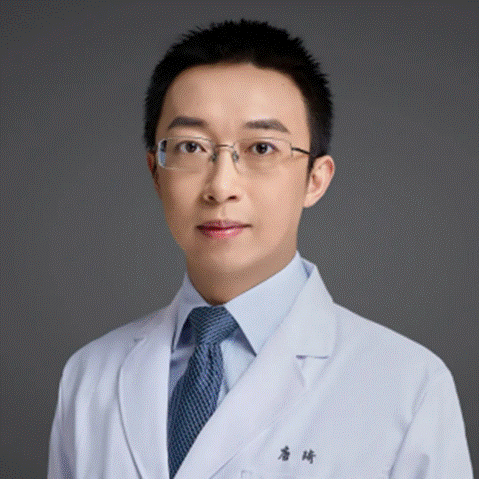
Professor Qi Tang