For nearly four decades, platinum-based chemotherapy has remained the standard first-line treatment for urothelial carcinoma (UC). However, its limitations—including modest survival outcomes and significant treatment-related toxicity—have persisted as major clinical challenges.Recently, based on the outstanding results of the RC48-C016 study, China’s domestically developed PD-1 inhibitor toripalimab was officially approved in combination with disitamab vedotin (DV) for the treatment of patients with HER2-expressing locally advanced or metastatic urothelial carcinoma.
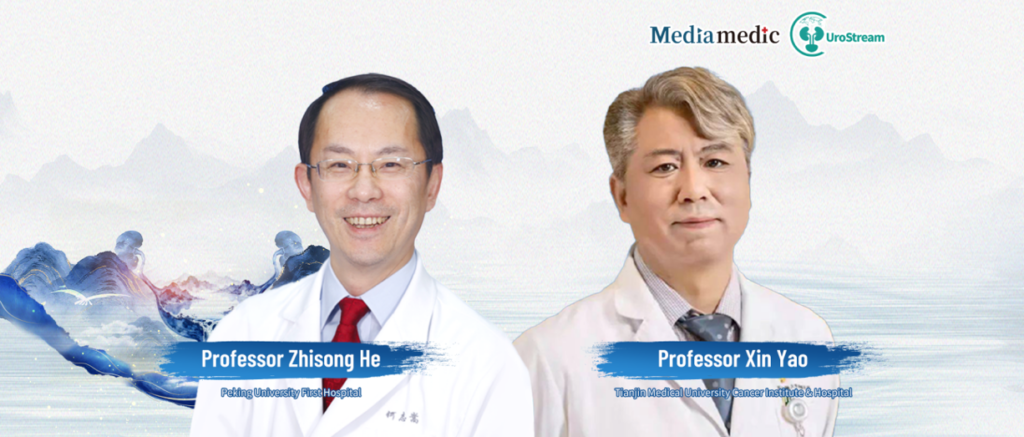
Oncology Frontier invited Professor Zhisong He from Peking University First Hospital and Professor Xin Yao from Tianjin Medical University Cancer Institute & Hospital to discuss the clinical significance of this approval, its implications for comprehensive disease management, evolving guideline recommendations, and its impact on real-world clinical practice.
Q1. With the continuous emergence of high-quality clinical evidence, treatment guidelines are constantly evolving. Could you explain how clinical research findings are evaluated and incorporated into the CSCO Urothelial Carcinoma Guidelines? In addition, the 2026 edition of the guidelines simultaneously elevated the Chinese-developed toripalimab plus disitamab vedotin regimen to a preferred first-line recommendation. What were the key factors behind its rapid inclusion?
Professor Zhisong He
The development of the CSCO Urothelial Carcinoma Guidelines is guided by three fundamental principles: evidence-based medicine, accessibility of medical resources, and prioritization of data generated in Chinese populations. The evaluation and incorporation of clinical research findings follow a rigorous and standardized process.
First, evidence is assessed according to its quality and strength of recommendation. The CSCO guidelines employ a grading system that integrates both levels of evidence and recommendation strength. The RC48-C016 study was a nationwide, multicenter, randomized phase III trial involving 484 Chinese patients enrolled across 74 clinical centers throughout China. Its efficacy and safety outcomes therefore provide an accurate reflection of treatment responses in the Chinese population.
The study was presented as an oral presentation at the 2025 ESMO Congress and was simultaneously published in The New England Journal of Medicine, placing it among the highest levels of clinical evidence (Level 1A).
Importantly, the trial achieved both co-primary endpoints of progression-free survival (PFS) and overall survival (OS). The regimen reduced the risk of disease progression by 64% (HR=0.36) and the risk of death by 46% (HR=0.54), while achieving an objective response rate (ORR) of 76.1%—the highest reported among all randomized phase III first-line studies in urothelial carcinoma. These results provided an exceptionally strong evidence base supporting its Category I recommendation.
Second, prioritization of Chinese patient data is a distinctive feature of the CSCO guidelines. Compared with evidence derived from overseas populations, high-quality domestic data more closely reflect the genetic background, pathological characteristics, and treatment responses of Chinese patients and therefore receive greater consideration during guideline evaluation.
Third, guideline committees assess clinical practicality, including treatment accessibility, health-economic feasibility, and compatibility with real-world medical practice in China. The newly approved indication for toripalimab plus disitamab vedotin satisfies these requirements. In addition, the regimen demonstrates superior safety and tolerability compared with conventional chemotherapy, making it highly relevant to clinical practice in China.
Finally, the CSCO guidelines operate through a dynamic update mechanism. While guideline revisions are generally conducted annually, studies representing major clinical breakthroughs may undergo expedited review and inclusion. Given the transformative impact of RC48-C016, we moved the update of the CSCO Urothelial Carcinoma Guidelines forward to the first half of the year to ensure that this important Chinese innovation could benefit patients as quickly as possible.
As a result, in the 2026 CSCO Guidelines, toripalimab plus disitamab vedotin received the highest-level Category I recommendation (Level 1A evidence) as first-line treatment for both bladder cancer and upper tract urothelial carcinoma (UTUC), regardless of cisplatin eligibility.
Q2. With the rapid evolution of immunotherapy, the first-line treatment landscape for urothelial carcinoma continues to change. Based on the RC48-C016 study, toripalimab has now been approved as first-line therapy for HER2-expressing locally advanced or metastatic UC. How do you view the significance of this approval? In addition, could it improve treatment accessibility for Chinese patients in real-world practice?
Professor Xin Yao
This approval represents a major milestone in the history of urothelial carcinoma treatment in China.
Before the emergence of immunotherapy and antibody-drug conjugates (ADCs), platinum-based combination chemotherapy had served as the standard first-line treatment for nearly 40 years. Yet limited survival outcomes and poor quality of life remained persistent challenges.
The approval of toripalimab plus disitamab vedotin fundamentally changes this landscape.
From a therapeutic perspective, the regimen achieves two major breakthroughs.
First, it overcomes a longstanding challenge in targeting HER2 in urothelial carcinoma. HER2 expression is defined as IHC 1+, 2+, or 3+, and subgroup analyses demonstrated consistent benefit across all HER2 expression levels. This means that approximately 80% of patients with urothelial carcinoma may be candidates for this highly effective combination from the time of diagnosis.
Second, it provides an effective chemotherapy-free first-line option. In RC48-C016, median PFS increased from 6.5 months with gemcitabine plus platinum chemotherapy to 13.1 months, while median OS improved from 16.9 months to 31.5 months, effectively doubling survival outcomes.
These benefits are driven by the synergistic interaction between toripalimab and disitamab vedotin. Toripalimab activates antitumor T-cell responses, while disitamab vedotin provides targeted cytotoxic activity, producing a true “1 + 1 > 2” effect and generating durable immunologic carryover benefits.
Furthermore, the incidence of grade 3 or higher treatment-related adverse events was only 55.1%, substantially lower than the 86.9% observed with chemotherapy. Rates of myelosuppression and related toxicities were reduced by nearly 30%, significantly improving patient comfort and treatment tolerability.
In terms of accessibility, both toripalimab and disitamab vedotin are domestically developed innovative therapies. Their approval reduces reliance on imported treatments and expands access for Chinese patients.
Even more encouraging is that both agents have already been included in China’s National Reimbursement Drug List. With the approval of this new indication, further reimbursement negotiations may broaden coverage, substantially reducing patients’ financial burden and helping achieve the ideal balance of efficacy, affordability, and accessibility.
Q3. Toripalimab plus disitamab vedotin has now entered routine clinical practice in China. As guidelines and consensus recommendations continue to evolve, what impact do you expect this regimen to have on clinical practice and patient outcomes?
Professor Zhisong He
The approval of this regimen and its incorporation into treatment guidelines will have profound implications across three dimensions: standardization of care, patient outcomes, and future industry development.
First, it will promote greater standardization of clinical practice. The 2026 CSCO Guidelines provide clear recommendations regarding patient selection, dosing, and treatment duration. This helps establish uniform treatment standards across hospitals of all levels, ensuring that patients throughout China can access high-quality, evidence-based care while minimizing variability in treatment approaches.
Second, it will substantially improve patient outcomes. The regimen doubles both PFS and OS, achieves an ORR of 76.1%, and delivers a median duration of response (DoR) of 14.6 months. This means that more patients can experience significant tumor regression and sustained disease control.
At the same time, the lower incidence of adverse events improves treatment adherence, allowing patients to complete planned therapy while reducing additional healthcare costs and quality-of-life burdens associated with treatment toxicity.
Finally, this achievement provides a powerful example of China’s growing leadership in cancer innovation. The success of this domestically developed immunotherapy–ADC combination demonstrates that China has entered the front ranks of global innovation in oncology and provides a reproducible model for future drug development and clinical translation.
By transforming high-level evidence generated in Chinese populations into clinical practice, this regimen has the potential to improve survival outcomes nationwide and truly deliver a “China solution” for Chinese patients.
Q4. Toripalimab’s role in urothelial carcinoma has expanded from second- and later-line settings into first-line treatment. How do you view its long-term strategic value across the entire disease continuum?
Professor Xin Yao
The clinical development strategy for toripalimab in urothelial carcinoma has been both systematic and forward-looking.
Its clinical journey began in patients who had progressed after chemotherapy, where it demonstrated promising antitumor activity and established the foundation for further development.
Building on these encouraging results, investigators subsequently conducted the phase III RC48-C016 study, which demonstrated a transformative improvement in clinical outcomes compared with conventional chemotherapy.
The approval of toripalimab plus disitamab vedotin as first-line therapy marks a major shift, bringing immunotherapy into the earliest stages of treatment and offering patients with HER2-expressing urothelial carcinoma a new opportunity for long-term survival.
Importantly, the clinical development program continues to expand into the perioperative setting.
Data from the RC48-C017 study showed that toripalimab combined with disitamab vedotin achieved a pathologic complete response (pCR) rate of 63.6% in perioperative treatment. In addition, neoadjuvant regimens incorporating chemotherapy achieved a pCR rate of 40.7% while demonstrating encouraging long-term survival outcomes.
Taken together, toripalimab has now established a comprehensive treatment framework spanning:
- Neoadjuvant therapy
- Adjuvant therapy
- First-line treatment
- Later-line treatment
This creates a complete treatment continuum that allows patients with urothelial carcinoma to benefit from high-quality, China-developed therapies at every stage of disease.
Beyond prolonging survival, this strategy also improves quality of life through enhanced safety and tolerability, helping shift the treatment paradigm from simple disease control toward comprehensive lifelong disease management.
For urothelial carcinoma care in China, the completion of this full-spectrum development strategy firmly establishes toripalimab as a cornerstone domestically developed PD-1 inhibitor and provides a valuable model for future innovation in oncology drug development.
Featured Experts

Professor Zhisong He
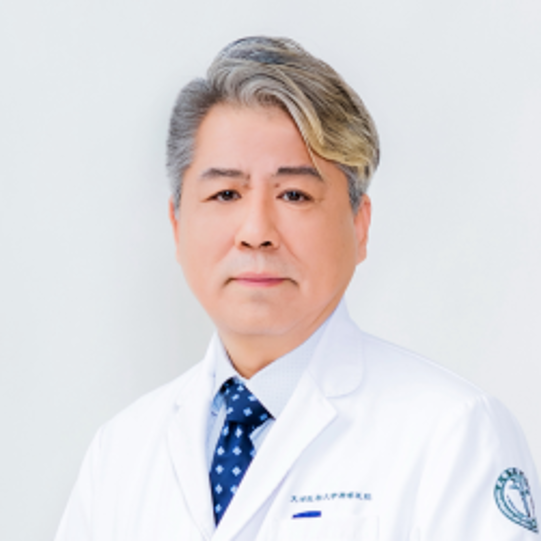
Professor Xin Yao