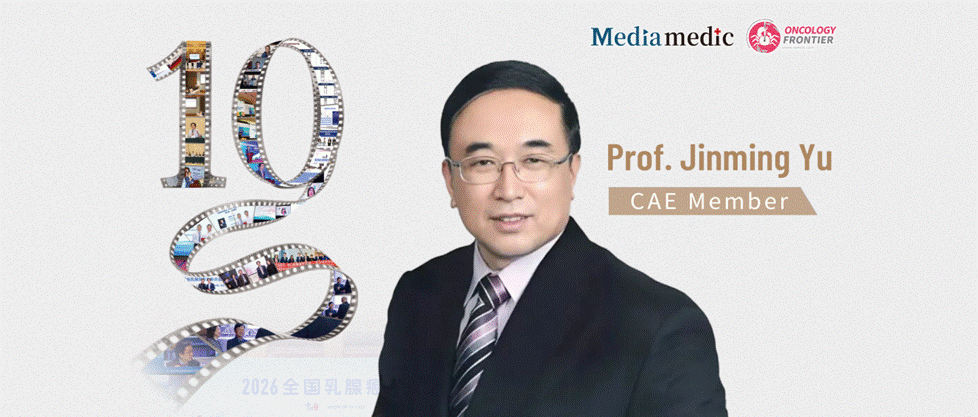
Editor’s Note: :As the Breast Cancer Committee of the Chinese Society of Clinical Oncology (CSCO BC) celebrates its 10th anniversary, the 2026 National Breast Cancer Conference was grandly held from April 10–12. More than an academic gathering, this conference served as both a comprehensive review of CSCO BC’s decade-long development and a forward-looking blueprint for the future of breast cancer care in China.During the meeting, Oncology Frontier launched a special “CSCO BC 10th Anniversary Tribute” series. In this feature, Professor Jinming Yu, current President of CSCO and Academician of the Chinese Academy of Engineering, reflects on the remarkable progress achieved by CSCO BC over the past decade and shares his vision for the future collaborative development of CSCO and CSCO BC in shaping a new national landscape for breast cancer and broader cancer prevention and treatment efforts in China.
01
Oncology Frontier: As President of CSCO, under the guidance of the “Healthy China 2030” initiative, what do you see as the core objectives of cancer prevention and control in China—particularly for breast cancer—at the current stage? How should CSCO BC position itself to better serve this national strategy?
Academician Jinming Yu:
The “Healthy China” strategy is a major national development goal proposed by the CPC Central Committee and the State Council. Within this framework, healthcare—and particularly cancer prevention and control—must play a leading role, because malignant tumors remain among the most serious threats to human health and are a major contributor to both poverty caused by illness and return to poverty due to catastrophic disease burden.
Breast cancer is now the second most common malignancy among Chinese women, second only to lung cancer. Therefore, breast cancer prevention and treatment are especially important within the broader implementation of the “Healthy China” strategy.
In recent years, China has carried out extensive and highly effective work in cancer prevention and treatment. The recently released “15th Five-Year Plan” has established a target of increasing the national 5-year survival rate for cancer patients to 46.6%. Furthermore, during the 2026 “Two Sessions,” the government work report announced that China’s average life expectancy had already reached 79.25 years by the end of the “14th Five-Year Plan” period—an extremely encouraging achievement.
In my view, the shared mission of both CSCO and CSCO BC is to further reduce cancer incidence while continuing to improve cure rates and treatment outcomes. This should remain the fundamental guiding principle for future development.
02
Oncology Frontier: The ten years since the establishment of CSCO BC have also been a decade of rapid progress in breast cancer care in China. In your opinion, what achievements has CSCO BC made in promoting standardized diagnosis and treatment, strengthening scientific innovation, and improving the homogenization of medical resources? How has this contributed to key goals of the “Healthy China 2030” initiative, such as improving 5-year survival rates for cancer patients?
Academician Jinming Yu:
CSCO BC is both a microcosm of CSCO and a reflection of the broader Chinese clinical oncology community. In recent years, China’s healthcare sector has achieved rapid development across multiple dimensions, and the accomplishments within clinical oncology have been especially remarkable.
For example, major international clinical guidelines from the United States, Europe, Canada, and other regions have increasingly incorporated “Chinese evidence.” Chinese investigators are now standing—or have already firmly established themselves—at the very center of the global academic stage. CSCO BC has made an indispensable contribution to this transformation.
In the fields of cancer prevention, screening, diagnosis, treatment, rehabilitation, and particularly the development of standardized clinical guidelines, CSCO BC has reached a level widely recognized domestically and internationally as among the best in China and among the leading organizations globally.
At the same time, the close collaboration between CSCO BC and CSCO has played a major role in advancing standardized oncology practice across China and improving treatment outcomes for patients.
03
Oncology Frontier: What is your vision for the future collaborative development between CSCO headquarters and CSCO BC? From which aspects—such as policy, resources, and academic platforms—will CSCO continue supporting CSCO BC in jointly shaping a new vision for cancer prevention and treatment in China?
Academician Jinming Yu:
CSCO BC operates as a subordinate academic committee under CSCO, and therefore CSCO headquarters should continue to provide strategic guidance for its development.
CSCO has always upheld the principles of unity, collaboration, innovation, and progress. Building upon CSCO’s nationwide academic platform, CSCO BC has fostered extensive collaboration among breast cancer specialists throughout China. Its achievements would not have been possible without the overall support of CSCO as an organization.
For example, in areas such as breast cancer basic research, translational medicine, and the management of comorbidities in breast cancer patients, CSCO BC has benefited greatly from collaboration with other well-developed CSCO specialty committees.
At the same time, CSCO headquarters maintains close partnerships with committees focused on non-small cell lung cancer, gastric cancer, colorectal cancer, and many other malignancies. We are confident that by “working as one unified force,” we will continue to achieve even greater breakthroughs in cancer prevention and treatment.
04
Oncology Frontier: Looking ahead to the next decade of CSCO BC, what are your greatest expectations and hopes for the organization?
Academician Jinming Yu:
CSCO BC has already delivered the “Voice of China” on multiple international stages by contributing Chinese evidence, Chinese clinical practice, and Chinese guidelines to the global oncology community.
I sincerely hope that in the future, CSCO BC will continue to stand prominently at the center of the international academic stage.
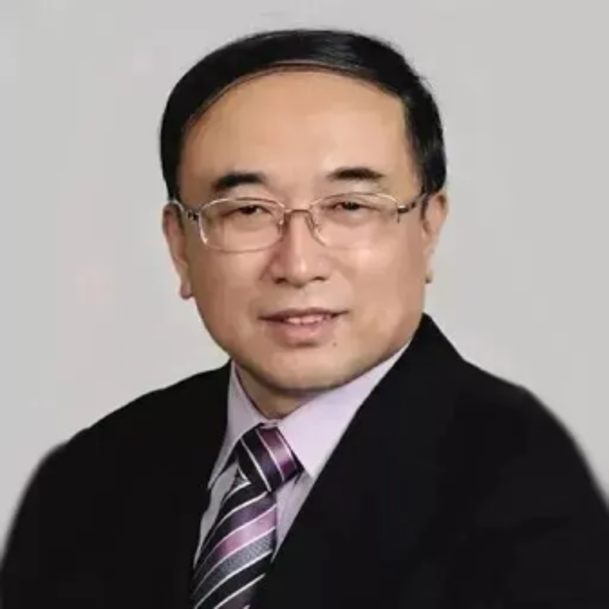
Professor Jinming Yu
Academician of the Chinese Academy of Engineering
MD, PhD Supervisor