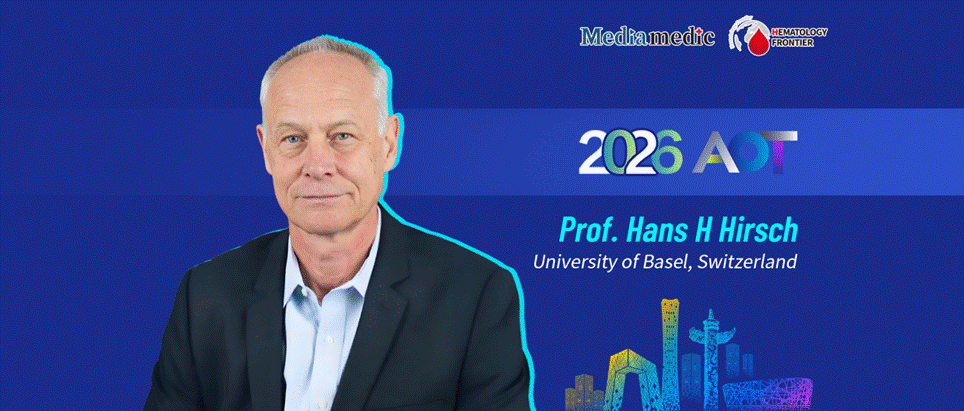
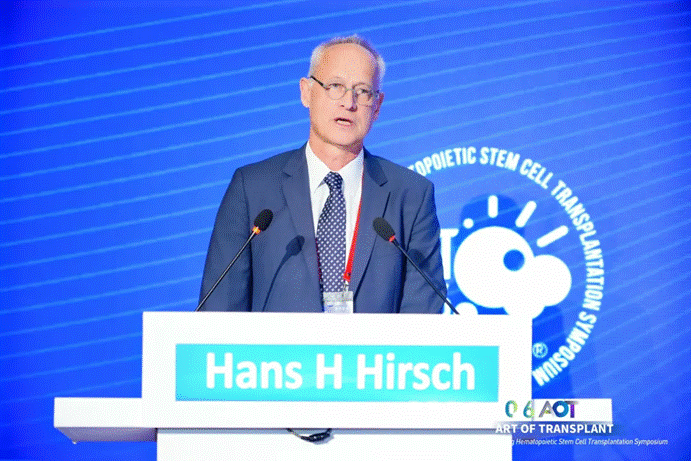
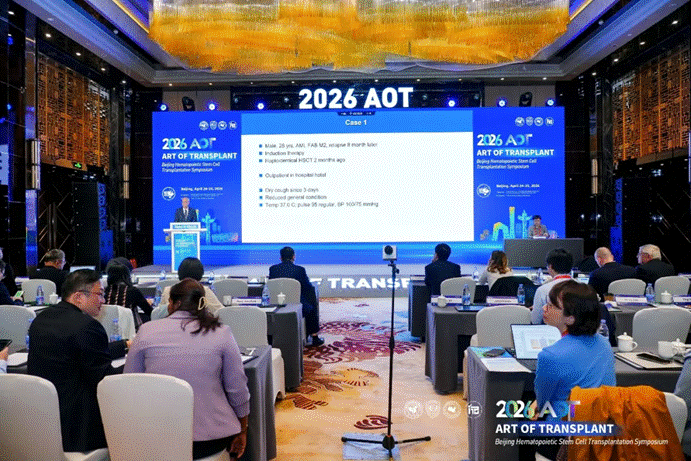
To comprehensively improve public health and strengthen strategies for the prevention and treatment of major diseases, medical innovation and international collaboration have become key drivers of clinical progress. Against this backdrop, the 2026 Beijing International Hematopoietic Stem Cell Transplantation Conference (AOT) was successfully held in Beijing from April 24 to 25, 2026. Organized by the Hematology Branch of the China International Exchange and Promotive Association for Medical and Health Care and hosted by the National Clinical Research Center for Hematologic Diseases and the Peking University Institute of Hematology, this year’s conference centered on the theme “The Art of Transplantation.” The meeting brought together leading hematology experts from around the world to discuss cutting-edge innovations and emerging trends in hematopoietic stem cell transplantation.During the conference, Oncology Frontier – Hematology Frontier conducted an exclusive interview with Professor Hans H. Hirsch from the University of Basel, Switzerland. The discussion focused on key clinical issues related to community-acquired respiratory viral infections following hematopoietic stem cell transplantation, with Professor Hirsch sharing his academic perspectives and practical experience to provide valuable insights for clinical management.
Reintegration into the community is an important goal in the patient’s treatment and recovery process, with its core being the safe resumption of normal social life with family and friends. To achieve this, it is first necessary to vaccinate both the patient and their close contacts to lower the risk of infection. Secondly, relatives and friends around the patient should be advised to avoid visits when experiencing symptoms of illness; if a visit is necessary, standardized contact precautions must be taken to minimize the possibility of virus transmission. The measures described above are of significant importance for safeguarding the health of both the patient and the community.
A key challenge in clinical practice is the potential delay in the appearance of significant clinical manifestations. Some patients may not exhibit relevant symptoms, thus failing to prompt timely rapid testing. Therefore, maintaining clinical vigilance, implementing rapid testing, and promptly initiating antiviral intervention are crucial. If the patient has partial or reconstituted immunity, the treatment response and prognosis are usually more favorable. In summary, it is essential to establish a rapid diagnostic process, administer antiviral medications in a timely manner, and maintain a high level of clinical alertness when initiating relevant diagnostics. Furthermore, a reasonable balance between treatment intensity and healthcare costs must also be achieved.
Expert Profile
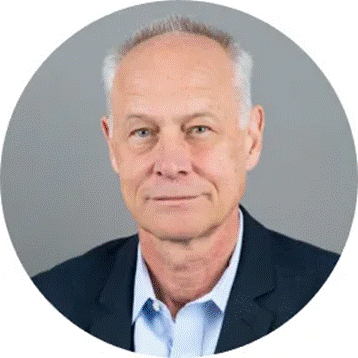
Hans H. Hirsch, MD
Research group leader
Departement Biomedizin University of Basel
Dr Hirsch has (co-)authored more than 200 peer-reviewed papers and contributed to guidelines in virology, infectious diseases, and transplantation. Dr. Hirsch is a Fellow of European Society Clinical Microbiology & Infectious Diseases (ESCMID), a Fellow of the American Society of Transplantation (FAST), long-time member of the Transplantation Society (TTS), the TTS-TID section, the American Transplantation Society (AST) and Infectious Disease Community of Practice (IDCOP), the Swiss Society of Transplantation (STS), the Swiss Society Infectious Diseases (SSID), the Swiss Transplant Cohort Study (STCS), the Swiss HIV Cohort Study (SHCS), and the International Immunocompromised Host Society (ICHS; past president 2022), and the European Society of Clinical Virology (ESCV). Dr Hirsch was awarded the ESCV Gardner Lecture Award 2024.