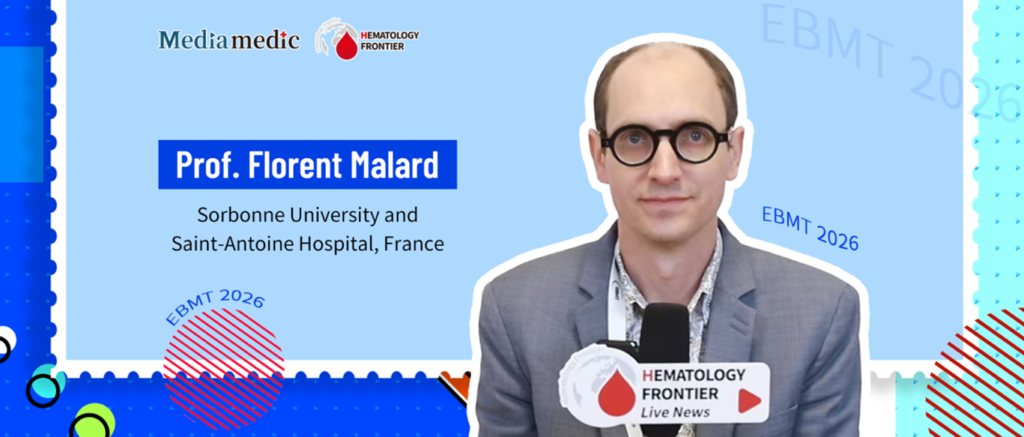
Graft-versus-host disease (GVHD) remains one of the most severe complications following hematopoietic stem cell transplantation. Among its manifestations, acute gastrointestinal GVHD is particularly challenging to manage. Despite standard therapies, a substantial proportion of patients fail treatment, and no approved therapeutic options currently exist for those with refractory disease, representing a major unmet medical need.Over the past decade, extensive research has demonstrated a close relationship between the intestinal microbiome and patient outcomes after stem cell transplantation, particularly in the pathophysiology of acute GVHD. Against this backdrop, the research team led by Professor Florent Malard—core expert of the EBMT Acute Leukemia Working Party and professor at Sorbonne University and Saint-Antoine Hospital, France—has explored microbiome-based therapies for acute GVHD.
This work led to the initiation of the pivotal Phase III ARES trial (NCT04769895), evaluating MaaT013 in patients with refractory acute GVHD, offering a novel therapeutic direction and advancing the field of GVHD management.
Current Challenges in the Treatment of Acute GVHD
Professor Florent Malard:
For patients with graft-versus-host disease (GVHD), particularly those presenting with acute gastrointestinal GVHD, the standard approach begins with corticosteroid therapy. For patients who do not respond adequately to steroids, ruxolitinib is commonly used as second-line treatment.
However, a considerable proportion of patients remain refractory even after this sequential approach. At present, no approved therapies are available for these patients, nor are there truly effective off-label alternatives. As a result, this population represents a significant unmet medical need, underscoring the urgent necessity for innovative therapeutic strategies.
Restoring Microbial Diversity: Mechanistic Rationale for MaaT013
Over the last decade, accumulating evidence has shown that the composition of the gut microbiome after stem cell transplantation is closely associated with patient outcomes, especially regarding the development and severity of acute GVHD.
The microbiome appears to play a central role in the pathophysiology of acute GVHD. Based on these insights, Professor Malard’s team initiated the exploration of microbiota-based therapies, ultimately leading to the design and implementation of the Phase III pivotal ARES study.
When administering MaaT013, the objective is to restore gut microbial composition. Following hematopoietic stem cell transplantation, chemotherapy and broad-spectrum antibiotics frequently induce profound dysbiosis, characterized by loss of bacterial diversity and depletion of protective bacteria—particularly butyrate-producing species.
Microbiota therapy aims to reverse these alterations by restoring microbial diversity and replenishing beneficial butyrate-producing bacteria.
Previous studies demonstrated increases in short-chain fatty acids and bile acids in patients’ blood following treatment. These metabolites may promote the induction of immunoregulatory T cells. Preliminary findings further suggest that a specific subset of regulatory T cells expands in patients who achieve clinical responses after MaaT013 treatment.
Together, these findings support a mechanistic link between microbiota therapy, immune regulation, and immunomodulation, ultimately contributing to the resolution of acute GVHD.
Toward Standardized Clinical Application
To date, MaaT013 has become available through early access programs in several European countries and additional regions worldwide.
Professor Malard noted that the team is currently pursuing regulatory approval from the European Medicines Agency (EMA), with the goal of obtaining approval within the year.
Importantly, the manufacturing process for MaaT013 has already been standardized, enabling its administration either through early access pathways or, in the future, through formal regulatory approval programs.
Expanding the Frontier: From Treatment to Prevention
Looking ahead, Professor Malard emphasized that while microbiota therapy offers meaningful benefit for steroid- and ruxolitinib-refractory GVHD, earlier intervention may yield even greater clinical impact.
Ideally, the ultimate goal in GVHD management is prevention.
To this end, an ongoing randomized, placebo-controlled trial is evaluating MaaT033, another microbiota-based therapy compositionally similar to MaaT013 but administered orally in capsule form rather than by enema.
The treatment regimen begins one week before transplantation, pauses temporarily, and resumes upon neutrophil recovery. Patients then receive three capsules daily for up to three months.
The study’s primary endpoint is improvement in overall survival—an ambitious but potentially transformative objective.
If microbiota therapy can successfully reduce GVHD incidence while improving survival outcomes, it would represent a major advance in transplantation medicine.
Conclusion
The clinical application of microbiome-based therapy has begun to fill a major therapeutic gap in refractory acute GVHD. By restoring intestinal microbial balance and modulating immune function, this strategy offers a promising new treatment option for critically ill patients.
At the same time, ongoing clinical trials are expanding the potential applications of microbiota therapy into the preventive setting, exploring opportunities for earlier intervention and more precise disease control.
These studies not only advance the development of microbiome therapeutics in hematopoietic transplantation, but also reflect a patient-centered, pathophysiology-driven approach to innovation in medicine.
Ultimately, this work lays an important foundation for improving transplant outcomes, advancing the broader field of hematologic disease management, and providing valuable insights for the development of novel therapies in other difficult-to-treat conditions.