Amid the vibrant renewal of spring, the 2026 CACA Western Integrated Oncology Conference was grandly convened in Chengdu, Sichuan. The meeting brought together leading oncology experts from across China to explore the frontiers of precision oncology and advance integrated, whole-course cancer care.Peripheral T-cell lymphoma (PTCL), a highly heterogeneous group of malignancies, continues to present major clinical challenges, including complex subtype classification, diagnostic difficulty, and limited therapeutic breakthroughs. In China, the higher incidence of PTCL and its distinct subtype distribution further underscore the urgency of advancing precision diagnosis and treatment.
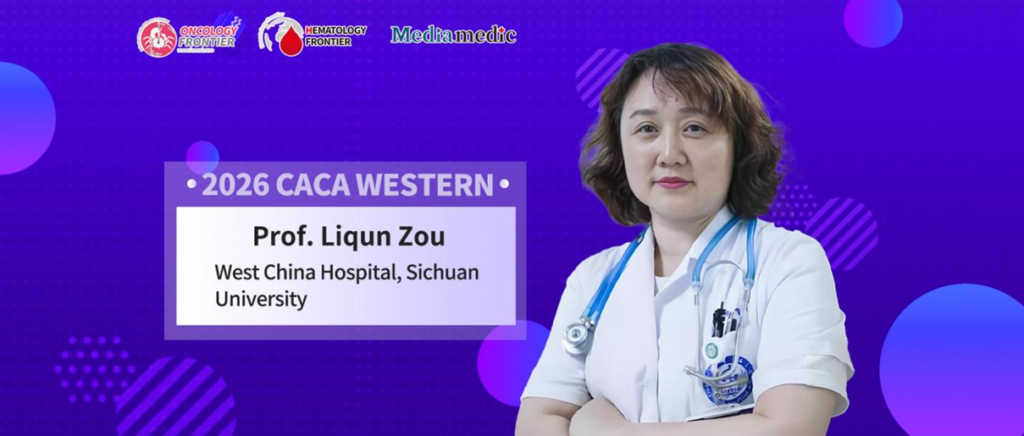
During the conference, Oncology Frontier – Hematology Frontier invited Professor Liqun Zou from West China Hospital, Sichuan University, for an in-depth discussion on recent progress in PTCL. The interview focused on advances in precision diagnosis, emerging therapeutic strategies, and the promotion of standardized care.
Advances in Molecular Classification and Precision Diagnosis
Oncology Frontier – Hematology Frontier: PTCL encompasses a wide range of subtypes and remains diagnostically challenging. What major advances have been made in pathological diagnosis and molecular classification in recent years? How have these new technologies and biomarkers improved diagnostic accuracy and prognostic stratification?
Professor Liqun Zou:
Peripheral T-cell lymphoma (PTCL) has a relatively low incidence in Western countries, accounting for approximately 10%–15% of non-Hodgkin lymphomas. In contrast, due in part to factors such as Epstein–Barr virus (EBV) infection, the incidence is significantly higher in China, with subtype distributions that differ from those seen internationally.
Broadly speaking, NK/T-cell lymphoma is also included within the PTCL spectrum.
In recent years, Chinese investigators have conducted extensive research in this field, including the application of next-generation sequencing for in-depth molecular classification. Specific genomic analyses and protein expression profiling have been performed for different subtypes, such as PTCL-not otherwise specified (PTCL-NOS) and anaplastic large cell lymphoma (ALCL), enabling more precise subtype classification and prognostic assessment.
Although prospective clinical evidence remains limited, current findings already highlight the importance of molecular classification. In subtypes such as NK/T-cell lymphoma and angioimmunoblastic T-cell lymphoma (AITL), evidence of EBV infection is frequently observed. Studies have shown that EBV DNA copy number is closely associated with prognosis in T-cell lymphomas.
Therefore, identifying high-risk patients through biomarker testing is of considerable importance for designing more targeted prospective clinical studies and improving individualized management.
Emerging Therapeutic Strategies: From Targeted Therapy to Precision Combination Approaches
Oncology Frontier – Hematology Frontier: With the rapid development of targeted therapy, immunotherapy, and cellular therapy, the treatment landscape for PTCL has evolved considerably. What do you consider the key breakthroughs in frontline and relapsed/refractory settings? How should combination regimens be rationally selected to improve patient survival?
Professor Liqun Zou:
At present, major therapeutic breakthroughs in PTCL remain relatively limited overall. Aside from the brentuximab vedotin (BV) plus CHP regimen—which demonstrated significant progression-free survival (PFS) and overall survival (OS) benefits over CHOP in anaplastic large cell lymphoma—most targeted therapy combinations have yet to be validated in prospective Phase III clinical trials.
Nevertheless, China has achieved substantial progress in novel drug development, with several innovative agents possessing independent intellectual property rights now entering clinical practice. These include the HDAC inhibitor chidamide, the JAK1 inhibitor golidocitinib, liposomal mitoxantrone, and EZH2 inhibitors.
In the frontline setting, multiple exploratory studies have been conducted in China. Although most remain Phase I or II trials, they have shown encouraging results, including improvements in complete response (CR) rates.
For certain specific subtypes—such as monomorphic epitheliotropic intestinal T-cell lymphoma—domestic studies suggest that CHOP combined with golidocitinib may provide favorable efficacy. In the future, individualized treatment strategies based on molecular classification and subtype-specific biology, incorporating targeted agents on top of CHOP, warrant further investigation.
For patients with relapsed or refractory disease, participation in clinical trials is currently recommended whenever possible. Numerous studies of novel agents have already generated promising data in China.
Treatment strategies should also be stratified according to transplant eligibility. Many of the aforementioned agents have shown encouraging efficacy in relapsed/refractory disease.
In addition, studies conducted at West China Hospital demonstrated that immune checkpoint inhibitors combined with azacitidine and lenalidomide achieved particularly favorable outcomes in heavily pretreated relapsed/refractory T-cell lymphoma, with median overall survival exceeding 3 years and median PFS exceeding 1 year.
These advances suggest that both frontline and later-line treatment of PTCL require continued exploration based on precise patient stratification in order to maximize clinical benefit.
Future Directions: Standardization, Precision Medicine, and Collaborative Research
Oncology Frontier – Hematology Frontier: Considering the characteristics of Chinese patients and current clinical needs, what areas in PTCL management still require urgent breakthroughs? What recommendations would you offer clinicians and researchers regarding precision medicine, novel drug development, and standardization of care?
Professor Liqun Zou:
PTCL is highly heterogeneous, making standardized initial diagnosis critically important.
The Lymphoma Committee of the Chinese Anti-Cancer Association (CACA) has already undertaken substantial efforts in pathology standardization, including pathology-focused initiatives and grassroots lymphoma programs in southwestern China this year. These projects aim to address the challenges of disease heterogeneity through precision diagnosis.
Regarding standardized treatment, CHOP-based therapy remains the current backbone approach. On this foundation, patients should be encouraged to participate in clinical studies whenever possible to pursue more individualized treatment strategies.
Because T-cell lymphomas are relatively uncommon overall, every patient represents an important opportunity for advancing knowledge. Therefore, both domestic and international multicenter collaboration are essential for driving progress in diagnosis and treatment.
Comprehensive disease management is equally important. Autologous hematopoietic stem cell transplantation (ASCT) remains a critical consolidation strategy. However, retrospective studies suggest that only approximately 8% of Chinese patients undergo ASCT or allogeneic transplantation following frontline therapy, indicating considerable room for improvement in post-remission management.
Although the CACA Lymphoma Committee has already initiated related efforts, broader implementation in routine clinical practice will require time. Consequently, alongside advancing clinical research, achieving greater standardization and consistency of care remains a key priority for improving PTCL outcomes.