Amid the vibrant renewal of spring, the 2026 CACA Western Integrated Oncology Conference was grandly convened in Chengdu, Sichuan. The meeting brought together leading oncology experts from across China to explore the frontiers of precision oncology and advance integrated, whole-course cancer care.Diffuse large B-cell lymphoma (DLBCL), the most common aggressive lymphoma subtype, continues to present major challenges in its relapsed or refractory (R/R) form. Conventional therapies provide limited benefit, and patient outcomes remain unsatisfactory.
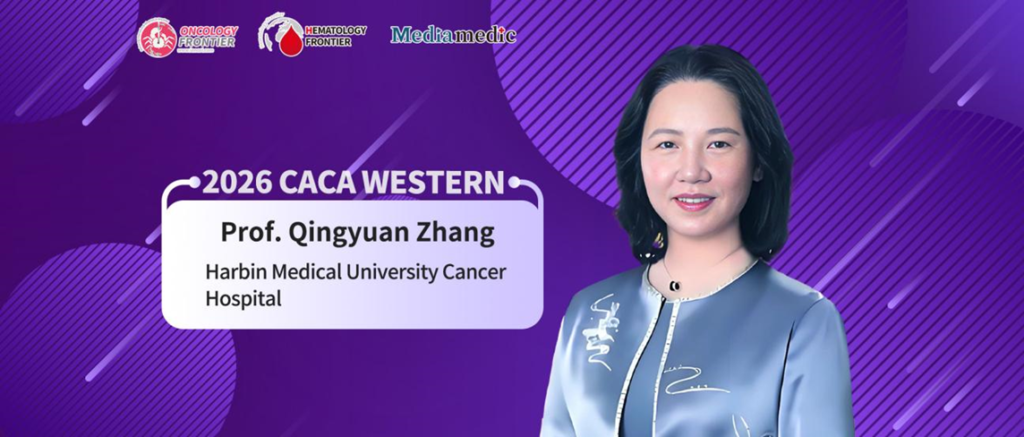
During the conference, Oncology Frontier – Hematology Frontier invited Professor Qingyuan Zhang from Harbin Medical University Cancer Hospital for an in-depth discussion. She offered comprehensive insights into the key challenges in R/R DLBCL management, the rational deployment of novel therapies, and optimization strategies under the framework of integrated oncology care.
Key Challenges and Unmet Needs in R/R DLBCL
Oncology Frontier – Hematology Frontier: You have long been dedicated to advancing standardized lymphoma care in China. Compared with newly diagnosed DLBCL, what are the most prominent challenges and unmet clinical needs in R/R DLBCL?
Professor Qingyuan Zhang:
Diffuse large B-cell lymphoma (DLBCL) is the most common subtype of non-Hodgkin lymphoma. Even with highly standardized first-line treatment, approximately 30%–40% of patients eventually experience disease progression and develop relapsed or refractory (R/R) disease.
Outcomes with later-line therapies are generally poor, and efficacy further declines with increasing treatment lines. According to the SCHOLAR-1 study, the median overall survival for patients with R/R DLBCL is only 6 months.
Traditional second-line treatment typically relies on immunochemotherapy, with complete response (CR) rates below 30%. In Chinese patient populations, real-world data indicate CR rates as low as 9%.
Clinically, treatment strategies for R/R DLBCL are usually risk-adapted. For transplant-eligible patients, autologous hematopoietic stem cell transplantation is recommended. However, due to advanced age, comorbidities, or poor responses to salvage chemotherapy, fewer than 50% of patients are ultimately eligible for transplantation, and only about 20% achieve long-term survival after transplant.
Therefore, R/R DLBCL continues to represent a major area of unmet clinical need.
Rational Sequencing of Novel Therapies: Balancing Efficacy, Safety, and Accessibility
Oncology Frontier – Hematology Frontier: Therapies such as bispecific antibodies, antibody–drug conjugates (ADCs), and CAR-T cells have significantly improved outcomes in R/R DLBCL, while also raising new questions regarding treatment sequencing and combination strategies. Based on clinical practice, how should these innovative therapies be optimally integrated to balance efficacy, safety, and accessibility?
Professor Qingyuan Zhang:
CAR-T cell therapy and bispecific antibodies have brought major breakthroughs in the treatment of R/R DLBCL, significantly improving patient outcomes and survival.
Currently, several CAR-T products have been approved for third-line and later treatment, enabling approximately 40% of heavily pretreated patients to achieve long-term survival. For patients with primary refractory disease or relapse within 12 months after first-line therapy, axicabtagene ciloleucel (axi-cel) and lisocabtagene maraleucel (liso-cel) have demonstrated superior efficacy compared with autologous stem cell transplantation and have been approved for these indications.
In addition, studies from both China and abroad have shown that CAR-T therapy is superior to conventional immunochemotherapy in the second-line setting for transplant-ineligible patients.
Bispecific antibodies have likewise demonstrated efficacy superior to that of traditional chemotherapy. For example, the STARGLO study showed that glofitamab combined with gemcitabine and oxaliplatin (GemOx) provided significant survival benefits compared with the R-GemOx regimen.
At present, bispecific antibodies have been approved for relapsed or refractory DLBCL in certain treatment settings. Furthermore, chemotherapy-free regimens combining bispecific antibodies with ADCs, chemotherapy, or small-molecule agents have also shown encouraging efficacy.
A key focus in clinical practice is how to strategically sequence these innovative therapies to maximize patient benefit. Earlier concerns suggested that prior use of bispecific antibodies might induce T-cell exhaustion and thereby compromise the efficacy of subsequent CAR-T therapy. However, current evidence suggests otherwise.
A meta-analysis incorporating 30 studies demonstrated that bispecific antibodies can serve as effective bridging therapy by reducing tumor burden and improving the tumor microenvironment, thereby creating more favorable conditions for subsequent CAR-T treatment.
Although the efficacy of bispecific antibodies following CAR-T therapy may be somewhat reduced, they still represent an important salvage option. In particular, emerging combination strategies may further improve treatment outcomes.
Overall, in a variety of clinical scenarios, both bispecific antibodies and CAR-T therapies have demonstrated clear advantages over conventional treatments.
Integrated Oncology and Long-Term Management: Building Better Outcomes for Patients
Oncology Frontier – Hematology Frontier: Within the framework of integrated oncology, multidisciplinary collaboration and whole-course management are essential for improving outcomes in R/R DLBCL. In your view, how can future care models be further optimized to provide patients with longer survival and better quality of life?
Professor Qingyuan Zhang:
Lymphoma—particularly DLBCL—is a highly heterogeneous disease. Therefore, precise pathological diagnosis is critically important both at initial diagnosis and in the relapsed/refractory setting. In-depth molecular biological analysis can provide essential guidance for clinical decision-making and help identify the most appropriate therapeutic strategies.
At the same time, the risk of relapse in DLBCL is not confined to the early treatment period. While many relapses occur within the first one to two years, some patients may experience disease progression many years later. Consequently, establishing a comprehensive long-term monitoring and disease management system is of great importance.
Through the integration of pathological assessment, imaging follow-up, radiotherapy, rehabilitation management, and supportive approaches—including the complementary role of traditional Chinese medicine in recovery—patients can receive truly continuous, whole-course care.
In summary, individualized treatment strategies guided by precise molecular classification, together with close collaboration within multidisciplinary teams (MDTs), are essential to optimizing treatment outcomes and improving prognosis in DLBCL.