2026 Beijing Young Urologic Oncology Physicians Academic Exchange Conference
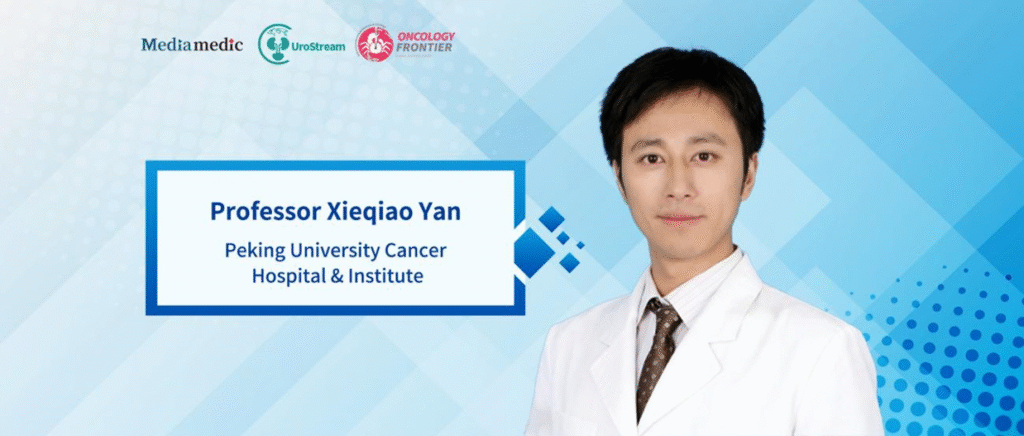
Editor’s Note: From January 10 to 11, 2026, the Beijing Young Urologic Oncology Physicians Academic Exchange Conference was successfully held in Beijing. The meeting brought together leading experts and young physicians in urologic oncology to discuss cutting-edge scientific advances and key clinical challenges, with the goal of fostering academic innovation and supporting the growth of emerging clinicians.Taking this opportunity, Oncology Frontier – Urology Frontier invited Professor Xieqiao Yan from Peking University Cancer Hospital & Institute to provide an in-depth analysis of treatment options after failure of targeted-immunotherapy in renal cell carcinoma (RCC), including later-line drug selection, individualized treatment strategies, and future development directions, offering valuable insights to advance precision therapy in RCC.


Professor Xieqiao Yan’s Featured Presentation
01
Oncology Frontier – Urology Frontier
What clinical benefits does targeted-immunotherapy offer RCC patients, and what are the key challenges after treatment failure?
Professor Xieqiao Yan: Targeted-immunotherapy has indeed brought substantial survival benefits to patients with advanced renal cell carcinoma. In the era before targeted therapy, when cytokine-based treatments were standard, the median survival was less than one year. The introduction of targeted agents extended median survival to approximately 26 months. With the advent of immunotherapy—whether dual-immune combinations or targeted-immune combinations—median survival for advanced RCC patients has now exceeded 40 months, with nearly half of patients living longer than four years.
However, despite these advances, approximately half of patients still experience disease progression within four years, raising the critical question of how best to treat patients after targeted-immunotherapy failure.
Currently, we face three major challenges:
- A lack of more potent targeted agents for later-line therapy
- Limited proven benefit of immunotherapy rechallenge after resistance develops
- Overall restricted options for subsequent-line treatments
While some emerging therapies show promise in early-phase trials, their safety and efficacy still require validation in Phase III studies.
02
Oncology Frontier – Urology Frontier
With the increasing availability of HIF-2α inhibitors and novel TKIs, what key factors should guide treatment decisions after targeted-immunotherapy failure?
Professor Xieqiao Yan: Several factors are particularly important when selecting post-failure treatment strategies:
1. Prior Treatment Regimen
If a patient previously received potent TKIs such as lenvatinib, vorolanib, or cabozantinib in combination with immunotherapy, switching to TKI monotherapy in the second line may yield limited benefit. Conversely, if first-line therapy consisted primarily of immunotherapy (single-agent or dual-agent), subsequent TKI monotherapy may still achieve meaningful efficacy.
This is supported by findings from the CaboPoint Study (Cohort A), where patients treated with cabozantinib after ipilimumab plus nivolumab failure achieved an objective response rate (ORR) exceeding 40%. In contrast, the METEOR Study reported an ORR below 20% when cabozantinib was used after prior targeted therapy.
2. Duration of Response and Resistance Pattern
- Progression within three months of immunotherapy suggests primary resistance, making further immune-based therapy unlikely to be beneficial
- Sustained response for over two years, followed by progression after a treatment-free interval, suggests that immunotherapy rechallenge may still be effective
03
Oncology Frontier – Urology Frontier
Biomarkers are essential for precision oncology. How do you view the future clinical role of biomarkers in RCC?
Professor Xieqiao Yan: Biomarkers are critical tools for patient selection and personalized treatment, yet RCC currently lacks validated biomarkers comparable to PD-L1 or tumor mutational burden (TMB) in other malignancies.
Nonetheless, several promising avenues are being explored:
1. ADC Target Expression
Targets such as CD70 and CA-IX are being evaluated for antibody–drug conjugate (ADC) therapies. For ADCs using non-cleavable linkers, target expression level may directly influence therapeutic efficacy.
2. Immune Microenvironment Profiling
Markers such as LAG-3 may serve as indicators of T-cell exhaustion:
- LAG-3–negative tumors suggest active T-cell responses and potential sensitivity to immunotherapy
- LAG-3–positive tumors indicate immune exhaustion, where single-agent immunotherapy may be less effective
At present, most of these findings derive from retrospective or post-hoc analyses, and prospective clinical trials are needed to confirm their clinical utility and move RCC closer to true precision treatment.
04
Oncology Frontier – Urology Frontier
Later-line RCC therapy is shifting from single-agent use to precision combination strategies. Which innovations may reshape clinical practice, and what research is your team pursuing?
Professor Xieqiao Yan: Future progress in later-line RCC treatment will depend on overcoming the limitations of current targeted and immune therapies.
Bispecific Antibodies
With widespread use of PD-1/PD-L1 inhibitors, next-generation bispecific antibodies targeting PD-1/PD-L1 and CTLA-4 or angiogenic pathways are entering clinical development. These agents may offer improved efficacy and better safety profiles.
This is particularly relevant for IMDC low-risk patients, where traditional thinking favors anti-angiogenic monotherapy. However, IMmotion151 showed that targeted-immune combinations improved ORR in low-risk patients, though survival benefit was not achieved—likely due to toxicity-related treatment discontinuation.
For example, in COSMIC-313, the triplet-therapy group experienced higher toxicity, more treatment interruptions, and lower cabozantinib dosing (22 mg vs. 60 mg), potentially limiting efficacy.
Our center is currently investigating AK112 (a PD-1/VEGF bispecific antibody) in first-line low-risk RCC patients. Preliminary data indicate good tolerability and promising efficacy, suggesting this approach may offer a better option for this subgroup.
Expanding Non-Traditional Later-Line Options
HIF-2α Inhibitors
HIF-2α inhibitors have a distinct toxicity profile compared with TKIs, primarily causing anemia or hypoxia rather than diarrhea, proteinuria, or fatigue. They may serve as an effective bridging therapy for patients experiencing cumulative TKI toxicity, allowing continued tumor control while improving tolerability.
Antibody–Drug Conjugates (ADCs)
ADCs offer another promising later-line strategy due to their novel mechanisms of action and unique safety profiles. Our institution is actively conducting ADC-focused clinical trials, aiming to expand therapeutic options and improve outcomes for RCC patients.
We look forward to continued collaboration with colleagues nationwide to push the boundaries of RCC treatment and benefit more patients.

Professor Xieqiao Yan