
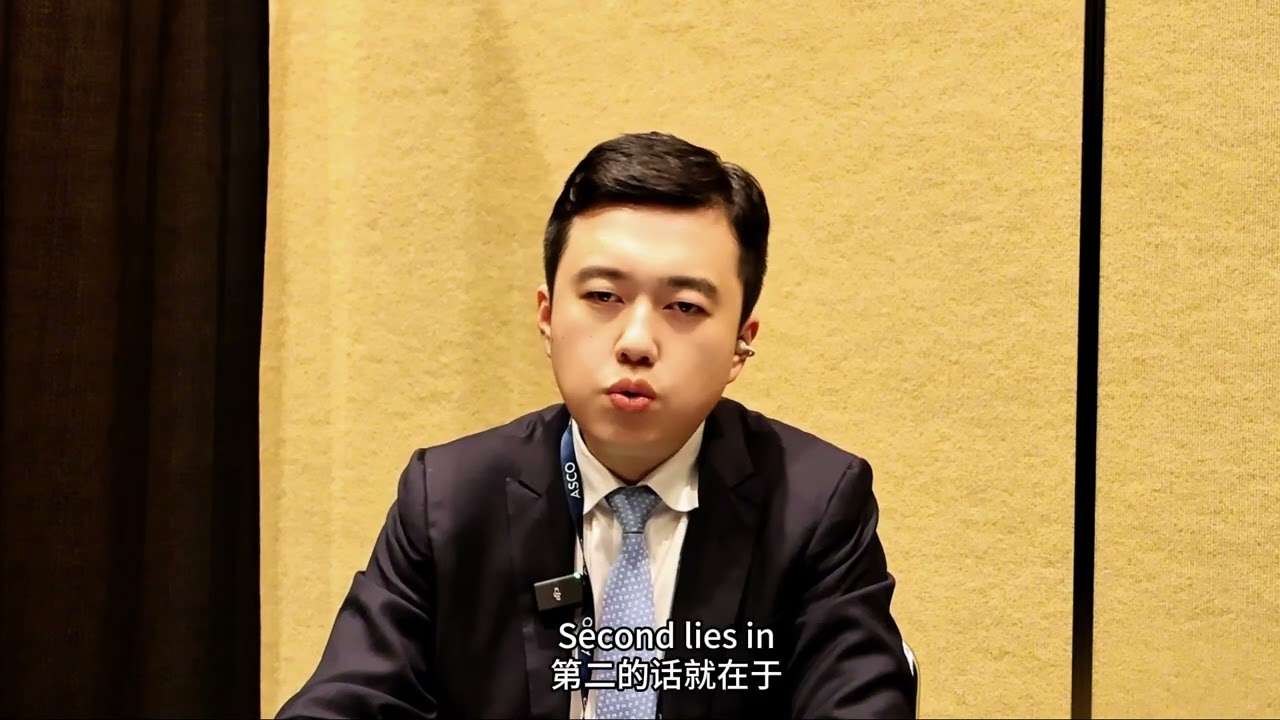
The 2026 ASCO Genitourinary Cancers Symposium (ASCO-GU) recently concluded successfully in San Francisco, USA. As one of the most influential global academic conferences in the field of genitourinary oncology, the meeting brings together the latest research advances and evolving clinical perspectives from around the world. At this year’s conference, numerous Chinese investigators presented their latest findings, sharing the Chinese perspective in uro-oncology with the international community.
Oncology Frontier – Urology Stream invited Prof. Haige Chen and Prof. Ruiyun Zhang from Renji Hospital, Shanghai Jiao Tong University School of Medicine to provide an in-depth interpretation of the key studies from their urothelial carcinoma research team that were selected for presentation at ASCO-GU. Their work explores innovative strategies in bladder-preserving therapy and precision diagnostics using liquid biopsy for urothelial carcinoma.
Three Studies Presented Internationally: New Insights into Precision Diagnosis and Treatment of Urothelial Carcinoma
Question
Several studies from your team were selected for presentation at this year’s ASCO-GU meeting. Could you share the key findings?
Prof. Ruiyun Zhang
First, we would like to thank Oncology Frontier for providing this valuable academic platform, allowing us to deliver important updates from the ASCO-GU meeting in San Francisco to colleagues in China.
At this year’s conference, two urothelial carcinoma studies from Prof. Haige Chen’s team at our hospital were presented as posters, while another related study conducted in collaboration with the Department of Radiation Oncology was also selected for presentation.
1. Breakthrough in the DECIDING Study Series:
Chemotherapy-Free Modified TMT Regimen Improves Outcomes in Bladder Preservation for MIBC, with Dual Liquid Biopsy Enabling Full-Course Monitoring
The DECIDING study series is a prospective multicenter clinical trial focusing on patients with HER2-high–expressing muscle-invasive bladder cancer (MIBC).
The study evaluates a chemotherapy-free modified trimodality therapy (TMT) regimen combining:
- Disitamab vedotin (DV)
- Immunotherapy
- Radiotherapy
This approach—referred to as the DVT regimen—aims to achieve bladder preservation.
All enrolled patients received the standard DVT regimen combined with bladder radiotherapy, with the primary endpoints being:
- Complete response rate (CR)
- Event-free survival (EFS)
Earlier results from the DECIDING series were presented at ASCO-GU 2025 and the European Association of Urology (EAU) Congress, attracting substantial international attention.
Key findings from the first phase (DECIDING-I)
The study demonstrated highly encouraging efficacy:
- Clinical complete response (cCR): 91.7% (improved from 83.3% previously reported at ASCO-GU 2025)
- 12-month bladder-intact disease-free survival (BIDFS): 91.7%
- Overall survival (OS): 100%
Among patients with HER2 IHC 3+ expression, the cCR rate reached 100%.
Integration of Liquid Biopsy Monitoring
The study also incorporated comprehensive liquid biopsy analyses, including:
- Urinary tumor DNA (utDNA)
- Circulating tumor DNA (ctDNA) in peripheral blood
Dynamic monitoring throughout treatment revealed:
- utDNA clearance rate: 83.3%, highly consistent with cCR outcomes
- utDNA levels significantly correlated with pathological response in bladder lesions
Compared with conventional methods such as imaging or cystoscopy, urinary utDNA may identify local recurrence risk earlier, providing critical guidance for clinical decision-making—particularly regarding whether salvage radical cystectomy is necessary, thereby preventing ineffective or prolonged bladder-preserving therapy.
Complementary Roles of utDNA and ctDNA
At the ASCO-GU urothelial carcinoma session, leading international experts extensively discussed the clinical value of utDNA and ctDNA in perioperative management, particularly in bladder-preserving strategies.
Our team believes that ctDNA and utDNA should not be viewed as competing technologies but rather as complementary tools:
- utDNA focuses on monitoring local bladder disease dynamics
- ctDNA better reflects risk of distant metastasis and long-term survival outcomes, with stronger correlation to overall survival
Therefore, a dual-liquid-biopsy strategy combining ctDNA and utDNA may become a key approach for treatment monitoring and prognostic assessment in bladder-preserving therapy for MIBC.
2. Focus on Ultra-High-Risk NMIBC:
Genomic Profiling of Bladder Carcinoma in Situ Opens New Paths for Non-Invasive Molecular Diagnosis
The second study focused on a particularly high-risk subgroup of non-muscle-invasive bladder cancer (NMIBC)—patients with carcinoma in situ (CIS).
Current international guidelines classify these patients as very high-risk NMIBC, mainly because:
- Extremely high rates of intravesical recurrence
- Significantly increased risk of progression to MIBC compared with high-grade papillary NMIBC
To address this challenge, our team prospectively collected clinical samples and data from patients with very high-risk NMIBC accompanied by CIS lesions.
Comprehensive genomic analyses and liquid biopsy profiling were performed on:
- CIS tumor tissue
- Paired urine samples
- Peripheral blood samples
Key discoveries
First, genomic comparisons between CIS lesions and papillary tumors revealed that CIS has a distinct mutational landscape, with:
- Significantly higher TP53 mutation frequency
Second, ERBB2 (HER2) mutations and copy number variations (CNVs) were also frequently observed in CIS lesions.
Importantly, even through urinary utDNA testing alone, the frequency of ERBB2 copy-number amplification was significantly higher than that observed in typical urothelial carcinoma populations.
Clinical implications
These findings offer two important clinical insights:
- HER2 may represent a key therapeutic target in refractory, ultra-high-risk CIS patients, providing a strong rationale for HER2-targeted precision therapy.
- Molecular classification may not require invasive tissue biopsy; HER2 amplification status can potentially be assessed through non-invasive urinary utDNA testing, enabling accurate molecular diagnosis.
Addressing Key Clinical Challenges: New Directions for Precision Management of Urothelial Carcinoma
Question
What implications do these findings have for clinical practice in China?
Prof. Haige Chen
The two studies we presented are prospective exploratory investigations. As we know, bladder-preserving therapy for bladder cancer is currently an area of intense research worldwide.
1. Multicenter Exploration Is Driving the Era of Individualized Bladder-Preserving Therapy
At this ASCO-GU meeting, we saw updates on bladder-preserving approaches based on enfortumab vedotin combined with immunotherapy.
In China, multiple research programs are underway, including:
- Our DECIDING series (DVT + radiotherapy)
- The TRUCE series from Tianjin Second People’s Hospital
- The HOPE series from West China Hospital of Sichuan University
- The PUNCH series from Sun Yat-sen University integrating utDNA monitoring
Over the next 2–3 years, as data from these studies mature, we expect to identify optimized individualized treatment strategies for different MIBC risk groups, advancing bladder-preserving therapy from standardized approaches to precision-stratified management.
2. Liquid Biopsy: From Companion Diagnostics to Core Decision-Making Tool
Liquid biopsy technologies are evolving from auxiliary diagnostic tools to central components of treatment decision-making.
From the IMvigor011 trial to the ctDNA analyses in the RETAIN2 study presented at this conference, it is becoming increasingly clear that liquid biopsy can guide whether patients should receive therapeutic intervention based on molecular detection results.
“Minimally invasive precision therapy” was one of the key themes at ASCO-GU this year. Liquid biopsy plays a central role in realizing this goal.
On one hand, it allows clinicians to identify patients who may safely avoid unnecessary adjuvant therapy, thereby preventing treatment-related toxicity.
On the other hand, liquid biopsy enables real-time dynamic monitoring of disease status, detecting progression risks earlier than traditional pathology or imaging.
We firmly believe that within the next 2–3 years, liquid biopsy will become an indispensable tool in both clinical research and routine practice for urothelial carcinoma, providing robust support for precision oncology.

Prof. Haige Chen

Prof. Ruiyun Zhang