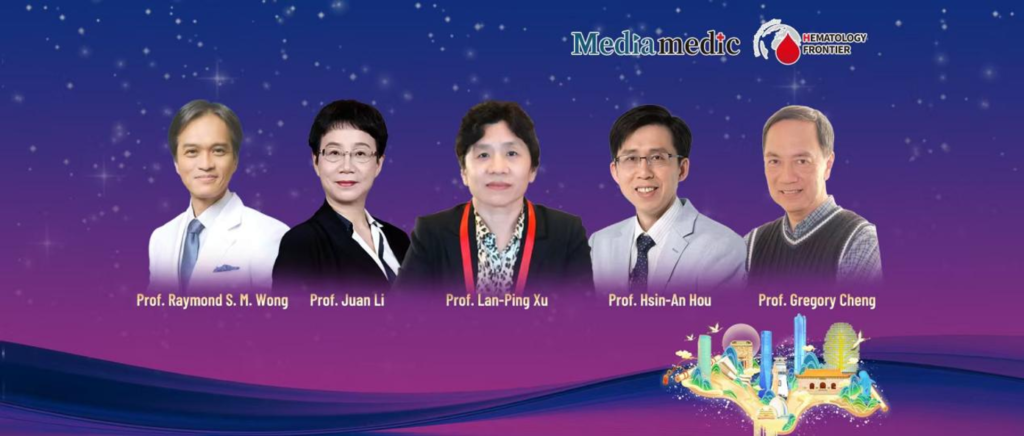
Editor's Note: Medical progress is driven not only by clinical practice and scientific innovation, but also by cross-regional exchange, mutual learning, and the transmission of knowledge and experience. Looking back at the history of hematology collaboration among the Chinese mainland, Taiwan, Hong Kong, and Macao—from the “seeds of life” transported across the Taiwan Strait to continuous breakthroughs in transplantation technology, and from exchanges among young physicians to deepening medical collaboration—each interaction has contributed to advances in diagnosis and treatment and enabled more patients to benefit from improved care.The 2026 Cross-Strait Hematology Academic Conference, held in Zhuhai and rooted in the Guangdong-Hong Kong-Macao Greater Bay Area, carries particular significance. On this occasion, we invited hematology experts from the Chinese mainland, Taiwan, Hong Kong, and Macao—including Conference Chair Prof. Lanping Xu of Peking University People’s Hospital, Conference Chair Prof. Hsin-An Hou, President of the Taiwan Society of Hematology, Prof. Shaoming Wang of The Chinese University of Hong Kong, Prof. Yanming Zheng of the Macau University of Science and Technology Hospital, and Executive Conference Chair Prof. Juan Li of The First Affiliated Hospital of Sun Yat-sen University—to engage in a roundtable discussion.
Together, they looked back on the history of cross-regional exchange, shared stories of mentorship and knowledge transfer, explored how different regions can leverage complementary strengths and advance collaboratively, and discussed future opportunities in young talent development, multicenter research, and medical collaboration. Their dialogue underscored a shared vision: transforming exchange from periodic gatherings into sustained collaboration, and turning consensus into concrete action.
Prologue
A Relay of Life, Carrying Compassion Across the Taiwan Strait
Oncology Frontier – Hematology Frontier: From the early days of cross-regional searches for unrelated hematopoietic stem cell donors and the transportation of stem cells, to the continued maturation of haploidentical hematopoietic stem cell transplantation, the development of hematopoietic stem cell transplantation itself reflects the history of exchange and shared progress in hematology across the Taiwan Strait. Have any of you personally experienced similar stories of collaboration or patient care? What impressions did those experiences leave on you?
Prof. Lanping Xu: In the early days of hematopoietic stem cell transplantation, transplantation from HLA-matched sibling donors was the primary approach. If a patient could not find a matched sibling donor, there was often little that could be done. Subsequently, with the establishment of unrelated donor registries, patients gained new hope for treatment. I have been involved in transplantation since the beginning of my career. As someone who witnessed and subsequently participated in my institution’s first unrelated donor transplantation, I have a particularly deep appreciation of this journey.
In the early years, unrelated hematopoietic stem cells were often transported from Hualien, Taiwan. Each donation was regarded as extraordinarily precious—literally a “seed of life.” During transportation, the container was carefully escorted throughout the journey by volunteers from the Tzu Chi Foundation in Taiwan, who would continuously and gently rock it to help maintain cell viability. Upon arrival, the volunteers would often organize activities such as sign-language songs to facilitate interaction and communication. Every stem cell handover was deeply moving, and people were often brought to tears, profoundly touched by the compassion and dedication embodied in this act of love across the Taiwan Strait. Many patients who underwent unrelated transplantation through this channel achieved long-term survival, and our medical team continued to follow them regularly over the years.
With the establishment of the China Marrow Donor Program in mainland China, particularly following the successful application of haploidentical donors in hematopoietic stem cell transplantation, the number of stem cell donations obtained through Tzu Chi in Hualien gradually declined. Nevertheless, those early experiences of cross-Strait collaboration remain deeply memorable.
As Prof. Hou just mentioned, unrelated donor resources in mainland China can now also provide support for patients in Taiwan. Although the number of such cases remains relatively small, these resources serve as an important complement, helping ensure that almost every patient can have access to hematopoietic stem cell transplantation when it is indicated.
Looking back, from the stem cells initially escorted across the Taiwan Strait by volunteers from Hualien, Taiwan, to today’s deeper integration of transplantation technologies and donor resources across the Strait, the development of hematopoietic stem cell transplantation stands as a vivid testament to the exchange, collaboration, and shared progress of the hematology communities on both sides.
Prof. Hsin-An Hou: From my personal perspective as a hematologist in Taiwan, the history of hematology exchange across the Taiwan Strait has been both highly significant and deeply valuable. Through communication and interaction, both sides have learned from each other and advanced together; for patients, this process has often represented an important opportunity for a new lease on life. As Prof. Xu noted, every instance of mutual assistance is accompanied by a profound sense of gratitude. Despite continuous advances in medicine, for many patients with malignant hematologic diseases and refractory benign disorders, hematopoietic stem cell transplantation remains the only potentially curative treatment option.
Over the years, exchanges and interactions between hematology communities across the Taiwan Strait have enabled both sides to improve and optimize transplantation processes. Benefiting from the wealth of clinical trial resources and accumulated clinical experience in mainland China, and with no language barrier between the two sides, we have often been able to identify suitable donors in mainland China. At the same time, we have learned about a number of novel and distinctive treatment strategies. This process of mutual learning has been tremendously meaningful.
Therefore, whether looking back on the past, focusing on the present, or looking ahead to the future, hematology exchange across the Taiwan Strait represents an excellent model of collaboration—one that deserves our continued joint efforts and deepening engagement. I believe that through sustained collaboration, patients with hematologic diseases will have even greater opportunities to receive better treatment in the future.
Prof. Shaoming Wang: Hematopoietic stem cell transplantation plays a highly important role in the treatment of a wide range of hematologic diseases. However, in clinical practice, patients often face difficulties in finding suitable donors. Through deeper collaboration among mainland China, Taiwan, Hong Kong, and Macao, a considerable number of patients in Hong Kong have successfully received hematopoietic stem cells donated by individuals from mainland China or Taiwan. This has been highly beneficial for the treatment of patients across different populations.
Prof. Yanming Zheng: Looking back at the early days, finding a matched unrelated donor was far from easy, and unfortunately, many patients died while waiting for bone marrow transplantation. Today, the maturation of haploidentical transplantation has greatly expanded the donor pool and made it easier for patients to find suitable donors when a fully matched unrelated donor is unavailable. With supporting systems and safeguards also becoming increasingly well established, the overall treatment environment has undergone a remarkable transformation.
I believe that, driven by continued technological innovation, hematopoietic stem cell transplantation will become increasingly accessible, efficient, and effective in the future.
Passing the Torch
Nurturing the Next Generation of Young Physicians
Oncology Frontier – Hematology Frontier: The most meaningful form of medical exchange is often not a single conference, but a young physician actually stepping into another hospital, joining a mentor on rounds, discussing cases, and learning clinical techniques firsthand. In recent years, young physicians from Hong Kong and Macao have also traveled to mainland hospitals for further training. Throughout your careers, have you had any particularly memorable experiences involving clinical training, visiting fellowships, or exchanges among medical professionals? What was the most valuable lesson you gained from those experiences?
Prof. Lanping Xu: Our hospital has long maintained a leading position in the field of hematopoietic stem cell transplantation. In particular, the haploidentical hematopoietic stem cell transplantation approach pioneered by Academicians Daopei Lu and Xiaojun Huang has distinctive advantages, attracting many experts and peers from both China and abroad to visit, exchange experiences, and learn from our practice.
In recent years, an increasing number of physicians from Hong Kong and Macao have come to our hospital for training, particularly physicians from Hong Kong. Three or four physicians from Queen Mary Hospital, for example, have completed training at our institution and subsequently implemented what they learned effectively in their respective positions.
At present, physicians from Taiwan have not yet formally undertaken clinical training at our hospital. Our interactions with colleagues in Taiwan have primarily taken the form of academic exchanges. We look forward to further deepening this collaboration in the future and creating opportunities for reciprocal visits and training among physicians on both sides of the Taiwan Strait.
Prof. Hsin-An Hou: Medicine itself is a process of continuous transmission and mentorship. Students often learn how to care for patients through the words, actions, and example of their teachers. Looking back over the past two decades or more, academic conferences in hematology have provided an excellent bridge for communication between the two sides, with both benefiting tremendously from these interactions.
As Prof. Xu mentioned, mainland China has achieved remarkable advances in haploidentical transplantation, and this approach has become an internationally recognized treatment paradigm. Thanks to the presentations and academic exchanges led by Academicians Daopei Lu and Xiaojun Huang at cross-Strait academic events in the early years, we were able to gain earlier exposure to treatment strategies that were most appropriate for our patients. Today, many of these advances have been consolidated into established guidelines and standards in the medical literature.
Creating more opportunities for young physicians and helping them advance smoothly in their careers requires the collective efforts of senior physicians and mentors on both sides. Although opportunities for physicians from Taiwan to undertake long-term training in mainland China remain relatively limited at present, our exchanges at various academic conferences have been highly active.
Because we share a common linguistic and cultural background and have no language barrier, our professional discussions can be particularly direct and meaningful. I hope that, building on this strong foundation, we can further deepen our collaboration and create more opportunities for young physicians. When more young people choose to dedicate themselves to the field of hematology, I believe that will be one of the greatest achievements we can hope for as senior physicians and mentors.
Prof. Juan Li: The First Affiliated Hospital of Sun Yat-sen University, where I work, is located in the Guangdong-Hong Kong-Macao Greater Bay Area, and we regularly welcome young physicians from Hong Kong and Macao for clinical training and further study. During their six-month to one-year training periods, these young physicians have demonstrated tremendous enthusiasm for learning and a strong commitment to clinical practice. They are eager to learn, receptive to guidance, and have achieved significant progress throughout their training.
We also organize academic exchange meetings together with our colleagues from Hong Kong. Overall, both sides greatly value these opportunities for learning and exchange, with enthusiastic participation and highly rewarding outcomes.
Prof. Shaoming Wang: For young physicians, it is extremely important to step outside their familiar environment and broaden their horizons. More than 20 years ago, I spent a year working at a major cancer center in the United States, where I had the opportunity to observe advanced approaches to diagnosis and treatment and learn from the institution’s clinical strengths. I also visited hospitals in several countries and regions with relatively limited medical resources. These experiences gave me a profound appreciation of how physicians working under resource constraints can nevertheless draw on their knowledge, ingenuity, and clinical judgment to address complex practical challenges.
These experiences were extremely important to my own professional development. They also taught me to approach patient care from different perspectives and to continually consider how we can provide better treatment for our patients.
Therefore, I hope that all young physicians will seize opportunities to step outside their usual environments and visit hospitals in different regions to exchange experiences and learn from one another. Although healthcare systems and resource allocation may differ across regions, it is precisely through this kind of mutual learning and exchange that we can explore together how to make future diagnosis and treatment even better.
Prof. Yanming Zheng: One of my strongest impressions from mentoring exchange students is how artificial intelligence (AI) has made access to information remarkably easy. This has made me realize that our exchanges should not be limited to medical knowledge alone. We should also place greater emphasis on how we care for patients and truly treat each patient as a whole person.
We need to continually remind medical students never to forget why they chose to put on the white coat in the first place. “Patients first” is the soul of medicine, and this is the core principle I hope we can continue to emphasize in future exchanges.
United in Purpose
Breaking Down Barriers and Advancing Cross-Regional Healthcare Collaboration
Oncology Frontier – Hematology Frontier: Today, as travel and interaction across the region have become increasingly convenient, some Hong Kong patients who live in the Pearl River Delta undergo diagnosis or initial treatment in Hong Kong and then continue their treatment and follow-up in Guangzhou or Shenzhen. Institutions such as the University of Hong Kong-Shenzhen Hospital have also become examples of cross-regional healthcare collaboration. From a clinician’s perspective, what do you believe is most important for achieving genuine “collaboration” among healthcare systems in different regions?
Prof. Juan Li: In our daily outpatient clinics and wards, we frequently treat patients from Hong Kong and Macao. As integration within the Greater Bay Area continues, an increasing number of residents from Hong Kong and Macao are choosing to live and seek medical care in cities such as Zhongshan, Foshan, and Qingyuan.
To make it easier for Hong Kong and Macao residents to access healthcare in mainland China, I believe there are three key areas that need to be advanced.
First, we need mutual recognition of diagnostic and treatment standards and greater alignment on clinical consensus. Second, we need to enable the interoperability and sharing of medical data, including medical records and imaging studies, to make diagnosis and treatment more efficient. Third, we need to put supporting measures in place to facilitate access to care. For example, the Hong Kong Elderly Healthcare Voucher Scheme implemented at our hospital has provided tangible convenience for elderly residents of Hong Kong and Macao seeking medical care in mainland China.
Prof. Hsin-An Hou: When it comes to promoting healthcare collaboration among mainland China, Taiwan, Hong Kong, and Macao, I believe the key lies in achieving “healthcare equity.” Because the accessibility of medications and diagnostic examinations varies across regions, we need to strengthen referral collaboration and leverage the synergistic effect of “1+1>2”, allowing each region to complement the strengths of the others.
Establishing this type of cross-system collaboration mechanism requires sustained effort and a process of long-term coordination and adjustment. As I just discussed with Prof. Xu, mainland China has made significant advances in CAR-T and immunotherapy, while some patients in Taiwan may specifically require access to these treatments and related expertise.
Therefore, building efficient platforms for communication and collaboration and exploring practical mechanisms that can benefit a broader patient population are essential to advancing healthcare equity. Although there may be many challenges at the outset, as long as we share a common goal and remain committed to long-term collaboration, we can break down existing barriers and ensure that every patient has the opportunity to receive the highest-quality care in the setting best suited to their needs.
Prof. Lanping Xu: I believe that this type of collaboration could be pursued through several potential models. If the Taiwan Society of Hematology could coordinate and oversee relevant matters, it could establish a point of contact with us whenever patients require referral or assistance. The Hematology Committee of the Cross-Strait Medicine and Health Exchange Association could also serve as a liaison and facilitate coordination between the relevant parties. In addition, hospital-to-hospital partnerships may be able to deliver tangible results more quickly.
Prof. Shaoming Wang: At present, cross-regional healthcare has become increasingly common. For example, patients from Hong Kong frequently travel to mainland China for medical treatment and then return to Hong Kong for subsequent care and follow-up. The movement of patients across regions has therefore become an established reality.
Against this backdrop, the key is to strengthen communication and collaboration among healthcare systems, hospitals, and medical specialties across the Greater Bay Area. At the same time, we need to fully understand the differences between healthcare systems and work together to explore effective mechanisms for collaboration.
Although healthcare systems and treatment approaches may differ somewhat across regions, continued exchange and sharing of clinical experience allow each side to incorporate new knowledge into daily practice. In the long term, this can help improve patient outcomes. Ultimately, we share the same fundamental goal—to provide patients with the highest-quality treatment possible. I believe that continued and deeper collaboration will ultimately translate into better outcomes for patients.
Prof. Yanming Zheng: Enabling the free flow of data—including clinical data and patients’ laboratory results—as well as biological samples, is currently one of the most important priorities.
It is foreseeable that more patients from Hong Kong will choose to seek medical care in mainland China in the future. In fact, many of my patients are already doing so. One major reason is the high cost of medications in Hong Kong. As a result, some patients receive their diagnosis in Hong Kong, travel to mainland China to obtain their medications, and then return to Hong Kong for subsequent follow-up care.
Therefore, facilitating the free flow of information will be a critical priority for future healthcare collaboration among mainland China, Taiwan, Hong Kong, and Macao.
Mutual Learning
Drawing on Complementary Strengths to Elevate Whole-Course Patient Management
Oncology Frontier – Hematology Frontier: The development of hematology requires not only new drugs and technologies, but also continued advances in models of care and approaches to patient management. For example, Taiwan has accumulated considerable experience in chronic disease management, home-based care, and palliative care, while Hong Kong has developed distinctive strengths in healthcare services and international clinical research. Meanwhile, mainland China has made rapid progress in recent years in areas such as large-scale clinical research, hematopoietic stem cell transplantation, and cellular therapy.
In your view, what experiences across the different regions of the hematology community are more valuable to learn from and share than technology alone?
Prof. Hsin-An Hou: Taiwan has long benefited from its national health insurance system, which provides certain advantages in terms of healthcare accessibility and convenience of medical care. In addition, the relatively compact geographic size of the region makes it easier to implement long-term, continuous patient management.
In recent years, we have also continued to improve post-transplant care through various exchange platforms. This process has been built on continuous learning and mutual exchange among physicians and between physicians and patients, while also relying heavily on evidence-based medicine. In particular, we have benefited considerably from experience in mainland China regarding preoperative, intraoperative, and postoperative assessment approaches.
Through this conference, we hope to share relevant experience and achievements from Taiwan with colleagues from mainland China, Hong Kong, and Macao. Through deeper interaction and discussion, we can work together to explore ways of further improving the quality of clinical diagnosis and treatment in the future.
Prof. Shaoming Wang: I strongly agree. In clinical practice, patient care should not be limited to the use of medications or technologies. Taking hematopoietic stem cell transplantation and CAR-T therapy as examples, in addition to focusing on the treatment itself, we should place greater emphasis on whole-course patient management—from the initial diagnosis, through each stage of treatment, and ultimately to recovery—so that we consider the patient’s overall experience throughout the entire care journey.
From this perspective, although healthcare systems differ to some extent across mainland China, Taiwan, Hong Kong, and Macao, each system has its own distinctive strengths when viewed through the lens of whole-course patient management. We should therefore focus on drawing on the best of each system, fully integrating their respective strengths, and applying them in a complementary manner. In doing so, we can elevate the overall patient care pathway to a higher level.
Professor Zheng Yanming: As I mentioned when discussing student exchange programs, I believe the most fundamental principle is “patients first.” This is the top priority.
Joining Hands
Looking Ahead: From Gathering Together to Meaningful Collaboration
Oncology Frontier – Hematology Frontier: After years of academic exchange, the hematology communities across mainland China, Taiwan, Hong Kong, and Macao now share many common experiences. Looking ahead, if the goal is not simply to “attend a conference” but to establish a sustainable model of collaboration, what would you most like the hematology communities across these regions to work on together next?
Professor Xu Lanping: Annual academic conferences are in themselves a very valuable form of exchange. They provide an opportunity to systematically review the progress made over the past year while creating a platform for colleagues from mainland China, Taiwan, Hong Kong, and Macao to communicate and engage in discussion. However, relying solely on an annual conference is far from sufficient to deepen exchanges among the hematology communities across these regions. What we hope to see is the advancement of substantive collaborative initiatives based on these existing exchanges—for example, rare disease management, the development of expert consensus statements, and the publication of retrospective research articles. Where conditions permit, we could also move toward prospective studies and jointly participate in multicenter clinical research. Although these initiatives will take time to develop, they should become important areas of collective effort going forward.
In addition, cultivating young talent is equally crucial. Enabling more young physicians to participate in such exchange activities will lay a solid foundation for long-term collaboration in hematology across mainland China, Taiwan, Hong Kong, and Macao. To this end, we hope to establish a youth committee in the future to further engage younger professionals. As demonstrated by this conference, considerable effort was devoted to developing a diverse and engaging program, with a number of outstanding young scholars specifically invited to participate. By bringing together senior, mid-career, and young physicians, the meeting reflects the principle of mentorship and the transmission of knowledge and experience across generations. We hope to continue nurturing young talent and further deepen hematology collaboration across the region.
Professor Li Juan: I fully agree with Professor Xu. With today’s highly developed digital technologies, we can establish online platforms for academic exchange and conduct discussions of challenging clinical cases. Mainland China has a large population base and therefore encounters a relatively wider range of diseases and clinical cases, while regions such as Hong Kong often have certain advantages in access to new knowledge and medicines. By establishing platforms for difficult-case discussions, the two sides can share their respective clinical experiences and treatment approaches. This would be highly beneficial in improving the level of diagnosis and treatment on both sides.
Professor Hou Hsin-An: The exchanges and collaboration between the two sides over the years have laid a very solid foundation. Looking ahead, there remains considerable potential for further collaboration and breakthroughs in areas including scientific research, clinical care, and hands-on learning. This year, the Taiwan Society of Hematology also established a Youth Working Group, with the aim of further improving platforms for exchange and enabling young physicians to strengthen interaction and learn from colleagues in mainland China, Hong Kong, and Macao, as well as to engage with experts from across Asia and around the world, thereby broadening their horizons.
In addition, as mentioned earlier regarding diagnostic and treatment standards and guidelines, differences in disease profiles across regions mean that there is also considerable room for continued collaboration in this area. I believe that through the gradual accumulation of collaborative efforts, fruitful results will ultimately emerge, and this should remain an important direction for both sides to pursue. Building on the successful experiences of the past, I hope that hematology exchanges and collaboration across mainland China, Taiwan, Hong Kong, and Macao will continue to advance steadily and deepen over the long term.
Professor Wang Shaoming: The value of an academic conference lies not only in listening to outstanding presentations by experts, but also in providing us with a valuable opportunity to gain insight into advanced practices in different regions and build professional friendships with colleagues. The conclusion of a conference should mark the beginning of substantive collaboration. Looking ahead, we hope to deepen cooperation in two key areas: first, conducting cross-regional real-world studies to further improve clinical outcomes and patient satisfaction; and second, drawing on our collective experience to jointly develop clinical guidelines and publish academic literature, thereby providing better guidance for clinical practice. We hope that every conference will be more than simply a gathering of colleagues—it should also serve as a starting point for future work planning and the implementation of collaborative projects, allowing the long-term value of these meetings to continue.
Professor Zheng Yanming: I believe that, in addition to actively participating in academic conferences and exchanges, we should also vigorously promote telemedicine collaboration. Through this approach, patients from Taiwan, mainland China, or Hong Kong could receive joint consultations involving experts from across the mainland, Taiwan, Hong Kong, and Macao, thereby enabling more effective disease management.