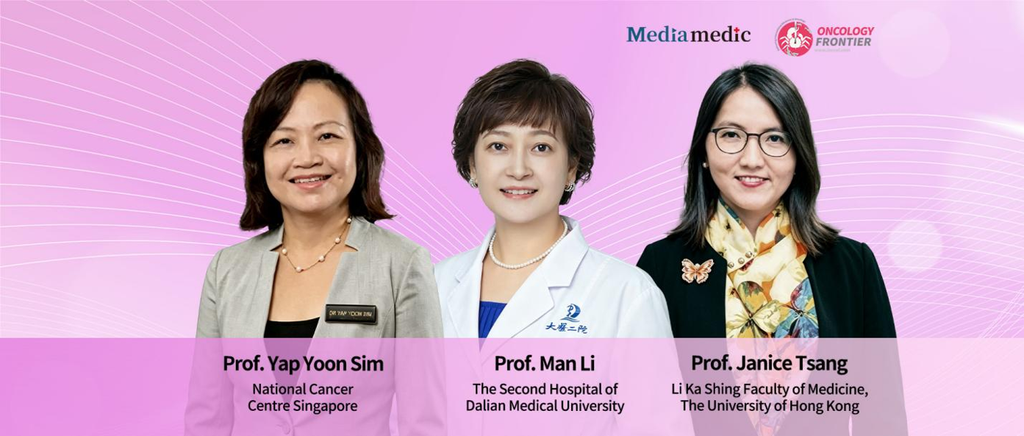
Editor's Note: Innovative breast cancer therapies and high-quality clinical evidence are advancing at an unprecedented pace. However, significant differences persist across regions in biomarker testing standards, drug approval and access timelines, and real-world follow-up systems. These disparities create delays and gaps in translating cutting-edge evidence into clinical practice. At the recently held 2026 Academic Conference on Advances in Breast Cancer Diagnosis and Treatment in Northeast China, Oncology Frontier invited Professor Yap Yoon Sim of the National Cancer Centre Singapore, Professor Man Li of the Second Affiliated Hospital of Dalian Medical University, and Professor Janice Tsang of the Li Ka Shing Faculty of Medicine, The University of Hong Kong, to discuss how the Asia-Pacific region can move beyond academic exchange toward generating shared clinical evidence, and how to bridge the gaps between clinical trials and full-cycle patient management in real-world practice. Drawing on the healthcare systems and clinical experience of their respective regions, the three experts offered valuable perspectives on developing a shared framework for comprehensive breast cancer care across the Asia-Pacific region.01
Oncology Frontier: Professor Yap Yoon Sim, you have long been involved in translational research and clinical collaboration in breast cancer across the Asia-Pacific region. A practical challenge is that centers across the region differ considerably in biomarker testing standards, clinical trial ethics approval processes, and patient recruitment capabilities. As a result, regional collaboration often remains at the level of academic exchange, with limited progress toward generating shared research evidence. In your view, what is the first and most important issue that needs to be addressed if Asia-Pacific collaboration is to generate research findings that can truly change clinical practice?
Professor Yap Yoon Sim: I think the first and most important step is to formulate a good research question that is worth investigating in depth. We also need to recognize that not every study can change clinical practice. Evidence-generation studies sometimes play a more supportive role by supplementing the existing literature—for example, by demonstrating that findings also apply to Asian populations.
If we want to conduct research that can change clinical practice globally, however, the research must be novel or address questions that previous studies have not yet explored. We may also need to move quickly enough, while maintaining high quality, to become the first to generate the data that others can use.
At times, we may also need to adopt a more inclusive approach. Critics outside Asia may argue, “This study was conducted only in Asia, and we do not know whether its findings apply to our populations as well.” Therefore, I believe broad collaboration is essential to making our research more meaningful and widely applicable.
02
Oncology Frontier: Professor Janice Tsang, Professor Yap has discussed how regional collaboration can move from academic exchange to evidence generation. Given Hong Kong’s geographical and clinical position as a link between mainland China and the wider Asia-Pacific region, you may have more direct experience with situations in which evidence is available but its adoption proceeds at different speeds. Taking HR-positive/HER2-negative advanced breast cancer as an example, access to treatment options after progression on CDK4/6 inhibitors varies considerably across clinical practice in the Asia-Pacific region. After clinical evidence has been generated, what is the real bottleneck in clinical decision-making: differences in the timing of drug approval and access, or inconsistencies in how different healthcare systems adopt the same evidence?
Professor Janice Tsang: Taking HR-positive/HER2-negative advanced breast cancer as an example, since last year’s ESMO Congress, we have seen an explosion of data and the release of numerous study results, particularly following progression on first-line treatment.
The bottleneck is not simply whether a particular drug receives local regulatory approval. It also concerns the practical implementation of the most appropriate treatment sequence for each individual patient. For example, in the case of ESR1 mutations or alterations in the PIK3CA pathway, patients need access to testing for these relevant molecular biomarkers. At present, such testing is not publicly funded for everyone, even in Hong Kong SAR, where I work. Not all patients, including those treated in the public healthcare sector, are covered. In many cases, patients must pay out of pocket for these molecular tests.
Furthermore, in regions with limited resources, we need to reach a consensus on whether to test only a specific actionable biomarker, use a breast cancer-specific gene panel, or conduct broader next-generation sequencing with a comprehensive gene panel. These are among the differences that require agreement among stakeholders.
I also think that many patients, family members, and caregivers assume that once researchers announce study results, responsibility for making those findings available lies with oncologists or investigators. They may believe that researchers have considerable authority or influence over drug endorsement, registration, and approval. In reality, these matters are governed by local policymakers, funding bodies, and healthcare administrators.
Therefore, what we need now is not simply collaboration among researchers, clinicians, and scientists across the Asia-Pacific region. We should also engage in advocacy and involve all relevant stakeholders, including policymakers, patient advocates, healthcare administrators, and pharmaceutical industry representatives. Bringing everyone together will allow us to co-create solutions and better understand the gaps in each area. Moreover, I believe that the voices of patient advocates are often more powerful than those of principal investigators or co-investigators.
03
Oncology Frontier: Professor Man Li, the previous two speakers have discussed evidence generation and its translation into clinical practice. We would now like to turn to full-cycle patient management. You lead Phase I clinical trials and also coordinate multidisciplinary team collaboration. Along the pathway from early-phase drug trials to comprehensive patient management, where do you see the greatest disconnect? Could this be precisely the area where Asia-Pacific collaboration could make the most immediate contribution, yet which is most easily underestimated?
Professor Man Li: The previous two professors have provided excellent insights into evidence generation and the translation of evidence into clinical practice. I believe that greater emphasis should be placed on collaboration and exchange across the Asia-Pacific region in the future.
Under the rigorous oversight of clinical trials, we are able to monitor adverse events more effectively. However, in real-world practice, we find that adverse event monitoring for many patients differs from the standards maintained in clinical trials. Patient safety monitoring during treatment is therefore a practical challenge facing both China and the wider Asia-Pacific region, and it is an area where we need to work together.
In clinical trials, patient eligibility criteria are very strict, follow-up is well organized, and adverse events are managed promptly. As a result, patients receiving innovative therapies can be monitored closely for adverse events, allowing them to remain on treatment for longer and achieve good therapeutic outcomes.
In real-world settings, however, patients have heterogeneous baseline characteristics. Their concomitant medications and post-treatment follow-up are also not managed as rigorously as they are in clinical studies. Consequently, various adverse events may occur during treatment, preventing some promising drugs from being used for extended periods in clinical practice and significantly limiting the clinical application of these innovative therapies.
This challenge is not unique to our clinical practice; it may also exist in Hong Kong and Singapore. Looking ahead, we hope that experts across the Asia-Pacific region can work together to develop joint strategies for managing adverse events associated with innovative drugs and learn from one another’s experience. I believe this is one of the most accessible starting points for regional collaboration.
By beginning with a focus on adverse event management, we can help ensure that innovative therapies supported by high-quality clinical research and data are effectively translated into practice and ultimately benefit patients with breast cancer across Asia.
04
Oncology Frontier: The three of you represent Singapore, Hong Kong, and mainland China, each with a distinct healthcare system and model of collaboration. Drawing on the clinical systems and experience in your respective regions, what is the single area along the pathway from clinical research to full-cycle patient management that most urgently requires regional collaboration? Furthermore, given the differences among healthcare systems in follow-up standards, patient education resources, and cross-border information continuity, where is the Asia-Pacific region most likely to reach consensus in advancing a shared framework for comprehensive patient management?
Professor Yap Yoon Sim: I think that, in most cases, we follow the management guidelines established by organizations such as ASCO and ESMO. Unfortunately, we may not always have the opportunity to develop something new ourselves. Unless we have a first-mover advantage in a particular area, it can be difficult for us to lead.
The situation may be different for our colleagues in lung cancer. They are dealing with diseases that are more prevalent in Asian populations, such as EGFR-mutated lung cancer. As a result, they are often key opinion leaders in these areas, and much of the evidence is generated by researchers in Asia.
For breast cancer, however, we may be able to take advantage of the impressive pharmaceutical industry that is emerging in Asia. For example, if new drugs are being developed in China and we have opportunities to collaborate, we may be able to generate data quickly enough to make an impact, particularly when these drugs are first-in-class. This could allow us to become leaders in certain areas of research, which, in turn, could influence clinical management in the broader population.
Professor Janice Tsang: I agree with Professor Yap’s comments. With the release of numerous study results, including data presented at this year’s ESMO Congress and findings published in high-impact journals such as The Lancet, JAMA, and The New England Journal of Medicine, we can see that the evidence is robust and well established on international platforms.
The real gap is whether we can incorporate all these newly developed drugs, particularly those originating in China and supported by robust evidence, into international guidelines or, at the very least, pan-Asia-Pacific guidelines. This would help bridge the gap between scientific advances and affordability. These drugs may also be more cost-effective and better aligned with the unmet needs of this region, particularly in Asia, where many countries are classified as low- and middle-income economies. This is my first point.
Second, taking Hong Kong SAR as an example, it remains the city with the longest life expectancy in the world, meaning that people in our region are living to increasingly advanced ages. We know that age should not be a barrier to treatment intent or intensity. However, patients aged 70 years and older are often excluded from clinical trials. We are fully aware that these patients have unmet needs in real-world practice. Hopefully, future guidelines will provide better coverage for this population and help address some of these unmet clinical needs.
Professor Man Li: We all know that Hong Kong and Singapore have extensive experience and strong foundations in standardized breast cancer care and full-cycle patient management. They have established long-term, systematic follow-up systems covering the entire process, from screening and diagnosis to treatment and subsequent follow-up, and these approaches have received broad recognition.
In China, breast cancer treatment and management developed relatively later, and considerable regional differences remain. I believe that, in the future, we need to collaborate with breast cancer specialists in Hong Kong, Japan, Singapore, and other countries and regions, learning from their experience in comprehensive patient management.
We are already seeing the concept of full-cycle breast cancer management becoming increasingly integrated into clinical practice at hospitals in economically developed regions of China. Government bodies and professional associations are also continuously promoting standardized breast cancer diagnosis and treatment, as well as the implementation of comprehensive management throughout the patient journey. I believe we still have a long way to go.
At the same time, China’s innovative drug development continues to advance, with new therapies increasingly being presented at international conferences such as ASCO and ESMO. With these new drugs, we are in a stronger position to improve standardized breast cancer care and full-cycle management. Nevertheless, we must place greater emphasis on improving every stage of care, from screening and diagnosis to treatment, prevention, and follow-up.
We hope that China’s innovative drugs can be effectively incorporated into clinical practice through the efforts of clinicians, improving not only patient survival but also quality of life. At the same time, we should continue learning from leading countries and regions such as Hong Kong, Singapore, and Japan, making better use of comprehensive patient management to provide improved care for patients with breast cancer in China.
Interviewed Experts:

- Professor Yap Yoon Sim

- Professor Man Li
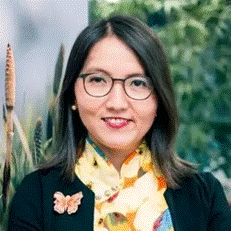
- Professor Janice Tsang